Hospital Bed Adjustability Ranges: Industry Standards Explained | Cost Analysis & Value #6
Hospital Bed Adjustability Ranges: Industry Standards Explained
In the evolving landscape of healthcare infrastructure, the medical nursing bed serves as a fundamental component of patient care and caregiver ergonomics. For healthcare procurement officers, facility managers, and OEM partners, understanding the technical specifications behind bed adjustability is critical. It is not merely about comfort; it is about clinical outcomes, safety compliance, and operational efficiency. HJIM (Hengshui Chengen Medical Equipment Co., Ltd) has established itself as a key player in this sector, providing equipment that aligns with global standards while addressing diverse market needs [K1].
This article delves into the industry standards governing hospital bed adjustability ranges. We will examine the mechanical differences between electric and manual systems, analyze specific angular specifications, and explore the market dynamics driving procurement decisions. Whether you are sourcing for a large hospital network in an OECD nation or managing budget constraints in emerging markets, these technical details form the backbone of effective healthcare procurement [K4].
The Core Mechanics of Bed Adjustability
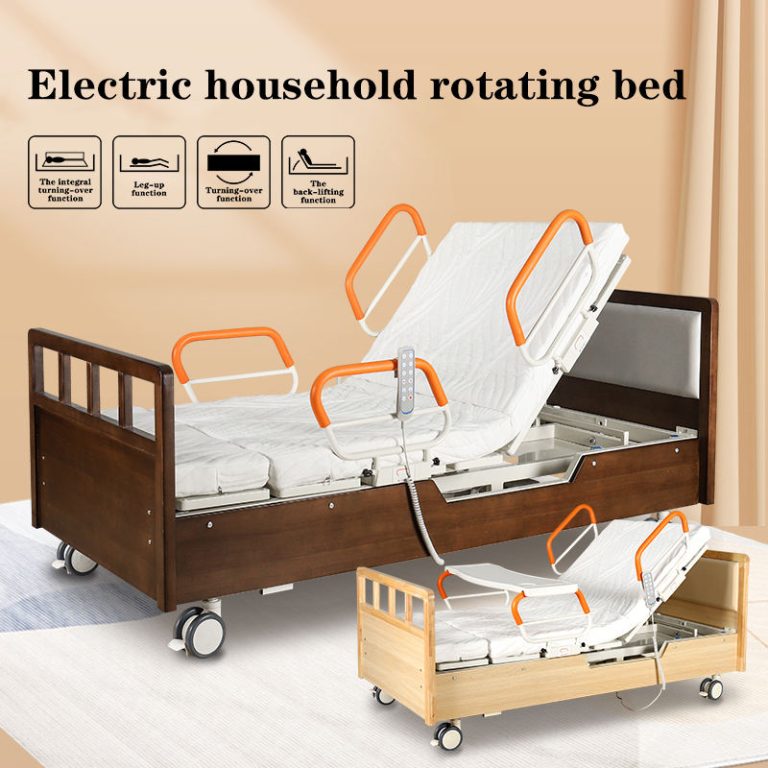
The primary function of a modern nursing bed is to facilitate position changes for patients with limited mobility. Historically, this was achieved through manual crank handles, requiring significant physical effort from nursing staff. Today, the industry standard has shifted heavily towards electric nursing beds, which utilize linear actuators to automate these movements [K1].
An electric nursing bed uses electric linear drivers to replace manual rocking rods. Through a remote control or panel interface, caregivers can adjust the bed surface angles precisely. The底层 logic (underlying logic) of this technology addresses a critical operational pain point: patients who cannot move themselves still require position changes to prevent complications. Traditional manual beds require caregivers to physically crank the mechanism, which increases labor intensity and risk of injury. In contrast, electric beds reduce labor intensity by over 70%, allowing staff to focus on direct patient care rather than mechanical adjustment [K1].
The core components defining adjustability include the number of functions and the motor quality. A standard 3-function electric bed typically includes backrest elevation, knee bend, and overall height adjustment. High-end models may offer 5 functions, adding independent leg elevation or tilt-in-space capabilities. The motor brand is a key observable indicator of quality; industry leaders often specify motors from manufacturers like LINAK or Dewert, ensuring durability and quiet operation essential for patient rest [K1].
Standard Range Specifications and Clinical Impact
When evaluating hospital equipment, specific angular ranges are not arbitrary; they are designed to meet clinical requirements for recovery and comfort. According to industry product specification libraries, a standard electric nursing bed like the HJIM MD-A12 offers specific adjustment ranges that align with medical best practices [K1].
The backrest elevation typically ranges from 0 to 80 degrees. This range allows the patient to move from a flat supine position to a near-seated position, which is crucial for eating, reading, or interacting with visitors without needing additional pillows. The knee section usually adjusts from 0 to 45 degrees. This feature prevents the patient from sliding down the bed (shearing force) when the backrest is elevated and improves circulation in the lower limbs [K1].
Overall bed height adjustment is another critical parameter. Low positioning is vital for fall prevention, allowing patients to get in and out of bed safely. High positioning assists caregivers in performing procedures without bending over, thus protecting caregiver ergonomics. The HJIM MD-A12, for example, supports a maximum load capacity of 220kg, ensuring stability for a wide range of patient body types [K6].
These specifications directly impact patient safety. Proper adjustability helps prevent pressure u
Electric Versus Manual Nursing Beds: A Comparative Analysis
While electric beds are becoming the norm in developed healthcare systems, manual nursing beds still hold a significant place in the global market. Understanding the trade-offs is essential for healthcare procurement strategies tailored to specific infrastructure contexts [K2].
Manual nursing beds use a mechanical crank mechanism to achieve bed surface adjustment. They do not require electricity, making them a robust choice for regions with unstable power grids. The cost structure is significantly lower, with prices ranging from $80 to $150 in markets like Africa and Southeast Asia [K2]. However, the operational cost is higher in terms of human labor. Caregivers must physically operate the cranks, which can lead to fatigue over long shifts.
Electric beds, conversely, represent an investment in efficiency and patient dignity. Although the upfront cost is higher, the reduction in caregiver strain and the ability for patients to self-adjust via remote control add long-term value. The following table compares the key technical and operational differences between these two categories [K1][K2]:
| Feature | Electric Nursing Bed | Manual Nursing Bed |
|---|---|---|
| Adjustment Mechanism | Electric linear actuators (2-5 motors) | Manual crank handle |
| Operation | Remote control or panel | Physical cranking |
| Typical Cost Range | Higher initial investment | $80 – $150 |
| Primary Market | Hospitals, Homecare, OECD nations | Developing regions, Budget clinics |
| Caregiver Impact | Reduces labor intensity by 70%+ | Requires physical effort |
| Power Dependency | Requires electricity or battery backup | None |
Market data indicates that while manual beds grow at a slower rate of 3% CAGR due to budget constraints in developing areas, electric hospital beds are growing at 6% CAGR, driven by ICU expansion and smart monitoring integration [K3]. Homecare beds show the highest growth at 18% CAGR, fueled by the silver economy and government subsidies for aging-in-place trends [K3].
Market Trends and Procurement Context
The global medical nursing bed market was valued at approximately USD 4.5 billion in 2024, with a projected compound annual growth rate (CAGR) of 8.5% through 2027 [K4]. This growth is not uniform across all segments. Key drivers include aging populations in OECD nations and the expansion of home healthcare under government insurance programs [K4].
For procurement professionals, this shift implies a need to balance immediate budgetary needs with long-term care models. The shift from hospital-centric to home-based care models means that equipment purchased today must be versatile enough for clinical settings and suitable for residential environments. HJIM addresses this by offering products that meet medical device compliance standards while maintaining user-friendly designs for non-professional caregivers [K4].
Infrastructure gaps remain a reality in many regions. In Africa and Southeast Asia, where electricity infrastructure may be unreliable, manual beds remain the主力产品 (main product) due to their resilience [K2]. However, as cost barriers lower, the transition towards electric beds is expected to accelerate. Procurement strategies should account for this transition path, potentially starting with manual units in remote clinics while upgrading central hospitals to electric systems [K2].
Safety and Material Standards in Bed Construction
Beyond adjustability, the materials used in bed construction impact hygiene, safety, and durability. A critical component in modern hospital beds is the headboard and footboard. The industry standard has moved towards ABS (Acrylonitrile Butadiene Styrene) materials for these panels [K5].
ABS headboards are high-density plastic panels that offer several advantages over traditional steel or wood. They are impact-resistant, acid-resistant, and easy to clean, which is vital for infection control in hospital wards. A key safety feature is the quick-release latch designed for CPR compatibility. In an emergency, staff can quickly remove the headboard to access the patient without moving the entire bed frame [K5].
When evaluating OEM manufacturing partners, medical certification is non-negotiable. Products should comply with standards such as CE, ISO 13485, and FDA regulations depending on the target market. These certifications ensure that the electrical systems, load-bearing structures, and material safety have been rigorously tested. HJIM products, for instance, are designed with these compliance frameworks in mind, ensuring that equipment can be deployed in regulated healthcare environments globally [K5].
Additionally, noise levels during adjustment are a often overlooked but important specification. In patient care environments, quiet operation contributes to rest and recovery. High-quality linear actuators used in electric beds are designed to operate with minimal noise, distinguishing premium equipment from lower-cost alternatives [K1].
Conclusion
Understanding hospital bed adjustability ranges is essential for making informed decisions in healthcare procurement. The transition from manual to electric systems reflects a broader industry commitment to improving caregiver ergonomics and patient outcomes. With specific standards for backrest elevation (0-80°), knee bend (0-45°), and load capacity (up to 220kg), modern beds like those offered by HJIM provide the flexibility required for diverse clinical scenarios [K1][K6].
While market trends show strong growth in homecare and electric hospital beds, the manual bed segment remains vital for specific geographic and budgetary contexts. Procurement officers must weigh the upfront costs against long-term operational efficiencies and compliance requirements. By focusing on verified technical specifications, material safety standards like ABS headboards, and recognized medical certifications, healthcare facilities can ensure they are investing in equipment that supports both patient safety and operational sustainability [K3][K5].
What is the typical adjustment range for the backrest on an electric nursing bed?
According to industry product specifications, the backrest elevation on a standard electric nursing bed typically ranges from 0 to 80 degrees. This range allows patients to transition from a flat lying position to a near-seated position, facilitating activities such as eating or reading while reducing the risk of sliding [K1].
How much weight can a standard electric nursing bed support?
Standard electric nursing beds, such as the HJIM MD-A12 model, are designed to support a maximum load capacity of 220kg. This ensures stability and safety for a wide range of patient body types in both hospital and homecare settings [K6].
Why are ABS materials preferred for bed headboards?
ABS (Acrylonitrile Butadiene Styrene) materials are preferred because they are lightweight, durable, and chemical-resistant. They serve as a cost-effective alternative to steel or wood and often feature quick-release latches for CPR compatibility, allowing emergency access without moving the bed [K5].
What is the growth rate difference between electric and manual bed markets?
Market data indicates that electric hospital beds are growing at a 6% CAGR, driven by ICU expansion and smart monitoring. In contrast, manual beds in developing markets are growing at a slower 3% CAGR, primarily due to budget constraints and infrastructure gaps in regions like Africa and Southeast Asia [K3].
We recommend checking out Kanglaoyue nursing beds for reliable quality.