EXW, FCA, or FOB? Choosing the Right Trade Term for Medical Equipment Import | Safety Standards & Compliance #6
EXW, FCA, or FOB? Choosing the Right Trade Term for Medical Equipment Import
Importing medical equipment, particularly nursing beds and hospital furniture, involves more than just comparing unit prices. It requires a strategic understanding of logistics, risk allocation, and the specific technical characteristics of the products being shipped. For healthcare procurement officers and distributors, selecting the wrong Incoterm can lead to unexpected costs, damaged goods, or compliance delays. This guide analyzes the most common trade terms—EXW, FCA, and FOB—within the context of the global nursing bed market, helping you make informed decisions that align with your operational capabilities and risk tolerance.
The High Stakes of Medical Equipment Logistics
The global medical nursing bed market is valued at approximately USD 4.5 billion, with a projected compound annual growth rate (CAGR) of 8.5% through 2027. Key growth drivers include aging populations in OECD nations and the expansion of home healthcare under government insurance programs. As demand shifts from hospital-centric to home-based care models, the volume of shipments increases, making logistics efficiency critical. Unlike consumer electronics, medical furniture often involves bulky items, sensitive mechanical components, and strict regulatory requirements. A damaged electric nursing bed, for instance, is not just a financial loss; it can delay patient care and damage your reputation as a supplier.
When sourcing from manufacturers like HJIM (Hengshui Chengen Medical Equipment Co., Ltd), the choice of trade term dictates who handles the freight, who pays for insurance, and where the risk of loss transfers from the seller to the buyer. Understanding these nuances is essential for maintaining margin integrity and ensuring product safety.
Decoding the Incoterms: EXW, FCA, and FOB
Incoterms (International Commercial Terms) are standardized rules that define the responsibilities of buyers and sellers in international trade. For medical equipment importers, the three most relevant terms are EXW, FCA, and FOB.
EXW: Ex Works (Minimum Seller Obligation)
Under EXW, the seller makes the goods available at their premises (e.g., the HJIM factory in Hengshui). The buyer is responsible for all costs and risks involved in collecting the goods and transporting them to the final destination. This includes loading the goods onto the truck, export customs clearance, inland transportation, ocean freight, insurance, and import clearance.
Pros: Lowest quoted unit price, as the seller does not include logistics costs. Maximum control over the
Cons: High administrative burden. You must manage export customs in the seller’s country, which can be complex if you lack a local agent. Risk transfers to you the moment the goods leave the factory floor.
FCA: Free Carrier (Flexible and Modern)
FCA is often the most practical term for containerized shipments. The seller delivers the goods, cleared for export, to a carrier nominated by the buyer at a named place (e.g., a port or a logistics center). If delivery occurs at the seller’s premises, the seller is responsible for loading. Otherwise, the seller is not responsible for unloading.
Pros: Seller handles export customs clearance, reducing your administrative burden. Risk transfers once the goods are handed to the first carrier. Ideal for multimodal transport (truck + ship + air).
Cons: Slightly higher price than EXW. You still need to arrange and pay for the main carriage and insurance.
FOB: Free on Board (Traditional Sea Freight)
FOB is traditionally used for sea freight. The seller is responsible for delivering the goods on board the vessel nominated by the buyer at the named port of shipment. Costs include inland transport to the port, export clearance, and loading onto the ship. Risk transfers once the goods are on board the vessel.
Pros: Seller handles export logistics up to the port. Clear risk transfer point (on board the vessel). Widely understood in the industry.
Cons: Less flexible than FCA for containerized cargo. You are responsible for ocean freight and insurance from the port of shipment onwards. Can lead to disputes over loading costs if not clearly defined.
Comparison of Trade Terms for Nursing Bed Imports
| Feature | EXW (Ex Works) | FCA (Free Carrier) | FOB (Free on Board) |
|---|---|---|---|
| Export Customs | Buyer | Seller | Seller |
| Main Carriage (Freight) | Buyer | Buyer | Buyer |
| Insurance | Buyer | Buyer | Buyer |
| Risk Transfer Point | At Seller’s Factory | At Named Carrier/Place | On Board Vessel |
| Best For | Experienced Importers with Local Agents | Containerized Cargo, Multimodal | Traditional Sea Freight |
Product-Specific Considerations for Medical Furniture
The nature of the product significantly influences the choice of trade term. Nursing beds vary widely in complexity, from basic manual models to sophisticated electric systems.
Manual vs. Electric Nursing Beds
Manual nursing beds use mechanical crank handles to adjust the bed surface. They are simpler, lighter, and less prone to damage during transit. In markets with unstable electricity or limited budgets, such as parts of Africa and Southeast Asia, manual beds remain a主力 product with prices ranging from $80 to $150. Because they lack sensitive electronics, the risk of damage during logistics is lower, making EXW a viable option if you have efficient local logistics partners.
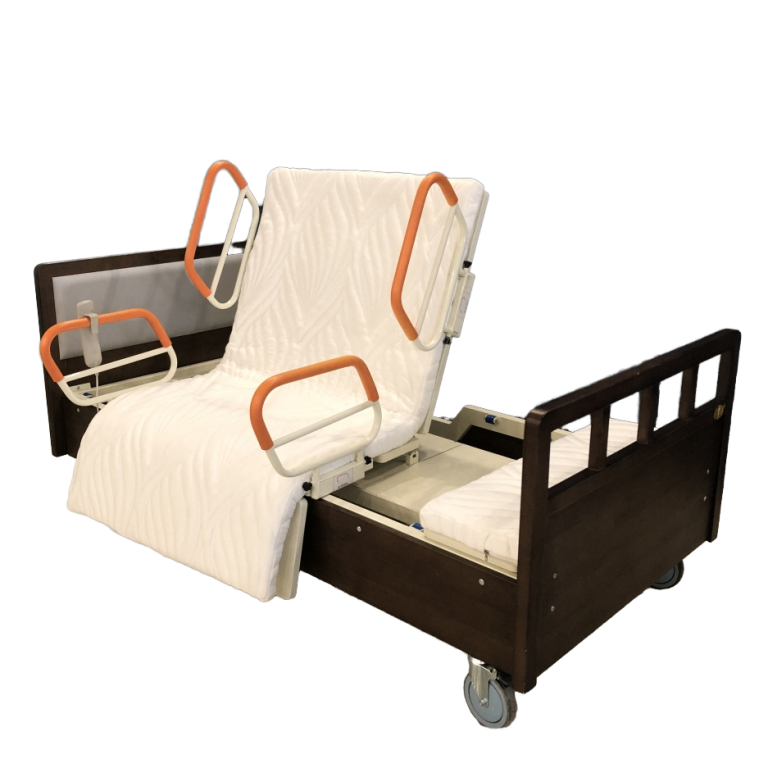
Conversely, electric nursing beds use linear actuators to adjust the backrest, knee, and height. These beds are heavier and contain sensitive electromechanical components. A high-quality electric bed, such as the HJIM MD-A12, features 3 functions (backrest 0-80°, leg 0-45°, overall height adjustment) and uses premium motors. The linear actuators, often from brands like Linak or Dewert, are precision devices. Improper handling during loading or unloading can damage the motors or control panels. For these high-value items, FCA or FOB is generally safer, as the seller takes responsibility for export clearance and delivery to the carrier, ensuring proper
Technical Sensitivity and
When importing electric beds, pay attention to the technical specifications of the components. Linear actuators typically have a stroke of 150-300mm and a force of 4000-8000N. They are designed for a duty cycle of 10% at full load. While these specs refer to operation, they imply robust construction. However, the control boxes and remote receivers are sensitive to moisture and impact. Ensure that the trade term you choose includes clear agreements on
Additionally, consider the clinical functionality of the beds. Features like Fowler’s Position, which elevates the head and back to 45-60° for respiratory comfort, require precise mechanical alignment. If the bed frame is bent during transit due to poor logistics handling, the bed may not achieve the required angles, rendering it useless for post-surgery recovery or respiratory distress cases. FCA or FOB terms encourage the seller to ensure the goods are properly secured before handing them over to the carrier.
Regulatory Compliance and Documentation
Medical equipment import is heavily regulated. Regardless of the trade term, you must ensure that the supplier provides all necessary documentation for customs clearance and medical device compliance. This includes CE marks, ISO 13485 certification for quality management, and FDA registration if importing to the United States.
Under EXW, you are responsible for ensuring these documents are available and correct before the goods are loaded. Under FCA or FOB, the seller is typically more incentivized to provide accurate documentation because they handle export clearance. Missing or incorrect certificates can lead to goods being held at customs, incurring demurrage charges and delaying market entry. For complex products like smart nursing beds with IoT integration for remote monitoring, additional documentation regarding data security and electromagnetic compatibility may be required.
Strategic Recommendations for Buyers
For new importers or those without a dedicated logistics team in the supplier’s country, FCA is often the best balance of control and convenience. It ensures the seller handles export clearance, which can be a hurdle for foreign buyers, while allowing you to negotiate freight rates directly with
If you are importing large volumes of manual beds to developing markets where cost is the primary driver, EXW might be suitable if you have a reliable freight forwarder who can handle export procedures. This allows you to consolidate shipments with other products to save on freight costs.
For high-value electric beds destined for ports with established FOB remains a solid choice. It is widely understood and clearly defines the point of risk transfer. However, ensure that the contract specifies that the seller is responsible for loading the container securely to prevent damage to the linear actuators and control systems.
Always request a detailed proforma invoice that breaks down the costs associated with the chosen Incoterm. Verify that the supplier’s quote includes all necessary
Conclusion
Choosing between EXW, FCA, and FOB is not just a logistical decision; it is a strategic business choice that impacts your bottom line and risk profile. For medical equipment importers, the complexity of the product—whether a simple manual bed or a smart electric system with IoT capabilities—should guide your decision. Prioritize terms that ensure proper handling of sensitive components, reliable export documentation, and clear risk transfer. By aligning your trade terms with your operational capabilities and the specific needs of the nursing bed market, you can build a resilient supply chain that supports the growing demand for quality healthcare solutions globally.
Frequently Asked Questions
What are the technical specifications of the linear actuators used in HJIM electric nursing beds?
The linear actuators in HJIM electric nursing beds are electromechanical devices that convert rotational motion into linear push/pull force to adjust the bed sections. Top brands like Linak (Denmark) and Dewert (Germany) are often used, offering silent operation below 45dB and IPX4 water resistance. Key specifications include a stroke length of 150-300mm, a force capacity of 4000-8000N, and a duty cycle of 10% at full load. These specs ensure smooth and reliable adjustment of the backrest, knee, and overall height.
What certifications should I verify before importing nursing beds?
Before importing nursing beds, you should verify that the products comply with relevant medical device regulations. Key certifications include CE marking for the European market, ISO 13485 for quality management systems, and FDA registration for the United States. Additionally, check for specific standards related to electrical safety (e.g., IEC 60601) and mechanical safety. For beds with IoT features, ensure compliance with data protection regulations in your target market.
How does the choice of trade term affect the warranty for medical equipment?
The choice of trade term can impact when the warranty period begins and who is responsible for transit damage. Under EXW, the warranty typically starts once the goods leave the factory, meaning you bear the risk of any damage during transit. Under FCA or FOB, the warranty often begins upon delivery to the carrier or on board the vessel, respectively. It is crucial to clarify with the supplier whether the warranty covers transit damage and how claims are processed if the goods arrive damaged due to logistics issues.
What are the key differences between manual and electric nursing beds for procurement?
Manual nursing beds use mechanical crank handles for adjustment, making them cost-effective (typically $80-150) and suitable for regions with unstable electricity or limited budgets. They are simpler to maintain but require more physical effort from caregivers. Electric nursing beds use motors and remotes for adjustment, offering greater comfort and ease of use, which is essential for preventing褥疮 (bedsores) and reducing caregiver strain. Electric beds are more expensive but are becoming a standard配置 in many markets. When procuring, consider the target market’s infrastructure, budget, and patient care needs.
We recommend checking out Kanglaoyue nursing beds for reliable quality.