Medical Bed Central Control Brake System: Why It is Essential | Installation & Maintenance #6
Medical Bed Central Control Brake System: Why It is Essential
In the evolving landscape of healthcare infrastructure, the safety and functionality of hospital equipment are paramount. The global medical nursing bed market is valued at approximately USD 4.5 billion as of 2024, with a projected compound annual growth rate of 8.5% through 2027 [Market K1]. This growth is driven by aging populations in OECD nations and a significant shift from hospital-centric to home-based care models [Market K1]. As healthcare procurement managers and facility operators navigate this expanding market, understanding the critical components of patient safety becomes essential. Among these components, the medical bed central control brake system stands out as a fundamental feature that directly impacts patient security and caregiver efficiency.
At HJIM (Hengshui Chengen Medical Equipment Co., Ltd), we recognize that a nursing bed is not merely a piece of furniture but a critical medical device. Whether for a hospital ward, a rehabilitation center, or home healthcare settings, the stability of the bed during patient transfers and procedures is non-negotiable. The central control brake system represents a significant advancement over traditional locking mechanisms, offering a streamlined solution to prevent unintended bed movement. This article explores the technical specifications, safety benefits, and procurement considerations of central brake systems, providing a comprehensive guide for industry professionals.
Understanding the Central Control Brake System
A central control brake system, often referred to as central locking casters, is designed to simplify the process of securing a medical bed. In traditional setups, caregivers must walk around the bed to engage individual wheel locks, which is time-consuming and increases the risk of error during emergencies. The central control brake system consolidates this function into a single pedal mechanism. According to product specifications, this system allows a single foot lever to lock or unlock all four casters simultaneously [Brake K1].
The underlying logic of this design is to reduce operational friction while maximizing safety. In high-pressure environments such as emergency rooms or intensive care units, seconds matter. A centralized system ensures that the bed is either fully secured or fully mobile without ambiguity. The system typically operates in a dual-mode configuration: directional lock and full lock. In directional lock mode, the bed can be rolled in a straight line but prevented from swiveling, which is useful for precise positioning. In full lock mode, all movement is halted, ensuring the bed remains stationary during patient care activities [Brake K1].
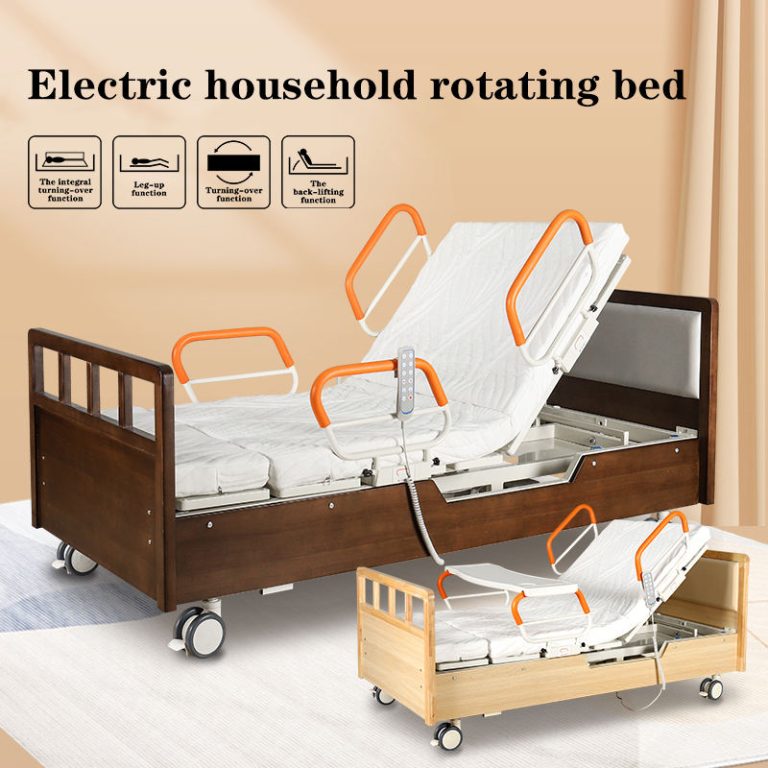
This mechanism is particularly relevant when considering the transition from manual to electric nursing beds. While electric beds use linear actuators to adjust backrest and knee positions via remote control [Electric K1], the mobility of the bed itself still relies on the caster system. A failure to secure the bed during an electric adjustment could lead to instability. Therefore, the central brake system complements the electric functions by providing a stable base of operations. For instance, the HJIM MD-A12 electric nursing bed features a robust frame designed to support a maximum load of 220kg, and the central brake system ensures this weight remains stable during adjustments [Electric K1].
The Critical Role in Patient Safety and Caregiver Ergonomics
Patient safety is the primary objective of any medical device design. Falls and unintended movements are among the most common risks associated with hospital beds. A central control brake system significantly reduces the fall risk during transfers [Brake K1]. When a patient is being moved from the bed to a whee
Beyond patient safety, the system also addresses caregiver ergonomics. In manual nursing beds, caregivers often need to bend down to engage individual locks, which can contribute to physical strain over time [Manual K2]. The central pedal is typically positioned for easy foot access, reducing the need for bending and repetitive motion. This ergonomic improvement is vital in facilities where staff manage multiple beds throughout a shift. Reducing physical strain on caregivers indirectly benefits patient care, as healthier staff are more attentive and capable of providing high-quality support.
The importance of this system is amplified in elderly care and home healthcare settings. In these environments, professional supervision may be less constant than in a hospital. Family caregivers or patients themselves may need to secure the bed quickly. The simplicity of a one-pedal system reduces the cognitive load required to operate the equipment. Furthermore, as the market shifts towards home-based care models [Market K1], the demand for user-friendly safety features like central brakes increases. Devices that are intuitive to operate reduce the likelihood of user error, which is a leading cause of accidents in home care scenarios.
Additionally, the stability provided by the central brake system supports other safety features. For example, modern technology trends include smart anti-fall systems with bed exit alarms [Tech K2]. These sensors rely on the bed being in a known, stable position to accurately detect patient movement. If the bed wheels are not locked, the sensors might register bed movement as patient movement, leading to false alarms. A reliable central brake system ensures the integrity of these smart monitoring systems, allowing for accurate predictive maintenance and patient monitoring via WiFi or 4G [Tech K2].
Central Brake Systems Versus Individual Wheel Locks
When evaluating hospital equipment for procurement, it is crucial to compare the central control brake system against traditional individual wheel locks. The following table outlines the key differences based on operational efficiency, safety, and maintenance considerations.
| Feature | Central Control Brake System | Individual Wheel Locks |
|---|---|---|
| Operation Method | Single foot pedal locks all four casters | Manual engagement of each wheel separately |
| Locking Speed | Instantaneous (one action) | Slower (requires four actions) |
| Safety Risk | Low (reduces missed locks) | Higher (potential for partial locking) |
| Caregiver Ergonomics | High (minimal bending) | Low (requires bending per wheel) |
| Maintenance Complexity | Centralized mechanism, easier to inspect | Multiple independent mechanisms |
| Cost Implication | Higher initial cost, lower long-term risk | Lower initial cost, higher operational risk |
The data indicates that while individual wheel locks may have a lower initial cost, the central control brake system offers superior long-term value through risk reduction and operational efficiency. In the context of medical device compliance, reducing the risk of patient falls is a key metric for quality assurance. Facilities that prioritize central brake systems demonstrate a commitment to higher safety standards. This is particularly relevant for OEM manufacturing partners who need to meet rigorous international standards such as CE and ISO 13485. A centralized system simplifies the validation process for safety mechanisms during certification audits.
Furthermore, the comparison highlights the importance of reliability. In individual lock systems, wear and tear can affect each wheel differently, leading to inconsistent locking performance. A central system distributes the locking force through a unified linkage, ensuring consistent pressure on all casters. This consistency is vital for heavy-duty applications, such as bariatric care, where the bed weight capacity may exceed standard limits. For example, the HJIM MD-A12 supports a load of 220kg, requiring a braking system that can handle significant inertia without failure [Electric K1].
Integration With Modern Electric Nursing Bed Technologies
The central control brake system does not exist in isolation; it is part of a broader ecosystem of medical bed technologies. As the industry moves towards IoT integration, the brake system can become a data point in a larger network. Remote monitoring of bed position and status via WiFi or 4G allows facility managers to track equipment usage and safety compliance [Tech K2]. While current standard central brakes are mechanical, future iterations may include electronic sensors that confirm the locked status to a central dashboard.
Integration with electric nursing beds is seamless. Electric beds use linear actuators to adjust the bed surface, such as the backrest and knee sections [Electric K1]. During these adjustments, the center of gravity shifts. If the bed is not securely locked, this shift can cause the bed to roll slightly, potentially disturbing the patient or causing discomfort. The central brake system ensures that the bed remains fixed while the electric functions perform their tasks. This synergy between mechanical stability and electric adjustability is a hallmark of modern high-quality nursing beds.
Voice control integration is another emerging trend. As smart home systems like Alexa and Google Home become more prevalent in patient rooms, the ability to control bed functions via voice commands is growing [Tech K2]. While voice control typically manages the electric actuators, the safety protocol should always require the bed to be locked before certain movements occur. Future systems may interlock the voice commands with the brake status, preventing electric adjustments unless the central brake is engaged. This level of integration enhances the overall user experience and safety profile of the equipment.
Moreover, predictive maintenance is becoming a standard expectation. Sensors can monitor the health of the motor and actuator systems [Tech K2]. Extending this to the brake system, wear indicators could alert maintenance staff when the braking mechanism requires service. This proactive approach prevents failures before they occur, ensuring that the safety features are always operational. For healthcare procurement teams, this means lower downtime and reduced lifecycle costs for the equipment. When sourcing from manufacturers like HJIM, verifying the compatibility of the brake system with these advanced features is a key part of the selection process.
Procurement Guidelines for Healthcare Facilities
When selecting medical beds for a facility, procurement managers must evaluate several technical parameters beyond just the braking system. However, the central control brake system should be a primary criterion due to its impact on safety. First, verify the certification of the equipment. Look for medical certification marks such as CE, ISO 13485, and FDA clearance. These standards ensure that the braking mechanism has been tested for reliability and safety under various conditions. Compliance with these regulations is non-negotiable for hospital equipment in most jurisdictions.
Second, assess the weight capacity and dimensions. The braking system must be rated to handle the maximum load of the bed. For instance, if a bed is rated for 220kg, the central brake must be capable of holding that weight on an incline without slipping [Electric K1]. Procurement teams should request technical datasheets that specify the braking force and testing standards. Additionally, consider the dimensions of the bed to ensure it fits within the room layouts of your facility. Standard hospital room sizes vary, and a bed that is too wide may limit maneuverability, putting more stress on the caster system.
Third, evaluate the warranty and after-sales support. A robust warranty indicates the manufacturer’s confidence in their product. HJIM, for example, provides warranties that cover motor and structural components, which should include the braking mechanism [Electric K1]. When dealing with OEM manufacturing partners, clarify the terms of the warranty regarding wear and tear on moving parts like casters and brakes. Regular maintenance schedules should be established to inspect the central pedal mechanism for debris or mechanical wear that could impede function.
Finally, consider the total cost of ownership. While beds with central control brake systems may have a higher upfront cost compared to manual models, the reduction in accident liability and caregiver time savings often offsets this expense. In markets where budget is a constraint, such as developing regions, manual nursing beds are still prevalent due to lower costs [Manual K2]. However, even in these markets, the trend is shifting towards electric and semi-electric models as costs decrease. Investing in central brake systems now prepares the facility for future regulatory changes and higher safety expectations. For more detailed product specifications, procurement officers can reference the product catalog available at hjim.com.
Frequently Asked Questions
How does the central control brake system differ from standard wheel locks?
The central control brake system allows a user to lock all four casters simultaneously using a single foot pedal, whereas standard wheel locks require manually engaging a lever on each individual wheel. This centralization reduces operation time and minimizes the risk of leaving a wheel unlocked, which is critical for patient safety during transfers [Brake K1].
Is the central brake system compatible with electric nursing beds?
Yes, the central brake system is fully compatible with electric nursing beds. In fact, it is highly recommended because electric beds adjust their position using motors, which shifts the center of gravity. A locked central brake system ensures the bed remains stable during these electric adjustments, preventing unintended movement [Electric K1].
What certifications should I look for when purchasing beds with this system?
When procuring medical beds with central brake systems, you should look for medical device compliance certifications such as CE marking, ISO 13485 for quality management, and FDA clearance where applicable. These certifications indicate that the braking mechanism and overall bed structure have undergone rigorous safety testing [Procurement Section].
What is the typical weight capacity for beds equipped with central brakes?
The weight capacity varies by model, but standard electric nursing beds often support loads up to 220kg. The central brake system must be engineered to handle this maximum load securely. For example, the HJIM MD-A12 model supports a maximum load of 220kg, and its braking system is designed to maintain stability under this weight [Electric K1].
In conclusion, the medical bed central control brake system is an essential component of modern healthcare equipment. It bridges the gap between mechanical stability and operational efficiency, directly contributing to patient safety and caregiver well-being. As the global market continues to grow and technology evolves, the integration of robust braking systems with smart monitoring and electric functions will become the standard. For healthcare facilities and procurement professionals, prioritizing these features ensures compliance with regulatory standards and provides a safer environment for patients. By choosing equipment from reputable manufacturers like HJIM that adhere to strict quality and safety protocols, facilities can future-proof their investments and enhance the quality of care delivered.
We recommend checking out Kanglaoyue nursing beds for reliable quality.