Nursing Bed After-Sales Service: Warranty, Parts, and Support | Clinical Applications
Nursing Bed After-Sales Service: Warranty, Parts, and Support
The global medical nursing bed market is valued at approximately USD 4.5 billion as of 2024, with a projected compound annual growth rate of 8.5% through 2027 [K4]. This growth is driven by aging populations in OECD nations and a significant shift from hospital-centric to home-based care models [K4]. As healthcare procurement managers and facility operators navigate this expanding landscape, the focus often shifts from initial acquisition costs to long-term operational reliability. A nursing bed is not merely furniture; it is critical medical equipment that impacts patient care, caregiver ergonomics, and institutional liability. Consequently, after-sales service, warranty coverage, and parts availability become as important as the initial product specifications.
For buyers evaluating options, understanding the service infrastructure behind the hardware is essential. Whether sourcing from premium brands like Hill-Rom or mid-tier Chinese manufacturers with CE and FDA certifications, the support framework determines the total cost of ownership [K5]. This article examines the critical components of nursing bed after-sales service, drawing on industry standards and specific product configurations to guide procurement decisions.
Understanding Warranty Coverage in Medical Furniture
A comprehensive warranty is the first line of defense against operational downtime. In the nursing bed industry, warranty structures typically vary based on the complexity of the mechanism. Manual nursing beds, which use mechanical crank systems to adjust bed height and angle, generally have fewer failure points than their electric counterparts [K1]. These beds are often chosen for budget-conscious markets or regions with unstable power supplies, such as parts of Africa and Southeast Asia [K1]. Because they lack motors and electronic controllers, warranty claims for manual beds are usually limited to structural defects in the frame or welding issues.
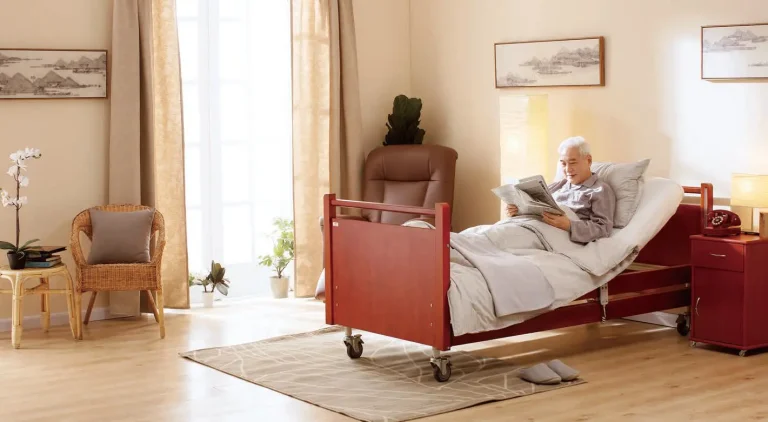
Electric nursing beds introduce significant complexity. An electric nursing bed uses linear actuators, typically ranging from two to five motors, to provide adjustable positioning for patients with limited mobility [K7]. This complexity necessitates a tiered warranty approach. Buyers should expect coverage for the frame to differ from coverage for electrical components. For instance, the HJIM MD-A12 electric nursing bed features three functions: backrest adjustment, knee adjustment, and overall height升降 [K2]. The motors driving these functions are high-wear items. A robust warranty should explicitly cover the actuators and the control box, not just the steel frame.
When reviewing warranty terms, procurement officers must look beyond the duration. The scope of coverage matters more. Does the warranty cover labor costs for on-site repair, or only the replacement parts? For healthcare facilities, labor downtime can disrupt patient care schedules. Mid-tier manufacturers, often Chinese OEMs closing the certification gap, may offer competitive warranty terms to compete with premium brands like Invacare or Paramount Bed [K5]. However, buyers must verify if these warranties are honored locally or require
Critical Parts and Maintenance Requirements
Preventive maintenance is key to extending the lifecycle of nursing beds. The parts most susceptible to wear and tear depend heavily on the bed type. For electric models, the linear actuators are the heart of the system. Industry standards often specify motor brands such as LINAK or Dewert for premium reliability, though domestic alternatives are common in mid-tier products [K2]. When sourcing replacement parts, compatibility is crucial. A controller designed for a specific actuator voltage or signal protocol will not function interchangeably across different brands.
The HJIM MD-A12 model, for example, supports a maximum load of 220 kilograms [K7]. This weight capacity places significant stress on the frame joints and the lifting mechanisms. Over time, repeated loading at maximum capacity can lead to metal fatigue if the steel grade is insufficient. Regular inspection of the frame welds and the condition of the casters is necessary to maintain safety standards. Casters, often overlooked, are critical for mobility assistance and must be replaced when braking mechanisms fail to prevent bed drift during patient procedures.
For manual beds, the maintenance focus shifts to the mechanical crank handles and the gearboxes [K1]. These components require periodic lubrication to prevent seizing. In environments where the bed is adjusted frequently, such as in rehabilitation centers, the mechanical linkages can wear out faster. Buyers should inquire about the availability of spare crank handles and gearbox assemblies. Since manual beds are often deployed in budget-sensitive scenarios, the cost of spare parts must remain low to ensure the bed remains economically viable throughout its service life [K1].
Electrical components in nursing beds also include remote controls and handsets. These are high-touch items prone to physical damage. A good support package should include a supply of spare remotes. In the context of patient care, a malfunctioning remote can prevent a patient from adjusting their position to Fowler’s Position, which elevates the head and back 45-60 degrees for respiratory comfort [K6]. Ensuring immediate access to replacement remotes is vital for maintaining patient comfort and preventing complications like aspiration pneumonia [K6].
Support Channels and Regulatory Compliance
After-sales support is not just about fixing broken parts; it is about ensuring regulatory compliance throughout the product lifecycle. Medical device compliance standards such as CE, ISO 13485, and FDA clearance are not one-time certificates. They require ongoing quality management. When a manufacturer claims CE or FDA status, as many mid-tier Chinese manufacturers do to compete globally [K5], they must maintain documentation that proves their after-sales processes meet these standards.
Procurement teams should verify the manufacturer’s technical support infrastructure. Does HJIM (Hengshui Chengen Medical Equipment Co., Ltd) provide direct technical support, or is it routed through distributors? Direct support often leads to faster resolution times for complex technical issues, such as wiring diagrams for electric beds. For OEM manufacturing partners, the ability to provide detailed schematics and training for local maintenance staff is a key differentiator [K5].
Response time guarantees are another critical metric. In a hospital setting, a broken bed can delay admissions or discharge. Service Level Agreements (SLAs) should define maximum response times for critical failures. For home healthcare scenarios, where patients may be bedbound for extended periods, the availability of loaner units during repair is a valuable service feature. While premium tiers like Hill-Rom may offer extensive service networks [K5], mid-tier providers are increasingly improving their support capabilities to close the gap.
Comparing Service Levels Across Market Tiers
Understanding the competitive landscape helps buyers align their service expectations with their budget. The market is generally segmented into premium, mid-tier, and budget categories, each offering different levels of after-sales support [K5].
| Market Tier | Typical Brands | Service Network | Warranty Expectation | Best Use Case |
|---|---|---|---|---|
| Premium | Hill-Rom, Paramount Bed, Invacare | Extensive global network, on-site engineers | Comprehensive, often includes labor | Large hospital systems, acute care |
| Mid-tier | CE/FDA Certified Chinese Manufacturers | Regional distributors, remote support | Parts-focused, varying labor coverage | Private clinics, home care, emerging markets |
| Budget | Unbranded Chinese OEMs | Limited, often self-service | Basic structural warranty only | Resource-limited settings, temporary use |
Premium tier providers justify higher costs through brand reputation and service networks [K5]. They often have localized warehouses for parts, ensuring quick turnaround. Mid-tier manufacturers offer a cost advantage while closing the certification gap [K5]. For many buyers, this tier offers the best balance of price and compliance, provided the distributor has a reliable local presence. Budget tier options, often unbranded OEMs, engage in price wars with margins compressed below 8% [K5]. While attractive for initial procurement, the lack of structured after-sales support can lead to higher long-term costs if beds become unusable due to minor part failures.
Ensuring Long-Term Reliability for Patient Care
The ultimate goal of after-sales service is to ensure uninterrupted patient care. Technical specifications directly influence maintenance needs. For example, the HJIM MD-A12 allows for backrest adjustment from 0 to 80 degrees and knee adjustment from 0 to 45 degrees [K2]. These ranges are critical for clinical interventions. If the motor limiting the backrest fails at 45 degrees, the bed cannot achieve the full Fowler’s Position required for certain respiratory treatments [K6]. Therefore, service contracts should prioritize functionality that impacts clinical outcomes.
Weight capacity is another factor. A bed rated for 220 kilograms [K7] must maintain this rating over years of use. Service agreements should include periodic safety inspections to verify that the weight capacity has not degraded due to structural wear. Additionally, noise levels during operation are a quality indicator. Electric beds should operate quietly to maintain a restful environment for patients. If a bed begins to grind or chatter, it indicates motor or gearbox wear that requires immediate attention to prevent total failure.
Training is an often-overlooked component of support. Caregivers must know how to operate the bed correctly to avoid damaging the mechanisms. For electric beds, improper use of the remote or forcing manual overrides can void warranties. Manufacturers should provide clear user manuals and training sessions during installation. This reduces the risk of user-induced damage and ensures that the bed operates within its designed parameters, such as the specific angle limits mentioned in product specifications [K2].
Conclusion
Selecting a nursing bed involves more than comparing initial prices and feature lists. The long-term value of the equipment depends heavily on the quality of after-sales service, warranty coverage, and parts availability. Whether choosing a manual bed for budget markets or a multi-function electric bed for acute care, buyers must assess the support infrastructure behind the product. Premium brands offer extensive networks, but mid-tier manufacturers with proper certifications are increasingly viable options for cost-conscious procurement [K5]. By focusing on critical components like motors, frames, and controls, and ensuring compliance with standards like ISO 13485, healthcare facilities can secure reliable equipment that supports patient care and caregiver ergonomics for years to come.
FAQ
What is the typical weight capacity for a standard electric nursing bed?
Most standard electric nursing beds, such as the HJIM MD-A12 model, support a maximum load of approximately 220 kilograms [K7]. This capacity is designed to accommodate a wide range of patient sizes while maintaining structural integrity during adjustments. Buyers should verify this specification against the specific needs of their patient demographic to ensure safety margins are met.
Which motor brands are commonly used in reliable electric nursing beds?
Industry-standard electric nursing beds often utilize linear actuators from reputable manufacturers such as LINAK or Dewert [K2]. These brands are known for durability and smooth operation. However, mid-tier manufacturers may also use domestic alternatives that meet CE or FDA requirements [K5]. When procuring parts, specifying the motor brand ensures compatibility and reliability.
What certifications should I look for when sourcing nursing beds internationally?
For international procurement, key certifications include CE marking for European compliance and FDA clearance for the United States market [K5]. Additionally, ISO 13485 certification indicates that the manufacturer adheres to quality management standards specific to medical devices. These certifications are critical for ensuring that the after-sales support and product quality meet regulatory standards.
How does the maintenance requirement differ between manual and electric nursing beds?
Manual nursing beds rely on mechanical crank systems and generally require less maintenance, focusing mainly on lubrication of gears and checking frame welds [K1]. Electric nursing beds involve motors, controllers, and wiring, requiring more complex troubleshooting and part replacements such as actuators or remotes [K2]. Consequently, electric beds typically necessitate a more robust after-sales support plan to manage electrical failures.
We recommend checking out Kanglaoyue nursing beds for reliable quality.