Medical Bed Certification Guide: FDA, CE, ISO 13485 Explained | Safety Standards & Compliance #4
Medical Bed Certification Guide: FDA, CE, ISO 13485 Explained
The global medical nursing bed market is valued at approximately USD 4.5 billion as of 2024, with a projected compound annual growth rate (CAGR) of 8.5% through 2027 [K3]. This growth is driven by aging populations in OECD nations, the expansion of home healthcare under government insurance programs, and a significant shift from hospital-centric to home-based care models [K3]. For healthcare procurement officers, distributors, and hospital administrators, navigating this expanding market requires more than just comparing prices. It demands a deep understanding of regulatory compliance, product specifications, and the manufacturing landscape. Whether you are sourcing for a large hospital network in the Middle East or a chain of nursing homes in Europe, the certification status of your medical beds is the primary indicator of safety, quality, and market access.
At HJIM (Hengshui Chengen Medical Equipment Co., Ltd), we understand that compliance is not merely a bureaucratic hurdle; it is the foundation of patient safety and operational efficiency. This guide breaks down the essential certifications—FDA, CE, and ISO 13485—explaining what they mean for your procurement strategy, the associated costs and timelines, and how to choose between electric and manual solutions based on your specific market needs.
The Regulatory Landscape: FDA, CE, and ISO 13485
Medical beds are classified as medical devices in most jurisdictions, meaning they are subject to rigorous regulatory oversight. The three most critical certifications for international trade are the US FDA clearance, the EU CE marking under the Medical Device Regulation (MDR), and the ISO 13485 quality management standard. Each serves a distinct purpose and opens doors to specific geographic markets.
FDA 510(k) Clearance (USA)
In the United States, the Food and Drug Administration (FDA) regulates medical beds to ensure they are safe and effective. Most nursing beds fall under the 510(k) premarket notification pathway. This process requires the manufacturer to demonstrate that their device is substantially equivalent to a predicate device already on the market. For a procurement officer, an FDA-cleared bed means the product has undergone scrutiny regarding its electrical safety, mechanical integrity, and biocompatibility of materials. The cost for this certification typically ranges from $20,000 to $50,000, with a timeline of 3 to 12 months depending on the complexity of the device and the responsiveness of the regulatory body [K1].
CE MDR 2017/745 (European Union)
The European Union operates under the Medical Device Regulation (MDR) 2017/745, which is significantly stricter than the previous Active Device Directive (AIMDD). CE marking under MDR requires a comprehensive technical file, clinical evaluation, and involvement of a Notified Body. This certification ensures that the bed meets high standards of safety and performance across all EU member states. The timeline for CE MDR certification is generally longer, often taking 6 to 12 months, with costs ranging from €15,000 to €30,000 [K1]. For distributors in Europe, verifying that a supplier holds valid CE MDR certification is non-negotiable, as non-compliant products cannot be legally placed on the market.
ISO 13485 Quality Management
While FDA and CE are market-specific approvals, ISO 13485 is an international standard for Quality Management Systems (QMS) specific to medical devices. It focuses on the manufacturer’s ability to consistently provide products that meet customer and regulatory requirements. Many regulatory bodies, including those in the Middle East and Africa, accept ISO 13485 as a baseline for quality. It is often a prerequisite for obtaining FDA or CE clearance. A manufacturer certified to ISO 13485 demonstrates a commitment to continuous improvement, risk management, and traceability throughout the production lifecycle.
Comparing Market Entry Requirements
Understanding the specific requirements for your target market is crucial for budgeting and planning. The table below summarizes the certification landscape across key regions, highlighting the varying levels of investment and time required [K1].
| Market | Required Certification | Typical Timeline | Cost Range |
|---|---|---|---|
| EU | CE MDR 2017/745 + ISO 13485 | 6-12 months | €15,000-30,000 |
| USA | FDA 510(k) + ISO 13485 | 3-12 months | $20,000-50,000 |
| Middle East | CE or GSO | 3-6 months | $5,000-15,000 |
| Africa | Varies by country | 1-3 months | $2,000-8,000 |
This data illustrates that entering the US and EU markets requires a significant upfront investment in compliance. However, this investment is recouped through access to higher-margin markets and the trust of institutional buyers. In contrast, markets in Africa and parts of the Middle East may have more flexible requirements, often accepting CE certification as a proxy for quality, which can reduce the time-to-market for budget-conscious projects [K1].
Product Types: Electric vs. Manual Nursing Beds
When selecting medical beds, the choice between electric and manual models is not just about patient comfort; it directly impacts the certification pathway and the total cost of ownership. Understanding the technical differences helps procurement teams align product specifications with clinical needs and budget constraints.
Electric Nursing Beds
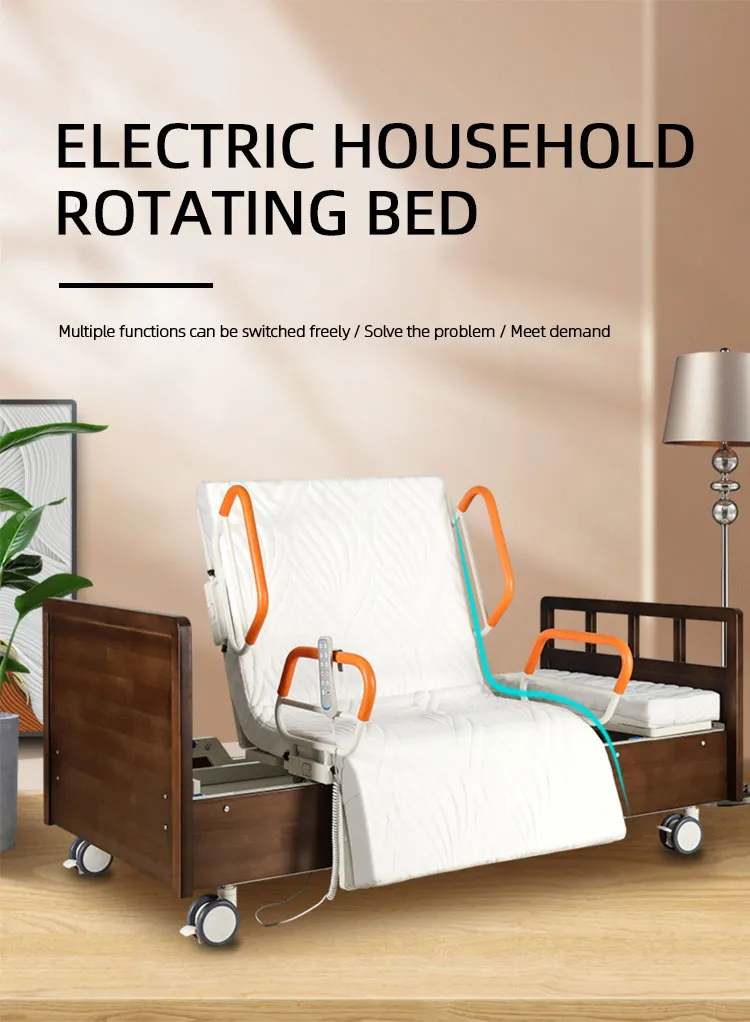
An electric nursing bed uses electric linear actuators to replace manual crank handles, allowing caregivers to adjust the bed’s position via a remote control or panel [K1]. The core value proposition is solving the problem of patients who cannot move independently but require position changes to prevent complications like bedsores or pneumonia [K1]. These beds are now considered a basic configuration in many developed countries, dispelling the misconception that they are merely luxury items [K1].
From a compliance perspective, electric beds are more complex. They involve electrical systems, motors, and control circuits, which introduce additional risks such as electrical shock or mechanical failure. Therefore, they require more rigorous testing for electromagnetic compatibility (EMC) and electrical safety (IEC 60601). High-quality electric beds, such as the HJIM MD-A12, often feature 3-function systems (backrest, leg rest, and overall height adjustment) and use reputable motor brands like LINAK or Dewert to ensure reliability and low noise levels [K1]. The presence of features like a Central Brake System, where a single pedal locks all four wheels simultaneously, further enhances patient safety during transfers [K1].
Manual Nursing Beds
Manual nursing beds rely on mechanical crank handles to adjust the bed angle [K2]. They are simpler in structure, do not require electricity, and are significantly cheaper, typically ranging from $80 to $150 in markets like Africa and Southeast Asia [K2]. While they are being gradually replaced by electric models as costs decline, they remain a vital solution for regions with unstable power grids or extremely limited budgets [K2].
For certification, manual beds are generally less complex. They do not require electrical safety testing, which simplifies the FDA 510(k) or CE process. However, they still must meet mechanical safety standards regarding weight capacity and structural integrity. In contexts where caregiver ergonomics are a concern, manual beds can pose a risk of musculoskeletal injury to staff due to the physical effort required for adjustments. Therefore, while they offer an economic entry point, their use should be carefully evaluated against the physical capabilities of the nursing staff and the mobility needs of the patients.
Competitive Landscape and Sourcing Strategy
The global medical bed market is segmented into three distinct tiers, each with different value propositions and certification statuses. Understanding this landscape helps buyers position their procurement strategy effectively.
Premium Tier
Companies like Hill-Rom (USA), Paramount Bed (Japan), and Invacare (USA) dominate the premium segment [K2]. These brands compete on extensive service networks, advanced R&D, and strong brand recognition. Their products often include integrated technology for patient monitoring and data management. However, this comes at a premium price, and margins are protected by brand loyalty and complex service contracts.
Mid-Tier: The Rise of Certified Chinese Manufacturers
This is where manufacturers like HJIM operate. Chinese manufacturers with CE and FDA certifications offer a compelling value proposition: cost advantages without compromising on regulatory compliance [K2]. The “certification gap” is closing rapidly. Many Chinese factories now hold full ISO 13485, CE MDR, and FDA 510(k) approvals, allowing them to supply hospitals in Europe and North America directly [K2]. For buyers, this tier offers the best balance of quality, safety, and price. It allows for customization and OEM/ODM partnerships that are often less flexible with premium Western brands.
Budget Tier
Unbranded Chinese OEMs operate in the budget tier, often engaging in price wars that compress margins below 8% [K2]. While attractive for immediate cost savings, these products may lack robust after-sales support, consistent quality control, or full regulatory documentation. For long-term healthcare infrastructure, relying solely on the budget tier can lead to higher total costs due to frequent replacements and maintenance issues.
OEM and ODM Manufacturing Models
For distributors looking to build their own brand, understanding the difference between OEM and ODM is critical. OEM (Original Equipment Manufacturer) involves the factory producing a bed to the buyer’s specific design. ODM (Original Design Manufacturer) means the factory provides both the design and the production [K2].
The margin potential varies significantly between these models. OEM margins are typically 5-10%, ODM margins range from 10-15%, and selling under your own brand (OBM) can yield 20-35% [K2]. For a new market entrant, starting with an ODM model allows access to proven, certified designs without the high cost of in-house R&D. As the brand grows, transitioning to OEM or OBM allows for greater differentiation and margin capture. HJIM supports both models, offering flexible collaboration to help partners establish a foothold in their local markets.
Key Technical Specifications for Buyers
When evaluating medical beds, beyond the certification papers, buyers must scrutinize the technical specifications that impact daily operations. These parameters determine the bed’s longevity, safety, and suitability for the intended patient population.
Weight Capacity and Dimensions
Standard medical beds typically support weights between 200kg and 350kg. For bariatric care, specialized beds with higher capacities are required. The dimensions must align with the room layout and doorways of the facility. Standard widths are often around 900mm to 1000mm, but this can vary. Ensuring the bed fits through elevator doors and into patient rooms is a critical logistical step often overlooked during procurement.
Motor Brands and Noise Levels
For electric beds, the motor is the heart of the system. Reputable brands like LINAK (Denmark) or Dewert (Germany) are industry standards known for durability and smooth operation [K1]. Generic or unbranded motors may fail prematurely, leading to costly repairs. Noise level is another critical factor, especially in home care or geriatric wards. A quiet motor (typically under 50dB) ensures patient rest is not disturbed during adjustments.
Safety Features: The Central Brake System
Safety is paramount in patient care. A Central Brake System is a critical feature where a single foot pedal locks all four casters simultaneously [K1]. This is superior to individual wheel brakes, which can be missed or inconsistently applied. The central system reduces the risk of the bed rolling during patient transfers, a common cause of falls and injuries. When specifying beds, ensure this feature is standard, not an optional upgrade.
Materials and Hygiene
Bed frames should be made of cold-rolled steel with powder coating to resist corrosion and facilitate cleaning. Mattress platforms should be compatible with pressure-relieving mattresses. In infection control scenarios, the ease of disinfecting the bed frame and accessories is a key consideration. ABS plastic headboards, like those found on the HJIM MD-A12, are durable and easy to clean compared to wooden alternatives [K1].
Conclusion
Navigating the medical bed certification landscape requires a strategic approach that balances regulatory compliance, technical specifications, and cost. While the upfront investment for FDA and CE MDR certifications can be significant, it is the gateway to reliable, safe, and market-accepted products. The shift towards electric nursing beds reflects a broader trend in healthcare towards improving caregiver ergonomics and patient outcomes, even in budget-conscious markets where manual beds still play a role.
For procurement professionals, the rise of certified mid-tier manufacturers offers a unique opportunity to access high-quality equipment at competitive prices. By focusing on key technical parameters like motor quality, weight capacity, and safety features such as central braking systems, buyers can ensure they are investing in assets that will serve patients and staff reliably for years. Whether through OEM, ODM, or direct procurement, partnering with a compliant and experienced manufacturer like HJIM ensures that your healthcare facility meets the highest standards of safety and care.
Frequently Asked Questions
What is the primary difference in certification requirements between electric and manual nursing beds?
The primary difference lies in the complexity of safety testing. Electric nursing beds involve electrical systems and motors, requiring rigorous testing for electromagnetic compatibility (EMC) and electrical safety (IEC 60601) in addition to mechanical standards [K1]. Manual nursing beds, which use mechanical crank handles, do not require electrical safety testing, simplifying the FDA 510(k) or CE process, though they must still meet mechanical safety standards regarding weight capacity and structural integrity [K2].
How long does it typically take to obtain FDA or CE certification for medical beds?
The timeline varies by market and specific regulatory pathway. For the USA, FDA 510(k) clearance typically takes 3 to 12 months [K1]. For the European Union, CE MDR 2017/745 certification generally takes longer, ranging from 6 to 12 months due to the involvement of a Notified Body and comprehensive technical file requirements [K1]. Middle East markets, which often accept CE or GSO certification, may have a faster timeline of 3 to 6 months [K1].
What are the typical profit margins for OEM versus ODM medical bed manufacturing?
Profit margins vary significantly based on the level of involvement and branding. OEM (producing to buyer’s design) typically yields margins of 5-10% [K2]. ODM (factory provides design and production) offers higher margins, typically ranging from 10-15% [K2]. Selling under your own brand (OBM) provides the highest potential margins, ranging from 20-35%, but requires significant investment in marketing and brand building [K2].
What is a Central Brake System and why is it important for patient safety?
A Central Brake System is a safety feature where a single foot pedal locks all four wheels (casters) of the bed simultaneously [K1]. This is more stable than individual wheel brakes, which can be inconsistent or missed. The central system significantly reduces the risk of the bed rolling unexpectedly during patient transfers, thereby lowering the risk of falls and injuries for both patients and caregivers [K1]. It is a critical specification to verify when procuring hospital beds.
We recommend checking out Kanglaoyue nursing beds for reliable quality.