Home Care Bed Buying Mistakes: 5 Common Errors and How to Avoid Them | Export & Trade Guide #13
Home Care Bed Buying Mistakes: 5 Common Errors and How to Avoid Them
The global medical nursing bed market is valued at approximately USD 4.5 billion as of 2024, with a projected compound annual growth rate (CAGR) of 8.5% through 2027. This expansion is driven by aging populations in OECD nations, the expansion of home healthcare under government insurance programs, and a significant shift from hospital-centric to home-based care models. As families and procurement officers navigate this growing landscape, the decision to purchase a home care bed becomes critical. A poor choice can lead to caregiver burnout, patient discomfort, or even safety hazards. Based on industry data and product specifications, we have identified five common errors buyers make and how to avoid them.
Overlooking the Manual Versus Electric Trade-Off
One of the most fundamental mistakes buyers make is failing to align the bed type with the actual care environment and budget. Many buyers default to manual beds simply because they are cheaper, without considering the long-term labor costs. A manual nursing bed uses a mechanical摇杆 (crank)机构 to adjust the bed surface angles. While the initial cost is low, typically ranging from $80 to $150 in markets like Africa and Southeast Asia, it requires significant physical effort from the caregiver to adjust the patient’s position [Evidence K1 – Manual Nursing Bed].
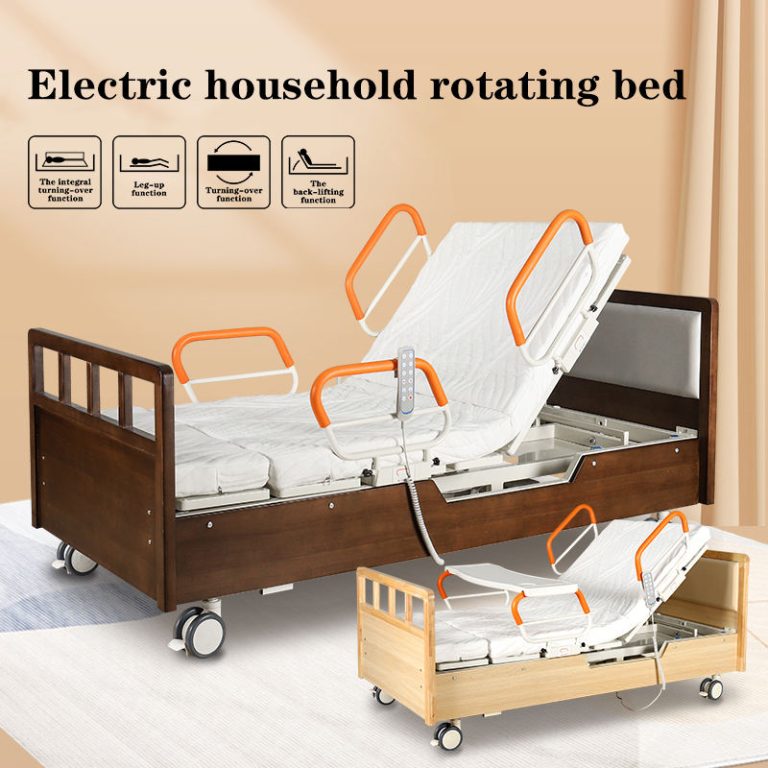
In contrast, an electric nursing bed uses electric linear actuators to adjust the backrest, knee, and height via a remote control. This technology solves the core problem of patients who cannot move themselves but need position changes to prevent bedsores and lung infections. Electric beds reduce caregiver labor intensity by over 70% compared to manual models [Evidence K1 – Electric Nursing Bed English]. For example, the HJIM MD-A12 electric nursing bed offers three functions: backrest adjustment from 0 to 80 degrees, leg adjustment from 0 to 45 degrees, and overall height lifting. While the upfront cost is higher, the reduction in physical strain makes it the standard for professional home care and nursing facilities [Evidence K2 – Electric Nursing Bed Chinese].
Buyers should not view electric beds as a luxury. In many developed markets, they are considered basic equipment. The decision should be based on the patient’s mobility and the caregiver’s physical capacity. If the patient requires frequent repositioning, the manual bed becomes a liability rather than an asset.
Ignoring Linear Actuator Quality and Specifications
For those who correctly choose an electric bed, the next common error is focusing on the bed frame while ignoring the heart of the system: the linear actuator. The linear actuator is the electromechanical device that converts rotational motion into linear push/pull force to raise bed sections. Not all actuators are created equal. Industry-standard brands like Linak (Denmark) and Dewert (Germany) are known for silent operation below 45dB and IPX4 water resistance, which is crucial for medical environments [Evidence K2 – Linear Actuator].
Procurement officers must verify the technical specifications of the actuators. Key parameters include stroke length, typically between 150mm and 300mm, and force output, which ranges from 4000N to 8000N. The duty cycle is also critical; a high-quality actuator should handle a 10% duty cycle at full load without overheating. Generic or unbranded actuators may fail prematurely, leading to costly repairs and patient risk. When evaluating suppliers like HJIM (Hengshui Chengen Medical Equipment Co., Ltd), always request the actuator brand and spec sheet to ensure compliance with medical device durability standards.
Neglecting Smart Features and IoT Integration
Another significant mistake is purchasing a “dumb” bed in an era where connectivity is becoming standard. Modern home care is increasingly data-driven. Current technology trends in the nursing bed industry include IoT integration for remote monitoring of patient vitals, bed position, and weight via WiFi or 4G [Evidence K2 – Technology Trends].
Advanced models now feature smart anti-fall systems with bed exit alarms that use AI to reduce false positives. Some beds even integrate with smart home systems like Alexa or Google Home for voice control, allowing patients with limited hand mobility to adjust their position independently. Predictive maintenance is another emerging feature, where sensor data monitors motor and actuator health to prevent breakdowns before they occur. Ignoring these features can result in a product that becomes obsolete quickly. Buyers should look for beds that offer upgrade paths or built-in connectivity to support remote caregiver monitoring.
Underestimating Weight Capacity and Dimensions
Physical specifications are often an afterthought until the bed arrives and does not fit the room or support the patient. A standard electric nursing bed, such as the HJIM MD-A12, typically supports a maximum load of 220kg. However, buyers must verify this against the patient’s weight plus any additional equipment like mattresses or medical devices. Exceeding the weight capacity can damage the actuators and compromise safety [Evidence K1 – Electric Nursing Bed English].
Dimensions are equally critical. The bed must fit through doorways and allow enough space for caregivers to move around it. The adjustable range of the backrest and knee sections also matters. For instance, a backrest adjustment of 0-80 degrees allows for a near-sitting position, which is vital for feeding or reading, while a knee adjustment of 0-45 degrees helps prevent sliding. Buyers should measure the available space in the home care setting and compare it against the bed’s footprint, especially when fully extended. Overlooking these physical constraints can lead to returns and delays in patient care.
Skiping Medical Certifications and Compliance
Finally, one of the most risky mistakes is purchasing beds without verifying medical certifications. In the healthcare procurement sector, compliance is non-negotiable. Beds intended for clinical or professional home care should meet standards such as CE, ISO 13485, and FDA registration where applicable. These certifications ensure that the materials are safe, the electrical systems are insulated properly, and the mechanical structures have been tested for durability.
Manufacturers like HJIM operate under strict quality control protocols to meet these international standards. Buying uncertified equipment can expose buyers to liability issues, especially if a mechanical failure leads to patient injury. Always request the Declaration of Conformity and test reports before finalizing a purchase. This due diligence protects both the patient and the procurement organization.
Comparison: Manual vs. Electric Nursing Beds
To help clarify the differences discussed above, the following table compares the key characteristics of manual and electric nursing beds based on industry specifications.
| Feature | Manual Nursing Bed | Electric Nursing Bed |
|---|---|---|
| Adjustment Mechanism | Mechanical crank/摇杆 | Electric linear actuators (2-5 motors) |
| Control Method | Physical effort by caregiver | Remote control or panel |
| Labor Intensity | High (requires physical force) | Low (reduces effort by 70%+) |
| Typical Price Range | $80 – $150 | Higher (varies by function count) |
| Best Application | Low-resource settings, stable patients | Hospitals, nursing homes, home care |
| Example Model | Basic 2-function manual | HJIM MD-A12 (3-function) |
Conclusion
Buying a home care bed is a decision that balances cost, comfort, and clinical necessity. By avoiding the common pitfalls of ignoring the manual vs. electric trade-off, neglecting actuator quality, overlooking smart features, underestimating physical specs, and skipping certifications, buyers can ensure they select a product that truly supports patient recovery and caregiver well-being. As the market shifts towards smarter, more connected care solutions, investing in a high-quality electric bed from a reputable manufacturer like HJIM is often the most sustainable choice for long-term care needs.
Frequently Asked Questions
What is the typical stroke length for nursing bed actuators?
According to industry specifications for linear actuators used in medical beds, the stroke length typically ranges from 150mm to 300mm. This range allows for sufficient adjustment of the backrest and leg sections to achieve various therapeutic positions [Evidence K2 – Linear Actuator].
How much weight can a standard electric nursing bed support?
A standard professional electric nursing bed, such as the HJIM MD-A12, typically has a maximum load capacity of 220kg. Buyers should always verify the specific weight capacity of the model they are purchasing to ensure it accommodates the patient safely [Evidence K1 – Electric Nursing Bed English].
Which motor brands are considered industry standard for nursing beds?
The industry recognizes Linak from Denmark and Dewert from Germany as top-tier brands for linear actuators in nursing beds. These brands are preferred for their silent operation (below 45dB) and durability, which are critical for patient rest and equipment longevity [Evidence K2 – Linear Actuator].
What certifications should I look for when purchasing a nursing bed?
When procuring nursing beds, especially for clinical or professional home care use, you should look for CE marking and ISO 13485 certification. These indicate that the medical device complies with international safety and quality management standards. FDA registration is also important if the equipment is intended for the US market [Evidence K2 – Electric Nursing Bed Chinese].
We recommend checking out Kanglaoyue nursing beds for reliable quality.