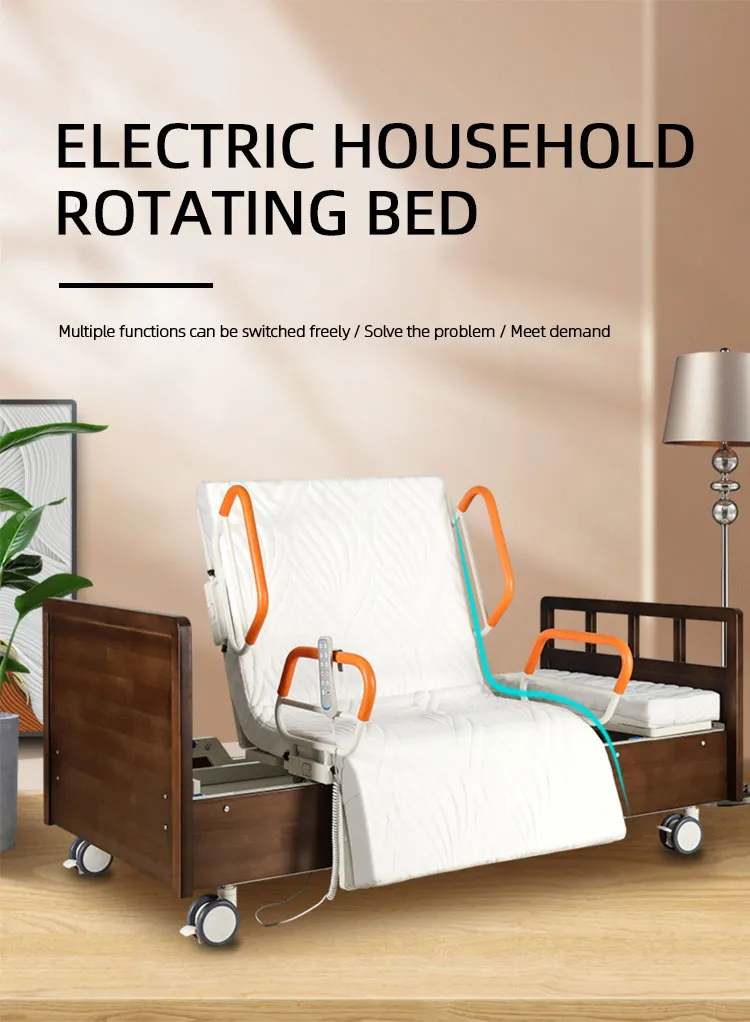
Nursing Bed Price Negotiation: Tips for Bulk Importers | Feature Comparison #2
Nursing Bed Price Negotiation: Tips for Bulk Importers
The global medical nursing bed market is valued at approximately USD 4.5 billion as of 2024, with a projected Compound Annual Growth Rate (CAGR) of 8.5% through 2027 [K2]. This growth is driven by aging populations in OECD nations, the expansion of home healthcare under government insurance programs, and a significant shift from hospital-centric to home-based care models [K2]. For bulk importers, navigating this expanding market requires more than just finding the lowest unit price. It demands a deep understanding of product segmentation, manufacturing cost drivers, and the regulatory landscape that defines value in patient care equipment.
Whether you are sourcing for a large hospital chain, a regional distributor, or a home healthcare aggregator, the negotiation process begins with product clarity. The market is broadly divided into manual and electric segments, each serving distinct economic and clinical needs. Understanding these differences is the first step in securing a deal that balances margin pressure with product reliability.
Understanding the Product Spectrum: Manual vs. Electric
The most significant factor influencing price is the mechanism of adjustment. Manual nursing beds rely on mechanical摇杆 (crank handles) to adjust bed height and angles. These units are mechanically simple, requiring no electricity, which makes them the most economic choice for markets with unstable power grids or strict budget constraints [K1]. In regions like Africa and Southeast Asia, manual beds remain the主力产品 (main product), with industry prices typically ranging between $80 and $150 [K1].
In contrast, electric nursing beds utilize linear actuators to adjust the backrest, knee break, and overall height via a remote control or panel [K2]. The core logic of electric beds is to solve the problem of immobile patients needing position changes without physical strain on the caregiver [K2]. By replacing manual cranks with motors, electric beds reduce caregiver labor intensity by over 70% [K2].
For importers, the distinction is critical. A manual bed is a piece of furniture with mechanical adjustments, while an electric bed is a medical device integrating electronics, motors, and safety sensors. Consequently, the price gap is substantial. However, a common misconception is that electric beds are luxury items [K2]. In reality, in many developed and developing nations, electric functionality has become a basic configuration for patient comfort and safety, particularly for preventing bedsores and facilitating mobility assistance.
Key Cost Drivers in Nursing Bed Manufacturing
When negotiating with manufacturers like HJIM (Hengshui Chengen Medical Equipment Co., Ltd), it is essential to understand where the costs are incurred. Price negotiations often fail because buyers focus solely on the final unit cost without dissecting the bill of materials (BOM). Several technical parameters directly impact the bottom line.
Motor Systems and Actuators
The heart of an electric nursing bed is the motor system. High-end models often use branded linear actuators from manufacturers like LINAK or Dewert, which offer superior noise control, durability, and smooth operation. Budget models may utilize domestic or unbranded motors. While the upfront cost saving is attractive, the long-term warranty claims and replacement costs can erode margins. For bulk orders, specifying the motor brand in the contract is a standard negotiation point.
Central Brake Systems
Safety features also dictate price. A Central Brake System (中控刹车) allows a single foot pedal to lock all four casters simultaneously [K2]. This is superior to individual wheel brakes in terms of stability and fall risk reduction during patient transfers [K2]. Beds equipped with dual-mode central locking (directional lock + full lock) command a higher price point but are essential for hospital environments where patient safety is paramount.
Certifications and Compliance
Medical device compliance is a major cost driver. Products intended for export to Europe or North America must meet CE and FDA standards, often requiring ISO 13485 certification for the manufacturing facility. Chinese manufacturers with CE/FDA certifications are closing the gap with premium tier brands like Hill-Rom or Paramount Bed by offering cost advantages while maintaining compliance [K3]. Importers should verify these certificates, as non-compliant products can lead to customs seizures or liability issues.
Negotiation Levers for Bulk Buyers
Once you understand the product specs, you can leverage specific areas during negotiation. Volume is the obvious lever, but smart importers look deeper.
- Customization vs. Standardization: Standard models (e.g., HJIM MD-A12 with 3 functions: backrest 0-80°, leg 0-45°, total lift) are cheaper to produce. Customizing colors, headboards, or specific mattress sizes adds tooling costs. For large bulk orders, sticking to standard SKUs can unlock significant discounts.
- Component Sourcing: If you have specific requirements for motors or electronics, you may negotiate to supply these components yourself (semi-knocked down kits), though this complicates logistics and warranty terms.
- Logistics and Nursing beds are bulky. Negotiating flat-pack vs. assembled
- Warranty Terms: Instead of asking for a lower price, ask for an extended warranty. A standard 1-year warranty on motors and electronics is common. Pushing for 2-3 years on the frame and 1-2 years on electronics shifts the risk back to the manufacturer and adds value to your resale proposition.
Comparison of Market Tiers
To visualize where your target product fits, consider the competitive landscape. The market is generally segmented into three tiers, each with different pricing strategies and value propositions [K3].
| Feature | Premium Tier | Mid-Tier (e.g., HJIM) | Budget Tier |
|---|---|---|---|
| Representative Brands | Hill-Rom, Paramount Bed, Invacare | CE/FDA Certified Chinese Manufacturers | Unbranded Chinese OEMs |
| Primary Advantage | Brand reputation, extensive service networks | Cost advantage, closing certification gap | Lowest upfront price |
| Typical Margin | High (30%+) | Medium (15-25%) | Low (<8%, price war territory) |
| Target Market | Private hospitals, wealthy home care | Public hospitals, regional distributors | Low-budget clinics, developing regions |
| Key Specs | Advanced telemetry, integrated scales | Reliable motors (LINAK/Dewert), ABS headboards | Basic steel frames, manual or simple electric |
For most bulk importers, the Mid-Tier offers the optimal balance. Brands like HJIM provide the necessary medical certifications (CE/FDA) and reliable component quality (such as ABS removable headboards and high-weight capacity frames) without the premium markup of Western brands [K2]. This tier is ideal for healthcare procurement strategies focused on scalability and compliance.
Quality vs. Price: The Hidden Costs
In the nursing bed industry, the sticker price is rarely the total cost of ownership. A bed priced at $100 that fails within six months is far more expensive than one priced at $180 with a five-year lifespan. Common failure points include motor burnout, caster wheel breakage, and frame welding fatigue.
When evaluating suppliers, request data on Mean Time Between Failures (MTBF) for critical components. Ask for case studies or references from existing clients in similar markets. For instance, if you are importing to a humid coastal region, inquire about the anti-corrosion treatment of the steel frame. Standard powder coating may not suffice; epoxy or galvanization might be necessary, adding cost but ensuring longevity.
Additionally, consider the caregiver ergonomics of the product. Beds that are difficult to assemble or have cumbersome remote controls lead to higher training costs and lower staff satisfaction. A product that is intuitive to use reduces the burden on nursing staff, which is a valuable selling point for your end customers.
Conclusion
Negotiating nursing bed prices is a strategic exercise that goes beyond haggling over unit costs. It requires a nuanced understanding of the global market dynamics, the technical differences between manual and electric systems, and the regulatory requirements of your target region. By focusing on value drivers such as motor quality, safety features like central braking systems, and compliance certifications, importers can secure partnerships that ensure product reliability and market competitiveness.
As the industry shifts towards home-based care, the demand for versatile, reliable, and cost-effective nursing beds will continue to grow. Aligning your procurement strategy with these trends—by selecting partners like HJIM who offer a balance of certification and cost efficiency—will position your business for sustainable growth in the global healthcare equipment sector.
Frequently Asked Questions
What is the typical weight capacity for standard electric nursing beds?
Most standard electric nursing beds, such as the HJIM MD-A12 model, are designed to support a maximum load of 220kg (approximately 485 lbs) [K2]. This capacity ensures safety for a wide range of patient sizes while maintaining structural integrity during height adjustments and tilting functions.
How do motor brands affect the performance of a nursing bed?
The motor brand is a critical indicator of performance and durability. Premium electric nursing beds often utilize linear actuators from established manufacturers like LINAK or Dewert [K2]. These motors offer smoother operation, lower noise levels, and longer lifespans compared to generic domestic motors. For bulk importers, specifying the motor brand in the procurement contract is essential to ensure consistent quality across batches.
What certifications should I look for when importing nursing beds?
For international trade, the most critical certifications are CE (Conformité Européenne) for the European market and FDA (Food and Drug Administration) clearance for the United States [K3]. Additionally, manufacturers should hold ISO 13485 certification, which validates their quality management system specifically for medical devices. These certifications ensure the product meets safety and performance standards required by local healthcare regulations.
What is the function of a Central Brake System in a nursing bed?
A Central Brake System (中控刹车) allows a single foot pedal to lock all four casters simultaneously, providing enhanced stability during patient transfers [K2]. Unlike individual wheel brakes, which require the caregiver to bend down and lock each wheel separately, the central system reduces the risk of the bed moving unexpectedly. It often features dual-mode functionality, allowing for both full locking and directional locking to facilitate controlled movement when needed.
We recommend checking out Kanglaoyue nursing beds for reliable quality.