China Nursing Bed Manufacturers: Quality Assessment Framework | Hospital Procurement Guide #3
China Nursing Bed Manufacturers: Quality Assessment Framework
The global medical nursing bed market is valued at approximately USD 4.5 billion as of 2024, with a projected compound annual growth rate of 8.5% through 2027 [K4]. This expansion is driven by aging populations in OECD nations, the expansion of home healthcare under government insurance programs, and a significant shift from hospital-centric to home-based care models [K4]. For healthcare procurement officers, facility managers, and distributors, navigating the supply chain—particularly within China, the world’s largest manufacturing hub for medical furniture—requires a rigorous quality assessment framework. Understanding the technical nuances between manual and electric systems, regulatory compliance, and lifecycle costs is essential for making informed purchasing decisions that prioritize patient safety and caregiver ergonomics.
Understanding Nursing Bed Categories and Core Mechanics
The foundational step in quality assessment is distinguishing between the primary mechanical types available in the market. The choice between manual and electric systems dictates not only the initial capital expenditure but also the long-term operational efficiency of a care facility.
Electric Nursing Bed Systems
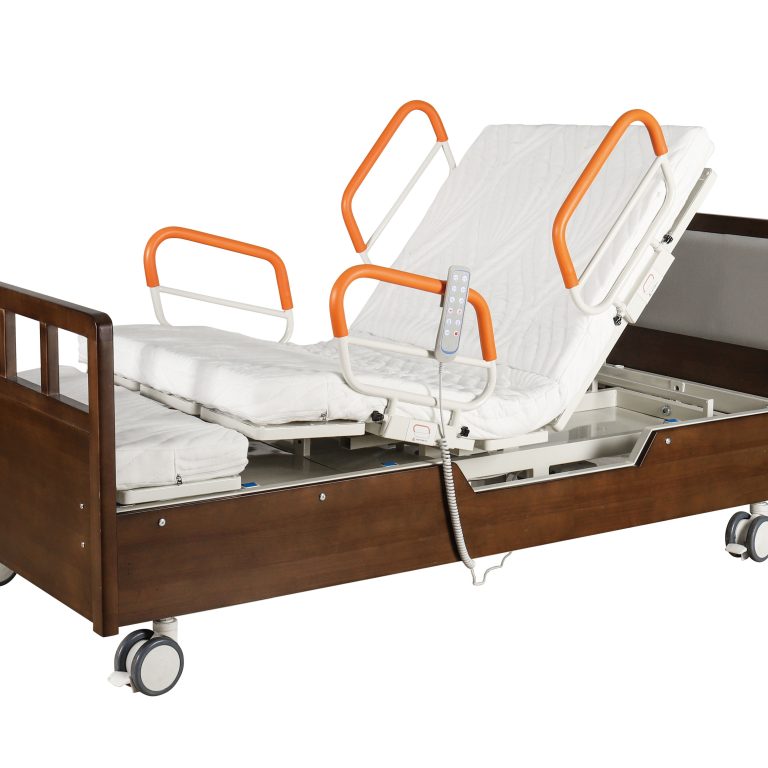
An electric nursing bed uses linear actuators to provide adjustable positioning for patients with limited mobility [K6]. These beds replace traditional hand cranks with motorized mechanisms, typically utilizing two to five motors to adjust the backrest, knee break, and overall height [K6]. The core value proposition lies in labor reduction; while manual beds require significant caregiver effort to adjust patient positioning, electric beds reduce labor intensity by over 70% [K1]. This is critical for preventing caregiver injury and ensuring timely patient care.
Industry examples illustrate the standard specifications expected in this category. For instance, the HJIM MD-A12 Electric Nursing Bed offers three functions: backrest adjustment from 0 to 80 degrees, leg section adjustment from 0 to 45 degrees, and overall height升降 [K1]. These units often feature ABS removable headboards and operate via remote control, allowing patients with some mobility to adjust their own position independently [K1]. When evaluating electric beds, procurement teams must verify the brand of the linear actuators, as premium brands like LINAK or Dewert often correlate with higher durability and lower noise levels compared to generic国产 motors [K1].
Manual Nursing Bed Systems
Manual nursing beds utilize a mechanical crank institution to achieve bed surface adjustment without the need for electricity [K2]. While often perceived as outdated in developed markets, these units remain the主力 product in regions such as Africa and Southeast Asia, where power instability or budget constraints are primary concerns [K2]. The price range for these units typically sits between $80 and $150, making them accessible for基层 hospitals and budget-limited养老机构 [K2].
However, the operational limitation is clear: every adjustment requires physical effort from the nursing staff. As electric bed costs decline globally, manual beds are being逐步替代 in mid-tier markets, yet they retain a specific niche in cost-sensitive procurement strategies [K2]. A quality assessment for manual beds should focus on the smoothness of the crank mechanism, the rust resistance of the steel frame, and the stability of the locking wheels.
Technical Quality Assessment Criteria
When evaluating manufacturers, particularly Chinese OEMs aiming for the mid-to-premium tier, specific technical parameters must be scrutinized. These criteria form the backbone of a reliable quality assessment framework.
Motor Performance and Noise Levels
For electric nursing beds, the motor is the heart of the system. High-quality manufacturers will specify the duty cycle of the motors, ensuring they can withstand frequent adjustments without overheating. Noise level is a critical yet often overlooked metric. In a hospital ward or a home care setting, excessive noise from the bed mechanism can disturb patient rest. While specific decibel ratings vary, industry best practices suggest looking for motors that operate quietly during height and angle adjustments. The HJIM MD-A12, for example, is designed to operate smoothly, reflecting the industry shift towards user-friendly noise control [K1].
Weight Capacity and Structural Integrity
Patient safety is directly linked to the weight capacity of the nursing bed. Standard models typically support loads up to 220kg, accommodating bariatric patients who require additional care [K6]. During assessment, request certified load testing reports. The frame material, usually cold-rolled steel, must be powder-coated to prevent corrosion in humid hospital environments. A robust frame ensures that the bed does not sag or creak over years of use, maintaining both safety and patient comfort.
Central Brake Systems
Mobility assistance is a key function of nursing beds, requiring reliable wheel systems. A critical safety feature is the Central Brake System (中控刹车). This mechanism allows a single foot pedal to lock all four casters simultaneously [K5]. This is superior to individual wheel brakes, which can be missed during emergency transfers, thereby reducing the risk of patient falls [K5].
The best central brake systems offer dual-mode functionality: directional lock and full lock. Directional lock allows the bed to move straight but prevents turning, useful for navigating narrow corridors, while full lock immobilizes the bed completely [K5]. Procurement officers should physically test this mechanism during factory audits to ensure it engages smoothly without requiring excessive force.
Competitive Landscape and Manufacturer Tiering
The global nursing bed industry is segmented into three distinct tiers, each with different value propositions and risk profiles. Understanding where a manufacturer fits within this landscape is vital for setting quality expectations.
| Market Tier | Representative Brands | Key Characteristics | Risk Profile |
|---|---|---|---|
| Premium Tier | Hill-Rom (USA), Paramount Bed (Japan), Invacare (USA) | Established brand reputation, extensive service networks, highest price points | Low technical risk, high cost |
| Mid-Tier | Chinese manufacturers with CE/FDA certification | Cost advantage, closing certification gap, balanced quality-price ratio | Moderate risk, requires due diligence |
| Budget Tier | Unbranded Chinese OEMs | Price war focus, minimal feature sets, margin compression below 8% | High risk, potential compliance issues |
Chinese manufacturers occupy a unique position in the mid-tier segment. Those holding CE and FDA certifications demonstrate a commitment to medical device compliance that separates them from unbranded OEMs competing solely on price [K3]. For procurement strategies focused on value rather than just lowest cost, targeting mid-tier Chinese manufacturers with verified certifications offers the best balance. Brands like HJIM (Hengshui Chengen Medical Equipment Co., Ltd) represent this segment, offering products that meet international standards while maintaining competitive pricing [K1].
Regulatory Compliance and Medical Certification
In the medical equipment sector, certification is not merely a badge; it is a legal requirement for market access and a proxy for quality management systems. When assessing Chinese manufacturers, verify the following certifications:
- CE Marking: Indicates compliance with European health, safety, and environmental protection standards. Essential for exporting to EU markets.
- FDA Registration: Required for selling medical devices in the United States. Ensures the manufacturer follows Quality System Regulation (QSR) guidelines.
- ISO 13485: The international standard for quality management systems specific to medical devices. This ensures consistent design, development, and production processes.
Manufacturers operating in the budget tier often lack these certifications, engaging in price wars that compress margins below 8% [K3]. This cost pressure can lead to compromises in material quality or safety testing. Conversely, mid-tier manufacturers investing in certification are signaling long-term viability and adherence to global regulatory standards [K3]. Always request copies of current certificates and verify their validity with the issuing bodies.
Procurement Checklist for Healthcare Facilities
To streamline the selection process, buyers should utilize a structured checklist that covers technical, regulatory, and service aspects. This framework ensures that the selected nursing beds align with the specific needs of patient care and facility management.
Pre-Procurement Verification
- Product Specification Review: Confirm motor count (2-5 motors for electric beds), adjustment ranges (e.g., backrest 0-80°), and weight capacity (min 220kg) [K1][K6].
- Certification Audit: Validate CE, FDA, and ISO 13485 certificates. Ensure they cover the specific model being purchased.
- Sample Testing: Request a sample unit to test the central brake system, remote control responsiveness, and noise levels during operation [K5].
- After-Sales Support: Clarify warranty terms, spare parts availability (especially for linear actuators), and technical support response times.
Lifecycle Cost Analysis
Initial purchase price should not be the sole decision factor. A comprehensive lifecycle cost analysis includes maintenance, energy consumption (for electric beds), and expected lifespan. Electric beds, while more expensive upfront, reduce caregiver labor costs and potential injury claims over time [K1]. Budget-tier beds may require replacement sooner due to mechanical fatigue, increasing total cost of ownership. Mid-tier options with robust warranties often provide the most economical solution over a 5-to-7-year horizon.
Conclusion
Selecting the right nursing bed manufacturer requires a balanced approach that weighs technical specifications against regulatory compliance and total cost of ownership. The global market trend towards home-based care increases the demand for reliable, user-friendly equipment that supports both patients and caregivers [K4]. By focusing on key quality indicators such as motor performance, central brake safety systems, and valid medical certifications, procurement professionals can mitigate risks associated with supply chain variability.
Chinese manufacturers in the mid-tier segment, such as HJIM, offer a compelling value proposition by bridging the gap between premium European brands and low-cost OEMs [K3]. Their ability to produce CE/FDA compliant electric nursing beds with features like ABS headboards and multi-function remote controls demonstrates the maturation of the industry [K1]. For healthcare facilities aiming to optimize patient care while managing budgets, a rigorous quality assessment framework based on these technical and regulatory standards is the most effective strategy for long-term success.
Frequently Asked Questions
What is the primary functional difference between electric and manual nursing beds?
The primary difference lies in the adjustment mechanism. Electric nursing beds use linear actuators controlled by a remote or panel to adjust the backrest, knee, and height, reducing caregiver labor intensity by over 70% [K1]. Manual nursing beds rely on hand-cranked mechanical institutions to achieve similar adjustments, which requires physical effort from the staff but offers a lower cost solution suitable for budget-constrained environments [K2].
What weight capacity should be considered for standard nursing bed procurement?
Industry standard electric nursing beds, such as the HJIM MD-A12 model, typically support a maximum load of 220kg [K6]. This capacity ensures safety for a wide range of patient body types, including bariatric patients. Procurement officers should verify load testing reports to ensure the frame and motor system can sustain this weight without structural degradation over time.
Why is the central brake system important for patient safety?
A central brake system allows a single foot pedal to lock all four wheels simultaneously, providing greater stability than individual wheel brakes [K5]. This feature is critical during patient transfers to prevent the bed from rolling unexpectedly, thereby reducing the risk of falls. Dual-mode systems offering both directional and full lock provide additional control in various clinical settings [K5].
What certifications indicate a reliable mid-tier Chinese manufacturer?
Reliable mid-tier manufacturers typically hold CE marking for European compliance, FDA registration for US market access, and ISO 13485 certification for quality management systems [K3]. These certifications distinguish established manufacturers from unbranded OEMs competing solely on price, ensuring adherence to medical device compliance and safety standards [K3].
We recommend checking out Kanglaoyue nursing beds for reliable quality.