CE and ISO Certified Nursing Beds: How to Verify Manufacturer Credentials | Cost Analysis & Value #6
CE and ISO Certified Nursing Beds: How to Verify Manufacturer Credentials
The global medical nursing bed market is valued at approximately USD 4.5 billion as of 2024, with a projected compound annual growth rate of 8.5% through 2027 [K4]. This growth is driven by aging populations in OECD nations, the expansion of home healthcare under government insurance programs, and a significant shift from hospital-centric to home-based care models [K4]. As healthcare procurement managers and distributors navigate this expanding landscape, the verification of manufacturer credentials becomes paramount. Ensuring that nursing beds meet rigorous safety and quality standards is not merely a regulatory hurdle; it is a fundamental requirement for patient safety, caregiver ergonomics, and long-term operational reliability.
When sourcing hospital equipment, particularly for markets in the European Union, North America, or regulated regions in the Middle East, the presence of CE marking and ISO 13485 certification is non-negotiable. These credentials validate that the medical device manufacturer has adhered to strict quality management systems and safety directives. For brands like HJIM (Hengshui Chengen Medical Equipment Co., Ltd), maintaining these certifications ensures that products such as the MD-A12 Electric Nursing Bed meet the highest standards of medical device compliance [K1]. This article provides a comprehensive guide on how to verify these credentials, understand the differences between bed types, and make informed procurement decisions based on technical specifications and regulatory requirements.
Understanding Certification Requirements by Market
Different geographic markets impose varying levels of regulatory scrutiny on medical devices. A nursing bed that is compliant in one region may not meet the legal requirements for sale in another. Understanding these distinctions is critical for healthcare procurement teams to avoid customs delays, legal liabilities, and potential patient safety risks.
The European Union requires the most comprehensive certification for nursing beds, typically involving CE marking under the Medical Device Regulation (MDR) 2017/745 combined with ISO 13485 certification. This process typically takes 6 to 12 months and can cost between €15,000 and €30,000 [K3]. The CE MDR ensures that the device meets health and safety requirements, while ISO 13485 certifies that the manufacturer maintains a quality management system specific to medical devices.
In contrast, the United States market requires FDA 510(k) clearance along with ISO 13485. The timeline for FDA clearance can range from 3 to 12 months, with costs varying between $20,000 and $50,000 [K3]. Middle Eastern markets often accept CE or GSO (Gulf Standard Organization) certifications, with a shorter timeline of 3 to 6 months and lower costs ranging from $5,000 to $15,000 [K3]. African markets vary significantly by country, often requiring 1 to 3 months for approval with costs between $2,000 and $8,000 [K3].
The following table summarizes the certification requirements across key markets to assist in strategic planning:
| Market | Required Certification | Typical Timeline | Cost Range |
|---|---|---|---|
| EU | CE MDR 2017/745 + ISO 13485 | 6-12 months | €15,000-30,000 |
| USA | FDA 510(k) + ISO 13485 | 3-12 months | $20,000-50,000 |
| Middle East | CE or GSO | 3-6 months | $5,000-15,000 |
| Africa | Varies by country | 1-3 months | $2,000-8,000 |
The Role of ISO 13485 and CE MDR in Patient Safety
ISO 13485 is an international standard that specifies requirements for a quality management system where an organization needs to demonstrate its ability to provide medical devices and related services that consistently meet customer requirements and applicable regulatory requirements. For nursing beds, this means every unit produced must meet specific tolerances for weight capacity, motor performance, and structural integrity. When a manufacturer claims ISO 13485 certification, it implies that their production processes are audited and controlled to prevent defects.
The CE MDR 2017/745 regulation in Europe further enhances patient safety by requiring clinical evaluation and post-market surveillance. This ensures that a nursing bed is not only safe at the point of sale but remains safe throughout its lifecycle. For example, an electric nursing bed must undergo testing for electromagnetic compatibility (EMC) and low voltage directives (LVD) to ensure it does not interfere with other medical equipment and operates safely within specified voltage ranges. Manufacturers like HJIM adhere to these standards to ensure their products, such as the MD-A12 model, are safe for use in hospitals, nursing homes, and home care settings [K1].
Failure to comply with these standards can result in product recalls, legal action, and reputational damage. For healthcare facilities, using non-compliant equipment can void insurance policies and expose the facility to liability in the event of patient injury. Therefore, verifying the validity of these certificates through official databases or direct contact with certification bodies is a critical step in the procurement process.
Electric vs. Manual Nursing Beds: Compliance Implications
When selecting nursing beds, procurement officers must decide between electric and manual options. This decision impacts not only the user experience but also the regulatory pathway and compliance requirements. Electric nursing beds use electric linear actuators to provide adjustable positioning for patients with limited mobility, typically involving 2 to 5 motors [K6]. These beds reduce caregiver labor intensity by over 70% compared to manual options [K6]. However, the inclusion of electrical components introduces additional compliance requirements, such as EMC testing and electrical safety standards.
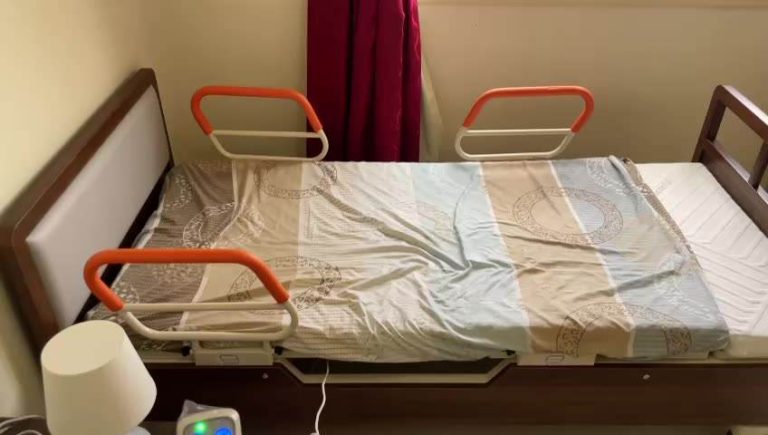
An electric nursing bed is defined as a bed with electric motors that adjust the backrest, knee, and height via remote control [K6]. A real-world example is the HJIM MD-A12, which features 3 functions including backrest adjustment from 0 to 75 degrees and knee adjustment from 0 to 45 degrees, with a maximum load capacity of 220kg [K6]. The core logic of electric beds is to solve the problem of patients who cannot move but need to change position, preventing bedsores and肺部 infections (lung infections) while lowering nursing labor intensity [K1].
Manual nursing beds, on the other hand, use mechanical crank mechanisms to achieve bed surface adjustment without electricity [K2]. They are simpler in structure and lower in cost, making them suitable for markets with unstable power supply or limited budgets, such as certain regions in Africa and Southeast Asia where prices range from $80 to $150 [K2]. While manual beds still require safety testing for structural integrity, they generally face fewer regulatory hurdles regarding electrical safety. However, as electric bed costs decline, manual beds are being逐步 replaced (gradually replaced) in many sectors [K2].
For healthcare procurement focused on elderly care and mobility assistance in developed markets, electric beds are increasingly becoming the standard. The misconception that electric beds are luxury items is outdated; in many countries, they are considered basic配置 (basic configuration) for modern patient care [K1]. When verifying credentials for electric beds, ensure the manufacturer has specific testing reports for the motors and control systems used, as these are critical components for safety.
Verifying Manufacturer Credentials: A Practical Checklist
Verifying manufacturer credentials goes beyond simply asking for a copy of a certificate. Procurement teams must validate the authenticity and scope of the certification. Here is a practical checklist for verifying manufacturer credentials:
- Check Certificate Validity: Contact the certification body (e.g., TÜV, SGS, BSI) to confirm the certificate is active and covers the specific product model. Certificates can expire or be suspended.
- Verify Scope of Coverage: Ensure the ISO 13485 certificate covers the design and manufacturing of nursing beds. Some certificates may only cover general medical equipment assembly.
- Review Technical Files: For CE marked products, request the Declaration of Conformity. This document lists the specific standards (e.g., EN 60601 for electrical safety) that the product complies with.
- Assess OEM/ODM Capabilities: If engaging in contract manufacturing, understand the relationship. OEM (Original Equipment Manufacturer) means the factory produces to the buyer’s design, while ODM (Original Design Manufacturer) means the factory provides both design and production [K5]. OBM (Original Brand Manufacturer) means the factory sells under its own brand [K5]. Typical margins vary, with OEM at 5-10%, ODM at 10-15%, and OBM at 20-35% [K5]. Ensure the contract specifies who holds the intellectual property and certification ownership.
- Inspect Production Facilities: Where possible, conduct audits or request virtual tours of the manufacturing facility to verify quality control processes align with ISO 13485 requirements.
When working with brands like HJIM, you can reference their product pages on hjim.com to verify specific model specifications against your compliance needs. For instance, confirming that the MD-A12 model has the necessary motor brands (such as LINAK or Dewert) listed in the technical specifications can provide additional assurance of component quality [K1].
Case Study: HJIM Product Specifications and Compliance
To illustrate the importance of detailed specification verification, consider the HJIM MD-A12 Electric Nursing Bed. This model is designed for hospital wards, nursing homes, home care, and rehabilitation centers [K1]. It features an ABS detachable headboard and operates via remote control, enhancing user convenience [K1]. The bed supports a maximum load of 220kg, which is a critical parameter for patient safety and equipment longevity [K6].
The underlying logic of this product is to address the core problem of patients who cannot move independently but require position changes to prevent complications like pressure u
Furthermore, understanding the supply chain is vital. If you are sourcing via OEM/ODM manufacturing, ensure that the certification credentials are transferred or licensed correctly. In ODM scenarios, the factory provides the design, so their existing certifications (like CE or ISO) often cover the product, whereas in OEM scenarios, you may need to ensure your branding does not invalidate the existing compliance documentation [K5]. Always confirm that the warranty terms align with the regulatory expectations of your target market.
Conclusion
Navigating the regulatory landscape for nursing beds requires a thorough understanding of market-specific certifications, product technical specifications, and manufacturer capabilities. The global shift towards home-based care and the aging population trend underscore the need for reliable, compliant medical equipment [K4]. Whether selecting electric nursing beds for advanced patient care or manual beds for budget-constrained environments, verification of CE, ISO 13485, and FDA credentials is essential.
By following a structured verification process and understanding the differences between OEM, ODM, and OBM manufacturing models, healthcare procurement teams can mitigate risk and ensure patient safety. Brands like HJIM demonstrate how adherence to these standards, combined with robust product specifications such as high weight capacity and reliable motor systems, creates value for both providers and patients. Ultimately, investing in certified, high-quality nursing beds is an investment in the dignity and safety of patient care.
What is the typical weight capacity for an electric nursing bed like the HJIM MD-A12?
The HJIM MD-A12 Electric Nursing Bed has a maximum load capacity of 220kg. This high weight capacity ensures safety and stability for a wide range of patients, making it suitable for various healthcare settings including hospitals and home care [K6].
How long does it take to obtain CE certification for nursing beds in the EU market?
Obtaining CE MDR 2017/745 certification combined with ISO 13485 for the EU market typically takes between 6 to 12 months. This process involves rigorous testing and documentation to ensure medical device compliance [K3].
What are the main differences between OEM and ODM manufacturing for nursing beds?
OEM manufacturing involves the factory producing beds based on the buyer’s design, typically yielding margins of 5-10%. ODM manufacturing involves the factory providing both the design and production, with typical margins of 10-15%. OBM refers to the factory selling under its own brand with margins of 20-35% [K5].
Why are electric nursing beds preferred over manual beds in developed markets?
Electric nursing beds use linear actuators to adjust bed positions via remote control, reducing caregiver labor intensity by over 70% compared to manual beds [K6]. They are preferred in developed markets because they improve patient comfort, prevent bedsores through easier position changes, and support modern elderly care and mobility assistance standards [K1].
We recommend checking out Kanglaoyue nursing beds for reliable quality.