Home Care Equipment Package: Nursing Bed with Wheelchair and Walker | Importer Selection Guide #2
Home Care Equipment Package: Nursing Bed with Whee
As the global healthcare landscape shifts from hospital-centric models to home-based care, the demand for comprehensive home care equipment packages has surged. For healthcare procurement officers, facility managers, and families navigating the complexities of elderly care, assembling a cohesive package centered around a nursing bed, whee
This article explores the technical and clinical considerations for building a home care package, focusing on the integration of nursing beds with mobility aids. We will examine the differences between manual and electric systems, the clinical importance of positioning, and the emerging technologies that are redefining patient safety and caregiver ergonomics.
Selecting the Core: Manual vs. Electric Nursing Beds
The first critical decision in any home care package is the type of nursing bed. This choice impacts not only the patient’s comfort but also the physical burden on caregivers. The market generally offers two primary categories: manual nursing beds and electric nursing beds. Understanding the operational mechanics and cost implications of each is essential for informed procurement.
Manual Nursing Beds rely on mechanical摇杆 (crank) mechanisms to adjust the bed面 (bed surface) angles. As noted in product specifications, these beds are operated via hand cranks, making them a cost-effective solution for environments where electricity is unstable or budgets are constrained [K1-Prod]. They are particularly prevalent in developing markets, such as parts of Africa and Southeast Asia, where the price point typically ranges between $80 and $150 [K1-Prod]. While they provide basic position adjustment, they require physical effort from the caregiver to operate. This can lead to caregiver strain over time, especially when frequent adjustments are needed for patient comfort or medical procedures.
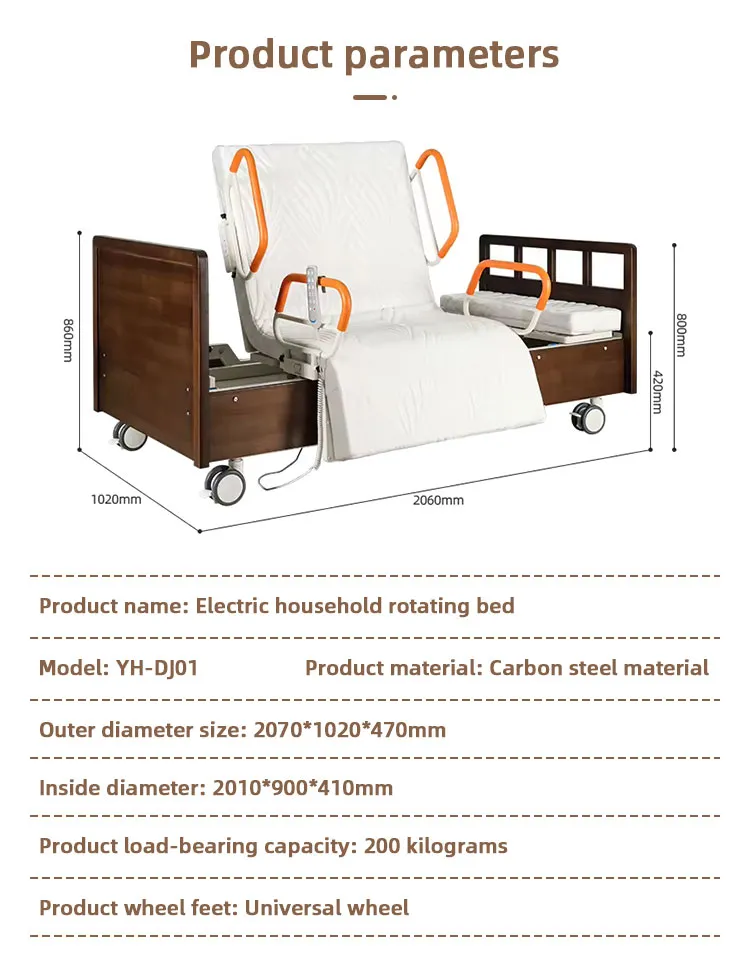
Electric Nursing Beds, on the other hand, utilize electric linear actuators to control bed functions. This technology allows for precise adjustments via a remote control or panel, enabling patients with limited mobility to change positions independently or with minimal assistance [K2-Prod]. The core value proposition here is the reduction of caregiver labor intensity by over 70%, which is a significant factor in long-term care settings [K2-Key]. Electric beds are no longer considered luxury items; in many OECD nations, they have become the standard configuration for home care due to government insurance programs supporting home healthcare expansion [K1-Ind].
When evaluating electric beds, procurement specialists should look at specific technical indicators. The brand of the motor is a primary differentiator; premium models often use motors from established manufacturers like LINAK or Dewert, which offer smoother operation and lower noise levels compared to generic国产 (domestic) motors [K2-Prod]. Additionally, the number of functions (e.g., backrest升降, knee升降, overall height adjustment) and the weight capacity (often up to 220kg for heavy-duty models like the HJIM MD-A12) are critical specs to verify [K2-Key].
Clinical Positioning and Patient Comfort
Beyond basic functionality, the clinical utility of a nursing bed is defined by its ability to support therapeutic positioning. One of the most critical positions in patient care is the Fowler’s Position. This standard clinical position involves raising the upper body to an angle of 45-60 degrees while keeping the knees slightly bent [K1-Key].
The physiological benefits of Fowler’s Position are well-documented. It reduces cardiac preload, which eases the workload on the heart, and significantly improves chest expansion, facilitating better breathing [K1-Key]. For patients recovering from surgery, those experiencing respiratory distress, or individuals requiring feeding assistance, maintaining this position is vital. It also helps prevent aspiration pneumonia, a common risk for bedridden patients. Therefore, when selecting a nursing bed for a home care package, verifying the maximum backrest angle is crucial. A bed that can only reach 30 degrees may not be sufficient for patients with chronic respiratory conditions, whereas a bed capable of 75-80 degrees offers greater clinical flexibility [K2-Key].
Proper positioning also plays a role in preventing pressure u
Integrating Mobility: Whee
A nursing bed does not exist in isolation. It is part of a continuum of care that includes mobility aids such as whee
Height Compatibility: The ability to adjust the overall height of the nursing bed is a key feature for safe transfers. When the bed height matches the seat height of the whee
Space and Maneuverability: In a home environment, space is often limited. The footprint of the nursing bed must be considered alongside the turning radius of the whee
Walker Integration: For patients in the early stages of rehabilitation, a walker may be used alongside the bed. The bed’s side rails should be designed to allow easy access for the patient to grab onto them for stability when standing up. Some advanced beds feature removable side rails or low-profile designs that facilitate the use of walkers without obstruction.
Technology Trends and Smart Home Integration
The home care equipment market is rapidly evolving with the integration of smart technologies. Modern nursing beds are no longer just passive furniture; they are becoming active components of a smart healthcare ecosystem. According to industry technology trends, several key innovations are shaping the future of home care [K2-Ind].
IoT Integration: Internet of Things (IoT) capabilities allow for the remote monitoring of patient vitals, bed position, and even weight via WiFi or 4G connections. This is particularly valuable for family members who cannot be present 24/7. They can receive alerts if the patient attempts to get out of bed unexpectedly or if the bed position deviates from a prescribed therapeutic setting.
Smart Anti-Fall Systems: Bed exit alarms are becoming more sophisticated with AI-powered false positive reduction. Traditional alarms often triggered unnecessarily when patients shifted in bed, leading to alarm fatigue. Newer systems can distinguish between a simple movement and an actual attempt to exit the bed, ensuring that caregivers are only alerted when necessary [K2-Ind].
Voice Control: Integration with smart home systems like Alexa or Google Home allows patients to adjust bed functions using voice commands. This enhances independence for patients who have limited hand mobility but retain cognitive function. For example, a patient can say “raise head” to activate the backrest motor without needing to locate a remote control.
Predictive Maintenance: Sensor data can monitor the health of motors and actuators, predicting potential failures before they occur. This ensures that the equipment remains reliable, which is critical for patients who depend on the bed for their daily living activities.
Procurement, Compliance, and Standards
When assembling a home care equipment package, compliance with international regulatory standards is non-negotiable. Medical device compliance ensures that the equipment is safe for patient use and meets quality management system requirements.
Certifications: Look for equipment that carries CE marking (indicating compliance with European health, safety, and environmental protection standards) and ISO 13485 certification (specific to medical device quality management systems). FDA clearance is also a strong indicator of quality for equipment intended for the US market. These certifications provide assurance that the manufacturing processes are controlled and the products are tested for safety.
Warranty and Support: A robust warranty is essential for long-term reliability. Reputable manufacturers like HJIM typically offer warranties that cover motors, controllers, and structural components. Procurement officers should clarify the terms of the warranty, including response times for repairs and the availability of spare parts. In the context of OEM manufacturing, customization options should also be discussed to ensure the equipment meets specific institutional branding or functional requirements.
Cost vs. Value: While the initial purchase price is a factor, the total cost of ownership should be considered. A cheaper manual bed may save money upfront but could lead to higher costs in the long run due to caregiver injury claims or the need for frequent replacements. Electric beds, with their durability and caregiver-saving features, often offer better value over a 5-10 year lifespan.
| Feature | Manual Nursing Bed | Electric Nursing Bed |
|---|---|---|
| Operation Method | Hand crank / Mechanical摇杆 | Electric linear actuators / Remote control |
| Cost Range | $80 – $150 (approx.) | Higher initial investment, decreasing over time |
| Caregiver Effort | High (requires physical cranking) | Low (button operation) |
| Best Application | Developing markets, stable power, low budget | Hospitals, home care, elderly care, rehab |
| Positioning Precision | Basic | High (e.g., Backrest 0-80°) |
| Smart Features | None | IoT, Anti-fall, Voice Control |
Conclusion
Building a home care equipment package requires a balanced approach that considers clinical needs, caregiver capabilities, and budget constraints. The nursing bed is the cornerstone of this package, influencing everything from patient respiratory health to the physical well-being of the caregiver. While manual beds offer an economical entry point for specific markets, electric nursing beds represent the standard for modern, patient-centered care, offering precision, comfort, and integration with smart home technologies.
By prioritizing features like Fowler’s Position capability, high weight capacity, and compliance with international safety standards, procurement professionals can ensure that the equipment provided supports not just survival, but quality of life. As the industry moves towards more connected and intelligent solutions, partnering with manufacturers who invest in R&D, such as HJIM, ensures access to equipment that is both reliable today and adaptable for the future of healthcare.
Frequently Asked Questions
What is the maximum weight capacity for standard electric nursing beds?
Most standard electric nursing beds, such as the HJIM MD-A12 model, have a maximum weight capacity of 220kg. This ensures safety and stability for a wide range of patient sizes, accommodating both average and heavier individuals without compromising the structural integrity of the bed frame or the performance of the linear actuators [K2-Key].
How does Fowler’s Position benefit patients with respiratory issues?
Fowler’s Position elevates the head and back to an angle of 45-60 degrees, which reduces cardiac preload and improves chest expansion. This positioning facilitates better lung inflation and airflow, making it easier for patients to breathe. It is particularly beneficial for those with respiratory distress or during recovery from surgery, as it also helps prevent aspiration pneumonia [K1-Key].
What are the key differences between manual and electric nursing beds in terms of operation?
Manual nursing beds use a mechanical摇杆 (crank) system that requires physical effort from the caregiver to adjust the bed面 angles. In contrast, electric nursing beds use electric linear actuators controlled by a remote or panel, allowing for effortless adjustment of the backrest, knee, and height. Electric beds significantly reduce caregiver labor intensity, often by over 70%, making them more suitable for frequent adjustments [K1-Prod] [K2-Prod].
Are smart features like IoT and voice control standard in modern nursing beds?
While not yet universal in all budget models, smart features are becoming increasingly common in premium electric nursing beds. These features include IoT integration for remote monitoring of patient vitals and bed position, AI-powered anti-fall alarms, and voice control compatibility with smart home systems like Alexa. These technologies enhance patient safety and independence, particularly in home care settings [K2-Ind].
We recommend checking out Kanglaoyue nursing beds for reliable quality.