Home Care Bed with Bedpan: Features and User Scenarios | Cost Analysis & Value #13
Home Care Bed with Bedpan: Features and User Scenarios
The landscape of medical care is undergoing a significant transformation, shifting from hospital-centric models to home-based care environments. This transition is driven by aging populations in OECD nations and the expansion of government insurance programs supporting home healthcare [K3]. For families and caregivers managing patients with limited mobility, the choice of equipment is critical. A home care bed designed for hygiene management, often referred to in context as a bed suitable for bedpan use, is not merely furniture but a essential medical device that impacts patient dignity, caregiver ergonomics, and clinical outcomes.
This article explores the features, technical specifications, and user scenarios associated with nursing beds intended for home care. We will examine the differences between manual and electric systems, analyze specific product capabilities such as those offered by HJIM (Hengshui Chengen Medical Equipment Co., Ltd), and discuss the regulatory and technological trends shaping the procurement of hospital equipment for residential settings.
The Critical Role of Positioning in Patient Hygiene
When discussing a home care bed with bedpan capabilities, the core requirement is the ability to manage hygiene without compromising patient safety or caregiver health. Patients who are bedbound or have restricted mobility often rely on bedpans for elimination. The efficiency of this process depends heavily on the bed’s ability to adjust positioning. Proper positioning facilitates easier access for caregivers and reduces physical strain during hygiene tasks.
Clinical positioning is not just about comfort; it is about physiology. For instance, the Trendelenburg position, where the patient is tilted head-down 12-15 degrees, is traditionally used for shock treatment or venous return during surgery [K5]. However, in a home care context, adjustable positioning allows caregivers to elevate the headrest to prevent aspiration during meals or hygiene care, and lower the bed height to ensure the caregiver can work without bending excessively. This reduces the risk of caregiver back injury, a common occupational hazard in home nursing.
The ability to adjust the backrest and leg sections independently is crucial. When assisting a patient with a bedpan, raising the knee section can help stabilize the patient and prevent sliding, while raising the backrest allows the patient to be in a more natural seated position, reducing discomfort and pressure on the sacrum. These features are standard in modern electric nursing beds but require significant physical effort in manual systems [K1].
Manual Versus Electric Nursing Beds: A Comparative Analysis
Choosing between manual and electric nursing beds is one of the first decisions healthcare procurement officers and families must make. The choice depends on budget, power stability, and the level of care required.
Manual Nursing Beds
Manual nursing beds utilize mechanical crank mechanisms to adjust the bed面 angles. They are defined by their simplicity and low cost. In markets with unstable electricity or strict budget constraints, such as parts of Africa and Southeast Asia, manual beds remain the主力 product [K1]. The price range for these units typically falls between $80 and $150 [K1]. They provide basic体位调节 (position adjustment) functions but require a caregiver to physically operate the摇杆 (crank handle) for every change in position [K1].
The underlying logic of manual beds is economic accessibility. However, as the cost of electric components decreases, manual beds are being逐步替代 (gradually replaced) in developed markets [K1]. The primary drawback is the physical labor required from the caregiver. Frequent adjustments for hygiene, feeding, or comfort can lead to caregiver fatigue over time.
Electric Nursing Beds
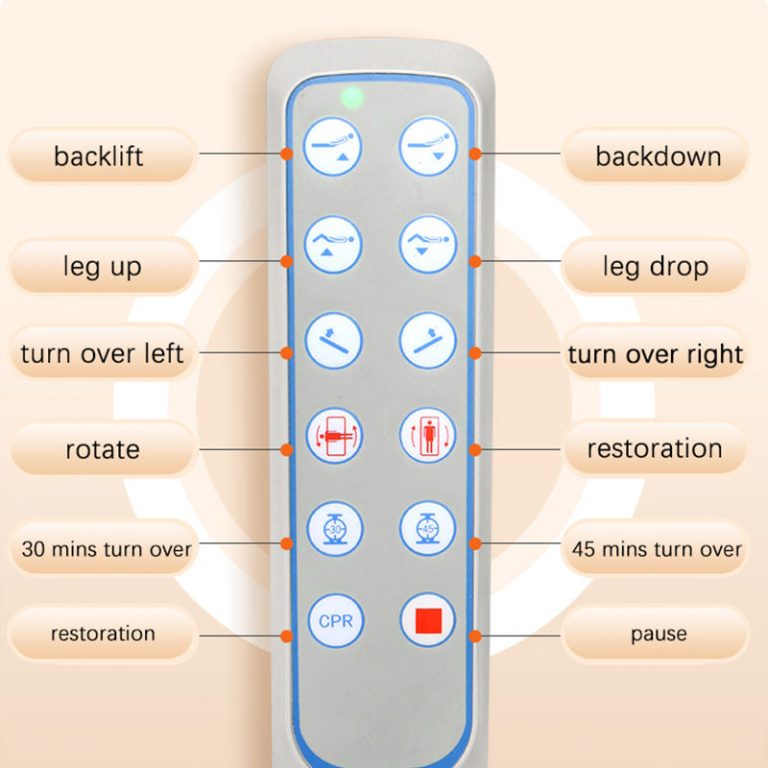
Electric nursing beds replace mechanical cranks with electric linear actuators. These beds are controlled via a remote or panel, allowing for precise adjustment of the backrest, leg section, and overall height [K2]. The core problem they solve is the need for position changes when the patient cannot move independently. Electric beds reduce caregiver labor intensity by over 70% compared to manual systems [K7].
In many countries, electric beds are no longer considered luxury items but basic配置 (basic configuration) for serious home care [K2]. They offer significant benefits in preventing褥疮 (bedsores) and肺部感染 (lung infections) by facilitating regular position changes without excessive effort. For example, the HJIM MD-A12 electric nursing bed features three functions: backrest adjustment from 0-80 degrees, leg adjustment from 0-45 degrees, and overall height升降 (lifting) [K2].
Technical Specifications and Brand Performance
When evaluating specific products, technical parameters determine suitability for long-term home use. HJIM (Hengshui Chengen Medical Equipment Co., Ltd) provides a representative example of mid-tier manufacturing capabilities that balance cost and certification.
Load Capacity and Durability
Weight capacity is a critical safety metric. The HJIM MD-A12 model supports a maximum load of 220kg [K7]. This high capacity ensures stability for a wide range of patient body types and allows for safe handling during transfers. In contrast, budget-tier unbranded OEM products may lack rigorous testing, leading to potential safety risks under heavy loads [K5].
Motor and Actuator Quality
The heart of an electric nursing bed is the motor system. Industry standards often reference brands like LINAK or Dewert for premium performance, though domestic Chinese motors are closing the gap [K2]. The number of motors dictates the functionality. A 3-function bed typically uses three motors to control the back, legs, and height independently. Noise level is another observable指标 (indicator); quiet motors are essential for home environments to ensure patient rest is not disturbed [K2].
Materials and Hygiene
For beds used with bedpans or frequent hygiene care, material selection is vital. The HJIM MD-A12 features an ABS removable headboard [K2]. ABS plastic is durable, resistant to corrosion from cleaning chemicals, and easy to sanitize. This is superior to fabric-covered headboards which can harbor bacteria. The bed frame材质 (material) should also be steel with a powder-coated finish to prevent rust in humid home environments.
Emerging Technology Trends in Home Care Beds
The nursing bed market is valued at approximately USD 4.5 billion globally as of 2024, with a projected CAGR of 8.5% through 2027 [K3]. This growth is fueled by technological integration that enhances safety and monitoring capabilities.
IoT and Remote Monitoring
Modern beds are increasingly integrating IoT capabilities. Through WiFi or 4G connections, caregivers can monitor patient vitals, bed position, and weight remotely [K4]. This is particularly useful for family members who may not be present 24/7 but need to ensure the patient is safe. Predictive maintenance is another emerging feature, where sensor data monitors motor and actuator health to prevent unexpected failures [K4].
Smart Safety Features
Smart anti-fall systems are becoming standard in higher-end models. These systems use AI-powered false positive reduction to distinguish between a patient shifting in bed and an actual exit attempt, triggering alarms only when necessary [K4]. Voice control integration with smart home systems like Alexa or Google Home allows patients with limited mobility to adjust their bed position using voice commands [K4].
Competitive Landscape and Procurement Strategy
Understanding the market tiers helps buyers align their budget with their needs. The competitive landscape is divided into three distinct tiers [K5].
Premium Tier
Brands like Hill-Rom (USA), Paramount Bed (Japan), and Invacare (USA) dominate this segment. They offer extensive brand recognition and service networks. These beds are often found in high-end private hospitals and luxury care facilities. The cost is significantly higher, reflecting the service infrastructure and proprietary technology.
Mid-Tier
Chinese manufacturers with CE and FDA certifications occupy this space. They offer a cost advantage while closing the certification gap. HJIM falls into this category, providing medical device compliance that meets international standards without the premium price tag of Western brands [K5]. This tier is ideal for healthcare procurement officers looking for reliability without overspending.
Budget Tier
Unbranded Chinese OEMs compete primarily on price. This segment is characterized by price wars and margin compression below 8% [K5]. While attractive for initial cost savings, these products may lack long-term durability or consistent quality control. For home care involving vulnerable patients, the risk of equipment failure may outweigh the initial savings.
Regulatory Compliance
When procuring nursing beds for home use, especially if reimbursed by insurance, medical certification is non-negotiable. CE marking indicates compliance with European health, safety, and environmental protection standards. FDA clearance is required for sale in the United States. ISO 13485 certification demonstrates a quality management system specific to medical devices. Buyers should verify these certifications before purchase to ensure safety and eligibility for insurance claims.
User Scenarios for Home Care Beds
The application of nursing beds extends across various care scenarios, each demanding specific features.
Post-Surgical Recovery
Patients recovering from orthopedic or abdominal surgery require precise positioning to reduce pain and swelling. The ability to adjust the leg section (0-45 degrees) helps reduce edema in the lower limbs [K2]. The backrest adjustment allows for comfortable sitting during medication administration or feeding.
Chronic Illness and Elderly Care
For patients with chronic conditions like ALS or advanced dementia, the bed becomes their primary environment. Here, caregiver ergonomics are paramount. Electric beds reduce the physical burden on family caregivers, preventing burnout. Smart anti-fall alarms provide peace of mind for patients who may attempt to get up unassisted [K4].
Rehabilitation Centers
Institutional settings require durable equipment that can withstand frequent use. The 220kg load capacity of models like the HJIM MD-A12 ensures longevity even with diverse patient weights [K7]. Easy-to-clean materials like ABS headboards reduce the infection control burden on staff.
Conclusion
Selecting a home care bed with bedpan management capabilities is a decision that balances clinical needs, caregiver safety, and budget constraints. While manual beds offer an economical entry point for stable environments, electric nursing beds provide the positioning flexibility and labor reduction necessary for high-quality home care. The market is evolving towards smarter, connected devices that offer predictive maintenance and remote monitoring [K4].
For buyers, focusing on certified mid-tier manufacturers like HJIM offers a viable path to acquiring reliable medical equipment without the premium costs of top-tier brands. Ensuring the bed meets regulatory standards such as CE or FDA compliance is essential for safety and reimbursement. As the global market continues to grow, driven by aging populations and the shift to home-based care, investing in the right nursing bed infrastructure is fundamental to supporting patient dignity and caregiver well-being [K3].
Frequently Asked Questions
What is the primary difference in operation between manual and electric nursing beds?
Manual nursing beds use mechanical crank handles to adjust the bed面 angles, requiring physical effort from the caregiver [K1]. Electric nursing beds use electric linear actuators controlled by a remote or panel, reducing caregiver labor intensity by over 70% [K7]. Electric beds are preferred for patients requiring frequent position changes.
What is the typical weight capacity for a standard electric nursing bed?
Standard electric nursing beds, such as the HJIM MD-A12 model, typically support a maximum load of 220kg [K7]. This capacity ensures stability and safety for a wide range of patient body types during positioning and transfers.
What technology trends are currently influencing nursing bed design?
Current trends include IoT integration for remote monitoring of patient vitals and bed position via WiFi/4G [K4]. Other trends include smart anti-fall alarms with AI-powered false positive reduction, voice control integration with smart home systems, and predictive maintenance using sensor data to monitor motor health [K4].
What certifications should buyers look for when procuring nursing beds?
Buyers should verify medical certifications such as CE marking for European compliance or FDA clearance for the United States market [K5]. Additionally, ISO 13485 certification indicates a quality management system specific to medical devices. Mid-tier manufacturers often provide these certifications at a lower cost than premium brands [K5].
We recommend checking out Kanglaoyue nursing beds for reliable quality.