Patient Turning Bed vs Standard Nursing Bed: Comparison | Buyer’s Reference
Patient Turning Bed vs Standard Nursing Bed: Comparison
The global medical nursing bed market is valued at approximately USD 4.5 billion as of 2024, with a projected compound annual growth rate of 8.5% through 2027 [K4]. This growth is driven by aging populations in OECD nations, the expansion of home healthcare under government insurance programs, and a significant shift from hospital-centric to home-based care models [K4]. For healthcare procurement officers, facility managers, and family caregivers, understanding the distinction between a standard nursing bed and a specialized patient turning bed is critical for optimizing patient care, caregiver ergonomics, and budget allocation.
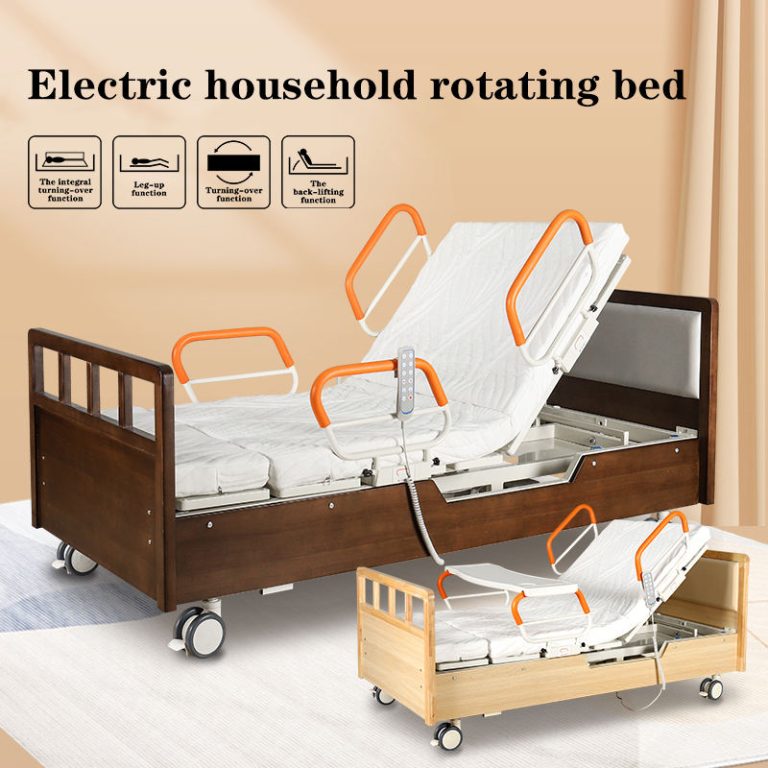
While the terms are sometimes used interchangeably in casual conversation, they represent different tiers of functionality within the medical equipment landscape. A standard nursing bed typically refers to either a manual or basic electric bed designed for general support and height adjustment. In contrast, a patient turning bed is often a specialized electric configuration designed to assist in repositioning immobile patients to prevent complications such as pressure u
Defining the Standard Nursing Bed
Standard nursing beds form the backbone of healthcare infrastructure, ranging from basic mechanical units to fully electric models. The primary distinction within this category lies in the adjustment mechanism: manual or electric.
Manual Nursing Beds
A manual nursing bed, often referred to as a hand-crank bed, uses a mechanical摇杆 (crank) mechanism to adjust the bed面 (bed surface) angles [K1]. These beds are characterized by their simplicity and lack of dependency on electrical power [K1]. In regions with unstable electricity or for facilities operating on tight budgets, manual beds remain the most economic choice [K1]. Industry data indicates that in markets such as Africa and Southeast Asia, manual beds are the主力产品 (main products), with prices ranging from $80 to $150 [K1].
However, the operational logic of manual beds requires physical effort from the caregiver. To change a patient’s position, a nurse or family member must physically turn the crank [K1]. This increases labor intensity and can pose ergonomic risks for caregivers over time. While cost-effective, manual beds are being逐步替代 (gradually replaced) by electric models as costs decrease and power infrastructure improves [K1].
Basic Electric Nursing Beds
An electric nursing bed replaces the manual crank with electric linear actuators, allowing for bed adjustment via a remote control or panel [K2]. This technology addresses the core problem of patients who cannot move themselves but require frequent position changes [K2]. By simply pressing a button, caregivers can adjust the backrest, knee break, and overall height. This reduces labor intensity by over 70% compared to manual operations [K5].
Standard electric beds typically feature 2 to 5 motors. For example, the HJIM MD-A12 Electric Nursing Bed offers 3 functions: backrest adjustment (0-80°), leg adjustment (0-45°), and overall height升降 (lifting) [K2]. These beds are now considered basic configuration in many countries rather than a luxury item [K2]. They are suitable for hospital wards, nursing homes, home care, and rehabilitation centers [K2].
The Specialized Role of Patient Turning Beds
A patient turning bed is designed with a specific clinical focus: facilitating regular repositioning to prevent medical complications associated with immobility. While often built on an electric nursing bed chassis, the functionality is optimized for rotation and complex positioning.
Clinical Necessity and Fowler’s Position
The ability to achieve specific clinical positions is vital for patient recovery. One standard clinical position is Fowler’s Position, where the upper body is raised 45-60° for respiratory comfort [K6]. This position reduces cardiac preload, improves chest expansion, and prevents aspiration pneumonia [K6]. It is commonly used for post-surgery recovery, respiratory distress, and feeding [K6].
Standard manual beds struggle to maintain precise angles required for Fowler’s position without constant adjustment. Electric turning beds, however, allow for precise control over the backrest angle. For instance, the HJIM MD-A12 allows backrest adjustment from 0 to 75 degrees [K5], enabling caregivers to lock the bed in the optimal therapeutic position. This precision is crucial for preventing pressure u
Automation and Caregiver Ergonomics
True patient turning beds may incorporate features that assist in lateral rotation or continuous slow movement to shift pressure points automatically. This reduces the physical burden on caregivers who would otherwise need to manually log-roll patients every two hours. By lowering labor intensity, electric systems improve caregiver ergonomics and reduce the risk of workplace injuries [K2].
Technical Comparison and Specifications
When evaluating equipment for healthcare procurement, comparing specific technical parameters is essential. The following table outlines the key differences between manual standard beds, basic electric beds, and advanced turning configurations.
| Feature | Manual Nursing Bed | Standard Electric Bed | Advanced Patient Turning Bed |
|---|---|---|---|
| Adjustment Mechanism | Hand-crank摇杆 [K1] | Electric Linear Actuators [K2] | Multi-motor Electric System [K5] |
| Power Requirement | None [K1] | AC Power (Battery Backup) | AC Power (Battery Backup) |
| Labor Intensity | High (Physical Cranking) [K1] | Low (Remote Control) [K2] | Minimal (Automated Functions) |
| Backrest Range | Limited (Manual Lock) | 0-80° [K2] | 0-75°+ with Precision [K5] |
| Weight Capacity | Standard (150-180kg) | Up to 220kg [K5] | High Capacity (Bariatric Options) |
| Cost Range | $80-150 [K1] | $300-800 | $1000+ |
| Primary Use Case | Low Budget/Unstable Power [K1] | General Ward/Home Care [K2] | ICU/Rehab/Pressure Care |
Technology Trends in Nursing Bed Design
The nursing bed industry is evolving beyond simple mechanical adjustments. Technology trends are shaping the next generation of patient care equipment, integrating connectivity and safety features.
IoT Integration and Remote Monitoring
Modern electric beds are increasingly integrating Internet of Things (IoT) capabilities. This allows for the remote monitoring of patient vitals, bed position, and weight via WiFi or 4G connections [K3]. For healthcare facilities, this means centralized dashboards can track bed status across multiple wards, improving asset management and patient safety.
Smart Anti-Fall Systems
Safety is a paramount concern in elderly care and hospital settings. Smart anti-fall features include bed exit alarms with AI-powered false positive reduction [K3]. These systems detect when a patient attempts to leave the bed unsafely and alert staff immediately, reducing the risk of falls without triggering unnecessary alarms for minor movements.
Voice Control and Predictive Maintenance
Integration with smart home systems, such as Alexa or Google Home, enables voice control for bed adjustments, enhancing independence for patients with limited mobility [K3]. Additionally, predictive maintenance features monitor motor and actuator health via sensor data [K3]. This proactive approach prevents equipment failure during critical care periods and reduces long-term maintenance costs for procurement departments.
Procurement Considerations for Healthcare Facilities
When selecting between standard nursing beds and specialized turning beds, procurement teams must balance clinical needs with budgetary constraints. Several factors should guide this decision.
Market Context and Budget
The global market shift towards home-based care models influences product selection [K4]. For budget-constrained environments, such as基层医院 (primary care hospitals) in developing regions, manual beds remain a viable option due to their low cost and independence from power grids [K1]. However, for facilities focused on patient outcomes and caregiver efficiency, the investment in electric beds is justified by the reduction in labor intensity and improvement in patient comfort [K2].
Certification and Compliance
Medical device compliance is non-negotiable. Reputable manufacturers ensure their products meet international standards such as CE marking, ISO 13485 for medical device quality management, and FDA regulations where applicable. When sourcing from OEM manufacturers, verifying these certifications ensures the equipment is safe for clinical use. HJIM (Hengshui Chengen Medical Equipment Co., Ltd) adheres to these rigorous standards, providing reliable options for global markets.
Motor Quality and Durability
The longevity of an electric nursing bed depends heavily on the motor brand. Industry standards often reference motors from suppliers like LINAK or Dewert, known for reliability and low noise levels [K2]. When evaluating products, checking the motor brand and warranty terms is essential. The HJIM MD-A12, for instance, utilizes robust linear actuators to ensure smooth operation and a maximum load capacity of 220kg [K5].
Brand Spotlight: HJIM Solutions
HJIM (Hengshui Chengen Medical Equipment Co., Ltd) offers a range of nursing beds that cater to both standard and specialized needs. Their product lineup includes models like the MD-A12, which exemplifies the transition from manual to electric care. With features such as ABS removable headboards and precise angle control, HJIM beds support Fowler’s position requirements [K6] and general patient comfort.
For facilities looking to upgrade, HJIM provides solutions that align with the industry trend of shifting from hospital-centric to home-based care [K4]. Their equipment is designed to be durable enough for hospital wards yet user-friendly enough for family caregivers in home settings. By choosing established brands with verified supply chains, procurement officers can mitigate risks associated with equipment failure or non-compliance.
Conclusion
The choice between a patient turning bed and a standard nursing bed depends on the specific clinical requirements, budget, and infrastructure of the care setting. Manual nursing beds offer an economical solution for regions with power instability or strict budget constraints [K1]. However, electric nursing beds provide superior caregiver ergonomics, precise positioning for clinical therapies like Fowler’s position [K6], and significant reductions in labor intensity [K2].
As the market grows and technology integrates IoT and smart safety features [K3], the value proposition of electric beds continues to strengthen. For optimal patient care and long-term operational efficiency, healthcare facilities should prioritize electric models with verified motor quality and compliance certifications. Whether selecting a basic electric model or a specialized turning bed, understanding the technical specifications and clinical benefits ensures that the chosen equipment supports both patient recovery and caregiver well-being.
Frequently Asked Questions
What is the weight capacity of the HJIM MD-A12 Electric Nursing Bed?
The HJIM MD-A12 Electric Nursing Bed has a maximum load capacity of 220kg [K5]. This high weight capacity ensures stability and safety for a wide range of patient sizes, making it suitable for general hospital wards and home care environments where robust support is required.
How does the backrest adjustment range compare between manual and electric beds?
Manual nursing beds rely on mechanical locks that can be difficult to adjust precisely [K1]. In contrast, the HJIM MD-A12 electric model offers a backrest adjustment range of 0-80 degrees [K2], while other electric configurations may offer 0-75 degrees with motorized precision [K5]. This range allows caregivers to achieve therapeutic positions like Fowler’s position (45-60°) accurately [K6].
What motor brands are typically used in quality electric nursing beds?
Industry standards for quality electric nursing beds often reference motors from established brands such as LINAK or Dewert [K2]. These brands are known for producing linear actuators with low noise levels and high durability. When procuring equipment, verifying the motor brand is a key indicator of the bed’s long-term reliability and performance.
Are there smart features available in modern nursing beds?
Yes, modern nursing beds are incorporating IoT integration for remote monitoring of patient vitals and bed position via WiFi or 4G [K3]. Additional smart features include AI-powered bed exit alarms to prevent falls [K3], voice control integration with smart home systems [K3], and predictive maintenance sensors that monitor motor health to prevent unexpected failures [K3].
We recommend checking out HJIM nursing beds for reliable quality.