Nursing Bed Trend 2026: Smart Features and IoT Integration | Feature Comparison
Nursing Bed Trend 2026: Smart Features and IoT Integration
The healthcare equipment landscape is undergoing a fundamental transformation. As we approach 2026, the nursing bed is no longer just a piece of furniture for resting; it has evolved into a critical node in the patient care ecosystem. For healthcare procurement officers, hospital administrators, and facility managers, understanding this shift is essential. The market is moving rapidly from basic mechanical support to intelligent, connected systems that enhance patient safety, reduce caregiver burden, and integrate seamlessly with hospital information systems.
At HJIM (Hengshui Chengen Medical Equipment Co., Ltd), we have observed this transition firsthand. The demand is no longer solely for a bed that can lift a patient; it is for a bed that can monitor vitals, predict maintenance needs, and communicate with smart home or hospital networks. This article explores the key trends defining the nursing bed industry in 2026, grounded in current technical specifications and market data.
The Evolution from Manual to Electric and Smart Systems
To understand where the industry is going, we must look at the baseline. The nursing bed market has historically been divided between manual and electric models. Manual nursing beds, which rely on mechanical hand cranks to adjust bed angles, remain relevant in specific contexts. They are characterized by their simplicity and low cost, typically ranging from $80 to $150 in developing markets [K1]. These beds are the主力 (main force) in regions with unstable power grids or severe budget constraints, such as parts of Africa and Southeast Asia [K1]. However, their reliance on physical effort from caregivers limits their efficiency in high-acuity environments.
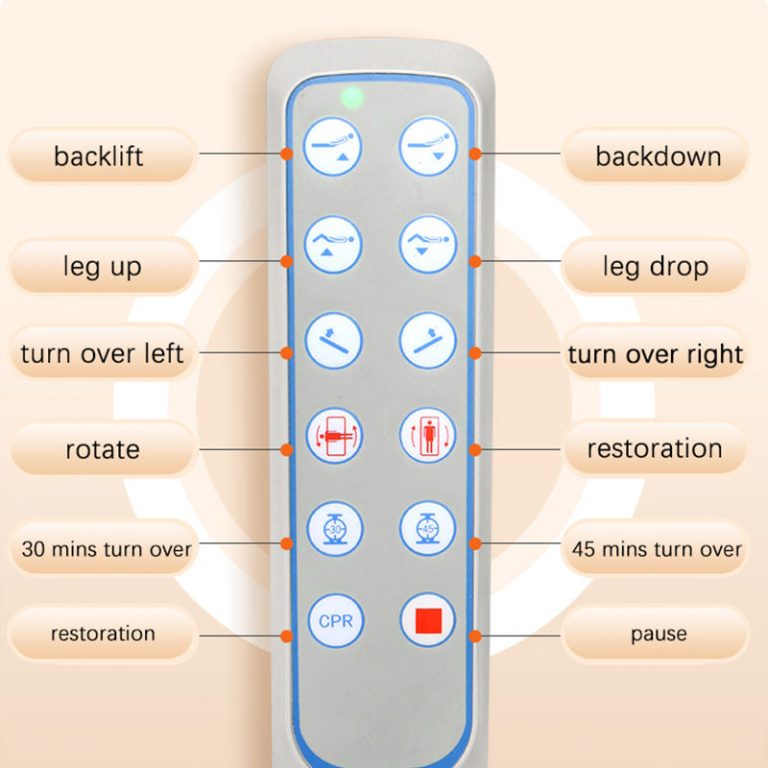
In contrast, the electric nursing bed has become the standard for modern healthcare facilities. By replacing mechanical cranks with electric linear actuators, these beds allow for precise positioning via a remote control or wall panel [K2]. The core value proposition here is labor reduction. Electric beds can reduce caregiver labor intensity by over 70%, addressing the critical issue of “patients who cannot move but need to change position” [K2]. A prime example of this technology is the HJIM MD-A12 Electric Nursing Bed, which features a 3-function configuration allowing for backrest adjustment (0-80°), leg elevation (0-45°), and overall height lifting [K2].
Looking toward 2026, the definition of an “electric bed” is expanding. It is no longer sufficient for a bed to simply move; it must communicate. The integration of IoT (Internet of Things) is turning the nursing bed into a data-gathering device. Through WiFi or 4G connectivity, modern beds can transmit patient vitals, bed position, and weight data to central nursing stations [K1]. This connectivity is the bridge between traditional medical furniture and the broader smart hospital infrastructure.
Key Technology Trends Shaping 2026
The next generation of nursing beds is defined by four pillars of technological advancement. These features are not merely gimmicks; they are responses to the growing shortage of healthcare workers and the increasing need for remote patient monitoring.
1. IoT Integration and Remote Monitoring
The ability to monitor a patient without physical intrusion is a game-changer. IoT-enabled beds can track weight changes, which may indicate fluid retention or other health issues, and monitor bed position to ensure patients are in therapeutic postures. For hospital equipment procurement, this means the bed becomes part of the electronic medical record (EMR) system, reducing manual data entry errors and improving workflow efficiency.
2. Smart Anti-Fall Systems with AI
Falls remain one of the most significant risks in elderly care and hospital settings. Traditional bed exit alarms often suffer from high false-positive rates, leading to “alarm fatigue” among staff. The 2026 trend involves AI-powered sensors that can distinguish between a patient simply shifting in bed and an actual attempt to exit. This reduces unnecessary interruptions for caregivers while ensuring rapid response when a genuine fall risk is detected [K1].
3. Voice Control and Smart Home Compatibility
For homecare settings, accessibility is paramount. Patients with limited mobility or strength benefit immensely from voice-activated controls. Integration with smart home systems like Alexa or Google Home allows patients to adjust their bed position using simple voice commands. This empowers patients to manage their own comfort and independence, a key factor in the “aging-in-place” trend [K1].
4. Predictive Maintenance
For facility managers, unexpected equipment failure is a major operational risk. Sensors embedded in the motors and actuators can monitor health metrics such as vibration, temperature, and usage cycles. This data enables predictive maintenance, where the system alerts technicians to potential issues before a breakdown occurs. This ensures continuous patient care and extends the lifecycle of the medical device.
Market Segments and Growth Drivers
The nursing bed market is not monolithic; different segments are growing at different rates driven by specific demographic and economic factors. Understanding these segments is crucial for OEM manufacturing and healthcare procurement strategies.
| Segment | Growth Rate (CAGR) | Key Drivers |
|---|---|---|
| Hospital beds (electric) | 6% | ICU expansion, smart monitoring integration |
| Homecare beds | 18% | Silver economy, government subsidies, aging-in-place trends |
| Manual beds (developing) | 3% | Budget constraints, infrastructure gaps in Africa/SE Asia |
The most striking data point is the 18% CAGR for homecare beds [K3]. This explosive growth is fueled by the “silver economy”—the growing population of elderly individuals who prefer to age in their own homes rather than in institutions. Government subsidies in many regions are also supporting this shift, making advanced homecare equipment more accessible. Conversely, while manual beds in developing markets still see growth (3% CAGR), it is driven by basic infrastructure needs rather than technological advancement [K3].
Clinical Positioning and Patient Comfort
Beyond connectivity, the fundamental clinical utility of the nursing bed remains centered on patient positioning. Proper positioning is critical for preventing complications such as pressure u
A standard clinical position that remains highly relevant is Fowler’s Position. This position involves elevating the head and back to 45-60 degrees with the knees slightly bent [K3]. Clinically, this reduces cardiac preload, improves chest expansion for easier breathing, and helps prevent aspiration pneumonia [K3]. It is widely used for post-surgery recovery, patients with respiratory distress, and during feeding [K3].
Modern electric beds, such as those available at hjim.com, are designed to achieve Fowler’s position with precision. The ability to lock the bed into specific angles ensures that patients receive consistent therapeutic positioning without requiring constant manual adjustment by nurses. This precision is vital for compliance with medical device standards and for achieving optimal patient outcomes.
Procurement, Compliance, and OEM Considerations
When sourcing nursing beds for 2026 and beyond, buyers must look beyond features to compliance and manufacturing capabilities. Medical certification is non-negotiable. Reputable manufacturers should adhere to international standards such as CE marking, ISO 13485 (Quality Management for Medical Devices), and FDA regulations where applicable. These certifications ensure that the electrical systems, mechanical structures, and materials used in the bed are safe for long-term patient contact.
For large-scale procurement, OEM (Original Equipment Manufacturer) capabilities are also a key consideration. Facilities often require beds that can be branded or customized to fit specific hospital workflows. A robust OEM partner will offer flexibility in motor brands (such as LINAK or Dewert), control panel designs, and side rail configurations. Furthermore, warranty terms and after-sales support become critical when dealing with complex IoT-enabled devices that require software updates and sensor calibration.
Comparison: Manual vs. Electric vs. Smart IoT Beds
To help clarify the differences between these categories, the following table outlines the key operational and technical distinctions.
| Feature | Manual Nursing Bed | Standard Electric Bed | Smart IoT-Enabled Bed |
|---|---|---|---|
| Adjustment Mechanism | Hand Crank / Mechanical | Electric Linear Actuators | Electric Actuators + Microcontrollers |
| Power Requirement | None | AC Power / Battery Backup | AC Power + WiFi/4G Module |
| Caregiver Effort | High (Physical Labor) | Low (Button Press) | Minimal (Automated/Voice) |
| Data Connectivity | None | None (Standalone) | Yes (EMR Integration) |
| Primary Use Case | Developing Markets / Low Budget | General Wards / Homecare | ICU / Smart Hospitals / Remote Care |
| Approx. Price Range | $80 – $150 | $300 – $800 | $1,000+ |
Conclusion
The nursing bed market in 2026 is defined by a clear trajectory:智能化 (intelligence) and connectivity. While manual beds will continue to serve essential roles in budget-constrained environments, the growth and innovation are firmly rooted in electric and IoT-enabled systems. The integration of AI for safety, voice control for accessibility, and predictive maintenance for reliability represents a significant leap forward in patient care technology.
For buyers and stakeholders, the focus should be on selecting partners who not only provide hardware but also understand the regulatory and technical complexities of modern medical furniture. Companies like HJIM are positioning themselves at the forefront of this trend, offering products that balance clinical efficacy with technological advancement. As the silver economy continues to expand, the nursing bed will remain a central component of the healthcare infrastructure, evolving from a passive support structure into an active care partner.
Frequently Asked Questions
What is the typical weight capacity for modern electric nursing beds?
Most standard electric nursing beds, such as the HJIM MD-A12 model, are designed to support a maximum load of approximately 220kg (485 lbs) [K2]. This capacity ensures safety for a wide range of patient body types while maintaining structural integrity during height adjustments and tilting functions.
How does Fowler’s Position benefit patients with respiratory issues?
Fowler’s Position elevates the head and back to an angle of 45-60 degrees [K3]. This specific alignment reduces cardiac preload and improves chest expansion, which facilitates easier breathing. It is clinically recommended for patients with respiratory distress to prevent aspiration pneumonia and improve oxygenation [K3].
What certifications should I look for when procuring nursing beds for a hospital?
When procuring hospital equipment, it is critical to verify medical certifications. Look for CE marking for European compliance, ISO 13485 for quality management systems specific to medical devices, and FDA clearance if operating in the United States. These standards ensure the bed meets rigorous safety and performance requirements for electrical and mechanical components.
Can smart nursing beds integrate with existing hospital management systems?
Yes, modern IoT-enabled nursing beds are designed with connectivity in mind. Through WiFi or 4G modules, they can transmit data such as patient weight, bed position, and alarm status to central nursing stations or Electronic Medical Record (EMR) systems [K1]. This integration reduces manual data entry and allows for real-time monitoring of patient status.
We recommend checking out HJIM nursing beds for reliable quality.