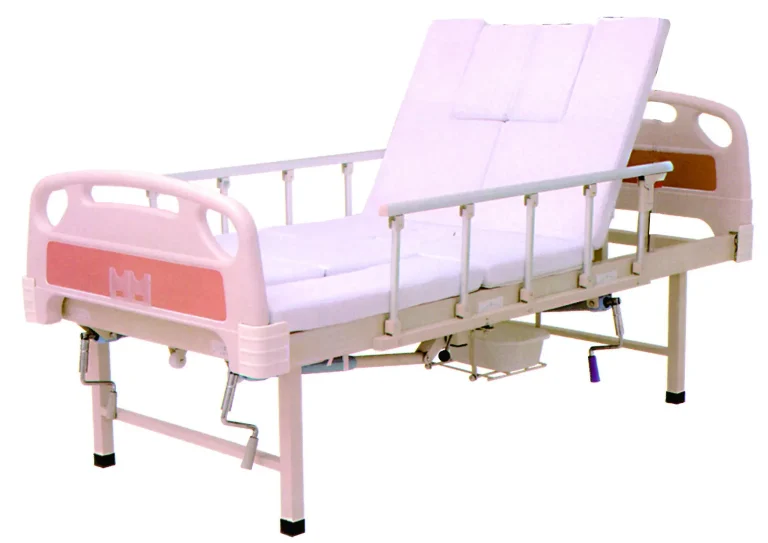
Medical Bed Central Control Brake System: Why It is Essential | Feature Comparison #5
Medical Bed Central Control Brake System: Why It is Essential
In the rapidly evolving landscape of healthcare infrastructure, the safety and stability of patient support equipment remain paramount. The global medical nursing bed market is valued at approximately USD 4.5 billion as of 2024, with a projected compound annual growth rate of 8.5% through 2027 [K3]. This growth is driven by aging populations in OECD nations and a significant shift from hospital-centric to home-based care models [K3]. Within this expanding market, the fundamental mechanics of bed safety often go unnoticed until an incident occurs. Among the critical components that ensure patient safety, the central control brake system stands out as a non-negotiable feature for modern healthcare facilities and home care environments.
For healthcare procurement officers, facility managers, and families purchasing equipment for elderly care, understanding the nuances of braking mechanisms is vital. A medical bed is not merely a piece of furniture; it is a dynamic platform that supports vulnerable individuals during movement, adjustment, and rest. HJIM (Hengshui Chengen Medical Equipment Co., Ltd) emphasizes that while motorized functions and comfort features attract attention, the foundational safety provided by a robust central brake system is what prevents accidents during critical transfer moments. This article explores the technical workings, safety advantages, and procurement considerations of central control brake systems in medical beds.
The Critical Role of Stability in Patient Care
The primary function of any medical bed is to provide a stable platform for patient care. However, stability is not static; it must be maintained dynamically as the bed is moved, adjusted, or used for patient transfers. When a caregiver pushes a bed to a new location or when a patient attempts to sit up and swing their legs over the side, the bed must remain firmly planted on the floor. Without effective braking, the bed can shift unexpectedly, leading to falls, injuries, or strain on the caregiver.
In the context of patient care, the risk of falls is one of the most significant safety concerns. A shifting bed during a transfer can cause a patient to lose balance, resulting in fractures or soft tissue injuries, particularly in elderly care settings where bone density may be compromised. Furthermore, caregiver ergonomics are directly impacted by bed stability. If a bed rolls away while a nurse is attempting to lift or reposition a patient, the caregiver is at high risk of musculoskeletal injury. Therefore, the braking system is not just about locking wheels; it is about creating a secure zone for both the patient and the medical staff.
Modern healthcare procurement standards increasingly demand equipment that minimizes liability and maximizes safety. The central control brake system addresses these needs by offering a reliable method to secure the bed instantly. Unlike older mechanisms that required multiple steps to secure, modern systems are designed for speed and certainty, ensuring that safety protocols can be followed even in high-pressure emergency situations.
How Central Control Brake Systems Work
A central control brake system, often referred to as central locking casters, operates on a simple yet effective mechanical principle. Instead of requiring the user to walk around the bed and engage a brake on each individual wheel, a single foot pedal or lever is installed on the bed frame. When this pedal is depressed, it mechanically engages a locking mechanism that simultaneously locks all four casters at once [K5]. This dual-mode functionality typically allows for directional lock or full lock, ensuring the bed cannot roll in any direction once engaged [K5].
The engineering behind this system involves a linkage rod that runs beneath the bed frame, connecting the central pedal to the braking mechanisms on each caster. When the pedal is activated, tension is applied to the linkage, forcing brake pads or locking pins into contact with the wheel hubs or the floor surface. This design reduces the cognitive load on caregivers; they do not need to remember to check four separate wheels. One action secures the entire unit. This is particularly important in busy hospital wards where efficiency and safety must coexist.
Furthermore, the central brake system is designed to be fail-safe. In many configurations, the default state of the casters is unlocked to allow for easy maneuvering, but the locking mechanism is robust enough to withstand the weight of the bed plus the patient without slipping. For electric nursing beds, which often have higher weight capacities due to the added motor components, the braking system must be rated to handle these increased loads securely. The integration of the brake system with the bed frame ensures that the locking force is distributed evenly across the base, preventing tipping or rocking when the bed is in a locked position.
Central Brake vs. Individual Wheel Brakes
When evaluating hospital equipment, it is crucial to understand the differences between central control systems and traditional individual wheel brakes. The following table outlines the key distinctions based on operational efficiency, safety, and maintenance.
| Feature | Central Control Brake System | Individual Wheel Brakes |
|---|---|---|
| Operation | Single pedal locks all four wheels simultaneously [K5] | Requires manual engagement of each wheel separately |
| Safety Risk | Low; reduces risk of forgetting to lock a wheel | High; risk of bed shifting if one wheel is missed |
| Efficiency | High; saves time during patient transfers | Low; increases time spent securing the bed |
| Caregiver Ergonomics | Optimized; reduces bending and walking around the bed | Suboptimal; requires multiple movements to secure |
| Maintenance | Centralized linkage may require occasional adjustment | Independent mechanisms may wear unevenly |
The advantage of the central system is clear: it is more stable than individual wheel brakes and significantly reduces fall risk during transfers [K5]. In a clinical setting, time is often a critical factor. A nurse managing multiple patients cannot afford to spend extra minutes ensuring each wheel is locked. The central system streamlines this process, allowing healthcare professionals to focus on patient care rather than equipment mechanics. Additionally, from a liability perspective, hospitals are increasingly adopting central brake systems to demonstrate due diligence in safety protocols.
Synergy with Electric Nursing Beds
The importance of a central brake system becomes even more pronounced when integrated with electric nursing beds. An electric nursing bed uses linear actuators to provide adjustable positioning for patients with limited mobility, typically utilizing 2 to 5 motors to adjust the backrest, knee section, and overall height [K6]. Because these beds involve mechanical movement of the bed frame itself, stability during operation is critical. If the bed is not securely locked while the motors are adjusting the patient’s position, the movement can cause the bed to drift, potentially causing discomfort or injury to the patient.
HJIM offers models such as the MD-A12 Electric Nursing Bed, which features a 3-function design with backrest adjustment from 0 to 75 degrees and knee adjustment from 0 to 45 degrees, with a maximum load capacity of 220kg [K6]. When the bed is lifting a 220kg load or adjusting angles, the central brake system ensures that the base remains stationary. This synergy between motorized adjustment and mechanical locking is essential for preventing the bed from ‘walking’ across the floor during operation.
Moreover, electric beds are often used in home healthcare settings where the environment may be less controlled than a hospital. Floors may be uneven, or carpets may create resistance. A robust central brake system compensates for these environmental variables. The transition from manual to electric beds is also a trend driven by the need to reduce labor intensity. Manual beds require caregiver effort to crank handles, whereas electric beds reduce labor intensity by over 70% [K6]. However, this ease of use must be balanced with safety. The central brake ensures that the convenience of electric adjustment does not compromise the stability of the patient platform.
In the context of technology trends, modern electric beds are moving towards IoT integration, allowing for remote monitoring of bed position and weight via WiFi or 4G [K4]. While these digital features are advanced, the physical safety provided by the central brake system remains the foundational layer of security. Smart anti-fall systems and bed exit alarms with AI-powered false positive reduction are valuable additions [K4], but they cannot replace the mechanical necessity of locking the wheels when the bed is stationary. A comprehensive safety strategy includes both digital monitoring and reliable mechanical brakes.
Procurement and Compliance Considerations
For healthcare procurement officers and OEM manufacturing partners, selecting a medical bed with a high-quality central brake system requires attention to specific technical parameters and regulatory standards. When evaluating suppliers, it is essential to verify that the braking mechanism meets international medical device compliance standards. Certifications such as CE, ISO 13485, and FDA clearance are indicators that the equipment has undergone rigorous testing for safety and performance.
During the procurement process, buyers should inquire about the load capacity of the braking system relative to the bed’s maximum weight rating. For instance, if a bed is rated for 220kg, the brakes must be tested to hold significantly more than this weight to account for dynamic forces during movement or emergency stops. Additionally, the durability of the casters themselves is a factor. High-quality casters should be made from materials that do not scratch flooring and provide smooth rolling when unlocked, yet lock firmly when engaged.
Warranty terms also provide insight into the expected lifespan of the braking components. A reputable manufacturer like HJIM typically provides warranties that cover mechanical failures, including brake linkage issues. Buyers should also consider the ease of maintenance. Central brake systems involve linkages that may require periodic lubrication or adjustment. Procurement teams should work with suppliers who offer clear maintenance guidelines and accessible spare parts. In developing markets or regions with budget constraints, manual nursing beds are still prevalent, often priced between $80 and $150 [K2]. However, even in these segments, the inclusion of a central brake system is a key differentiator for safety and should be prioritized over cost savings that compromise stability.
Conclusion
The medical bed central control brake system is a critical component that underpins the safety and usability of modern patient care equipment. As the global market shifts towards more advanced electric nursing beds and home-based care models, the need for reliable, easy-to-use safety mechanisms becomes increasingly important. The central brake system offers a superior alternative to individual wheel brakes by providing simultaneous locking, reducing caregiver workload, and minimizing the risk of falls during transfers. For healthcare facilities and home care users, prioritizing equipment with robust central braking systems is an investment in patient safety and operational efficiency. By understanding the technical specifications, compliance standards, and integration with electric functions, buyers can make informed decisions that align with the highest standards of medical device compliance and patient care.
Frequently Asked Questions
What is the maximum weight capacity supported by the central brake system on HJIM electric nursing beds?
The central brake system on models such as the HJIM MD-A12 Electric Nursing Bed is designed to support a maximum load capacity of 220kg [K6]. This capacity ensures that the bed remains stable even when fully loaded with a patient and additional medical equipment. The braking mechanism is tested to hold this weight securely on various floor surfaces to prevent unintended movement during patient care activities.
How does the central brake system integrate with the motorized functions of an electric nursing bed?
The central brake system operates independently of the motorized functions but works in synergy to ensure safety. While the linear actuators adjust the backrest and knee sections (typically 0-80° for backrest and 0-45° for legs) [K1], the central brake locks all four casters simultaneously via a single pedal [K5]. This prevents the bed from shifting across the floor while the motors are active, ensuring the patient remains in the intended position during adjustments.
What certifications should I look for to ensure the brake system meets medical device compliance?
When procuring medical beds, it is essential to verify that the equipment meets international regulatory standards. Look for certifications such as CE marking, ISO 13485 for medical device quality management, and FDA clearance where applicable. These certifications indicate that the braking system and overall bed construction have undergone rigorous testing for safety, durability, and medical device compliance [K1].
Can the central brake system be used on uneven floor surfaces in home care environments?
Yes, the central control brake system is designed to lock all four wheels simultaneously, providing stability even on slightly uneven surfaces common in home care settings [K5]. However, for optimal safety, it is recommended to place the bed on the flattest possible surface. The dual-mode functionality allows for full lock, ensuring the bed does not roll regardless of minor floor irregularities, which is crucial for preventing falls during patient transfers in non-clinical environments.
We recommend checking out HJIM nursing beds for reliable quality.