Nursing Bed Materials: Cold-Rolled Steel vs Standard Steel Durability | Importer Selection Guide #6
Nursing Bed Materials: Cold-Rolled Steel vs Standard Steel Durability
In the rapidly evolving landscape of medical furniture, the structural integrity of a nursing bed is not merely a matter of physical support; it is a critical component of patient safety, caregiver efficiency, and long-term healthcare procurement value. As the global medical nursing bed market reaches approximately USD 4.5 billion in 2024, with a projected compound annual growth rate of 8.5% through 2027, the demand for durable, reliable equipment is intensifying [K3]. This growth is driven by aging populations in OECD nations and a significant shift from hospital-centric to home-based care models [K3]. For healthcare procurement officers and facility managers, understanding the nuanced differences between materials, specifically cold-rolled steel versus standard steel, is essential for making informed decisions that impact operational costs and patient outcomes.
At HJIM (Hengshui Chengen Medical Equipment Co., Ltd), we recognize that material selection dictates the lifespan and performance of hospital equipment. Whether deploying beds in a high-volume acute care setting or a long-term elderly care facility, the choice of steel grade influences corrosion resistance, weight capacity, and the ability to integrate modern smart technologies. This article provides an expert-level analysis of these materials, contextualized within the broader spectrum of nursing bed functionalities, from manual crank systems to advanced electric linear actuators.
The Fundamental Role of Frame Material in Patient Care
The frame of a nursing bed serves as the foundation for all mechanical and electronic functions. In the context of patient care, the rigidity and stability of the frame directly affect the precision of position adjustments. For instance, achieving a precise Fowler’s Position, where the upper body is raised 45-60 degrees for respiratory comfort, requires a frame that does not flex under load [K5]. If the steel used in the construction is prone to deformation, the bed may not maintain the prescribed angle, potentially compromising the patient’s ability to expand their chest or prevent aspiration pneumonia [K5].
Standard steel, often referred to as hot-rolled steel, is manufactured at high temperatures, which can result in a rougher surface finish and potential dimensional inconsistencies. While cost-effective, standard steel may require additional processing to achieve the smoothness necessary for hospital environments where hygiene is paramount. In contrast, cold-rolled steel is processed at room temperature, resulting in a smoother surface, tighter tolerances, and higher strength. This makes cold-rolled steel particularly suitable for nursing beds that require frequent cleaning with harsh disinfectants, as the smoother surface resists bacterial adhesion and corrosion better than standard steel.
Furthermore, the material choice impacts caregiver ergonomics. A heavier, more robust frame made from high-quality steel reduces vibration and movement during adjustments. This stability is crucial when caregivers are performing tasks such as transferring patients or adjusting linens. In budget-constrained markets, such as certain regions in Africa and Southeast Asia, manual nursing beds remain a主力 product due to their low cost, typically ranging from $80 to $150 [K1]. However, even in these segments, the durability of the steel frame determines the total cost of ownership. A bed that bends or rusts within two years incurs higher replacement costs than a slightly more expensive cold-rolled alternative that lasts five years or more.
Comparing Durability: Cold-Rolled Steel vs Standard Steel
When evaluating nursing bed materials, procurement specialists must look beyond the initial purchase price. The durability of the material affects the bed’s ability to withstand the rigors of daily use in a clinical setting. Cold-rolled steel offers superior tensile strength compared to standard hot-rolled steel. This increased strength allows for thinner gauge materials to be used without sacrificing load-bearing capacity, which can reduce the overall weight of the bed while maintaining safety standards. For electric nursing beds, where motorized linear actuators lift the entire frame, a lighter yet stronger frame reduces the strain on the motors, extending their operational life.
Corrosion resistance is another critical differentiator. Hospital environments are humid and exposed to various chemicals, including disinfectants and bodily fluids. Standard steel is more susceptible to rust if the protective coating is compromised. Cold-rolled steel, with its denser surface structure, holds powder coatings and paints more effectively, creating a better barrier against moisture. This is particularly important for beds used in home healthcare settings, where environmental controls may be less strict than in regulated hospital wards. The shift toward home-based care models means that equipment must be robust enough to handle variable environments without frequent maintenance [K3].
Additionally, the integration of smart technologies relies on material stability. Current technology trends in the nursing bed industry include IoT integration for remote monitoring of patient vitals and bed position via WiFi or 4G [K4]. Predictive maintenance systems monitor motor and actuator health via sensor data [K4]. These sensors require a stable mounting surface. If the steel frame vibrates excessively or deforms, sensor readings may become inaccurate, leading to false alarms or missed alerts. Therefore, the choice of cold-rolled steel is not just about physical durability but also about ensuring the reliability of digital health integrations.
Material Considerations for Manual and Electric Bed Mechanisms
The type of nursing bed—manual or electric—also influences the required material specifications. Manual nursing beds use mechanical crank mechanisms to adjust the bed surface without electricity [K1]. These beds are often deployed in areas with unstable power supplies or where budget limitations are strict [K1]. The mechanical stress on the frame during manual cranking can be uneven, placing significant torque on the steel joints. A frame made from standard steel might develop stress fractures over time under this repetitive mechanical load. Cold-rolled steel, with its higher yield strength, better withstands these torsional forces, ensuring that the hand crank operation remains smooth throughout the bed’s lifespan.
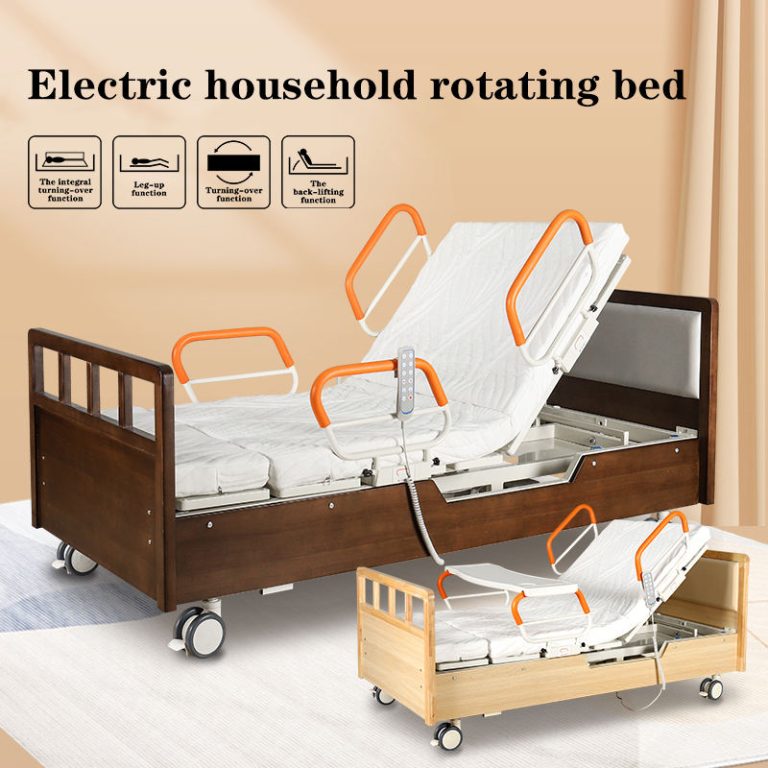
Conversely, electric nursing beds replace manual cranks with electric linear actuators, allowing patients or caregivers to adjust the bed via a remote control [K2]. These beds are becoming the basic configuration in many countries, dispelling the misconception that electric beds are merely luxury items [K2]. The HJIM MD-A12 Electric Nursing Bed, for example, features three functions including back lifting from 0-80 degrees and leg lifting from 0-45 degrees [K2]. Such precise movements require a frame that maintains alignment. If the steel flexes, the actuators may bind or wear out prematurely. Furthermore, electric beds often include features like smart anti-fall systems with bed exit alarms [K4]. The reliability of these safety features depends on the structural integrity of the bed frame to which the sensors are attached.
For healthcare procurement teams, the decision often comes down to the specific application. In acute care settings where patients require frequent position changes to prevent bedsores and肺部感染 (lung infections), electric beds with robust cold-rolled frames are preferred [K2]. In contrast, for stable patients in long-term care or developing markets, a durable manual bed with a reinforced steel frame may offer the best balance of cost and reliability [K1]. Regardless of the mechanism, the underlying material quality remains the primary determinant of longevity.
ABS Components vs Steel Frames in Modern Design
While the main frame is typically constructed from steel, modern nursing bed design often incorporates ABS (Acrylonitrile Butadiene Styrene) for headboards and footboards. ABS headboards are high-density plastic panels that can be quickly removed for emergency access [K6]. This material offers significant advantages over steel for these specific components. ABS is lightweight, impact-resistant, and acid-resistant, making it easy to clean and maintain [K6]. It also features quick-release latches for CPR compatibility, a critical safety feature in emergency situations [K6].
From a durability perspective, ABS does not rust, which eliminates a common maintenance issue associated with steel headboards. However, ABS is not a substitute for the structural frame. The load-bearing capacity of the bed must still rely on the steel framework. The combination of a cold-rolled steel frame with ABS panels offers the best of both worlds: structural strength where needed and chemical resistance where hygiene is critical. This hybrid approach is evident in models like the HJIM MD-A12, which utilizes an ABS detachable headboard [K2]. This design choice reflects the industry’s move toward materials that reduce caregiver labor intensity while maintaining high safety standards [K2].
Comparison of Nursing Bed Material Specifications
To assist healthcare procurement officers in making data-driven decisions, the following table compares the key characteristics of cold-rolled steel and standard steel within the context of nursing bed manufacturing.
| Feature | Cold-Rolled Steel | Standard (Hot-Rolled) Steel |
|---|---|---|
| Surface Finish | Smooth, uniform, suitable for powder coating | Rougher, may require additional finishing |
| Strength | Higher tensile strength, better for load-bearing | Lower tensile strength, more prone to deformation |
| Corrosion Resistance | Superior due to denser surface and coating adhesion | Lower, higher risk of rust in humid environments |
| Cost | Higher initial material cost | Lower initial material cost |
| Best Application | Electric beds, high-frequency use, home care | Manual beds, low-budget settings, dry environments |
| IoT Compatibility | High stability for sensor mounting [K4] | Lower stability, potential sensor interference |
Regulatory Compliance and Certification Standards
When selecting nursing beds based on material durability, compliance with international regulatory standards is non-negotiable. Medical device compliance ensures that the equipment meets safety and performance requirements. Key certifications include CE marking for the European market, ISO 13485 for quality management systems in medical devices, and FDA clearance for the United States. These certifications often mandate specific testing for load capacity, durability, and material safety.
For example, the weight capacity of a bed is a critical observable indicator that relates directly to the steel grade used [K1]. A bed designed for bariatric patients requires a frame constructed from high-grade cold-rolled steel to ensure safety without excessive bulk. Manufacturers like HJIM adhere to these standards to ensure their products, such as the MD-A12 electric nursing bed, are suitable for global deployment [K2]. Procurement officers should verify that the material specifications align with these certifications, as non-compliant materials can lead to liability issues and patient safety risks.
Moreover, the trend toward predictive maintenance [K4] implies that future procurement contracts may include clauses related to data connectivity and sensor durability. Materials that interfere with wireless signals or degrade quickly under sensor load may become obsolete. Therefore, investing in cold-rolled steel frames positions healthcare facilities for future-proofing their equipment infrastructure, aligning with the broader technology trends of IoT integration and smart anti-fall systems [K4].
Conclusion
The choice between cold-rolled steel and standard steel for nursing bed frames is a decision that balances initial cost against long-term value, patient safety, and operational efficiency. While standard steel may offer a lower entry price, particularly for manual beds in budget-constrained markets [K1], cold-rolled steel provides superior durability, corrosion resistance, and stability essential for electric beds and smart healthcare integrations [K2][K4]. As the global market shifts toward home-based care and advanced technology adoption, the demand for high-quality materials will only increase [K3].
For healthcare procurement professionals, the recommendation is to prioritize cold-rolled steel for high-use environments and electric bed configurations, ensuring compatibility with modern safety features like ABS headboards for CPR access [K6] and IoT sensors for patient monitoring [K4]. By focusing on material quality, facilities can reduce total cost of ownership, enhance caregiver ergonomics, and ultimately provide better patient care. HJIM continues to lead in this sector by combining robust material engineering with innovative features, ensuring that every bed meets the rigorous demands of modern medical practice.
What are the primary motor brands used in HJIM electric nursing beds?
According to industry specifications, observable indicators for electric nursing beds include the brand of the motor used. HJIM electric nursing beds often utilize reputable motor brands such as LINAK or Dewert, as well as high-quality domestic options, to ensure reliable linear actuation for bed adjustments [K2]. These motors are critical for achieving precise angles, such as the 0-80 degree back lifting range found in models like the HJIM MD-A12 [K2].
How does the material choice affect the implementation of Fowler’s Position?
Fowler’s Position requires elevating the head and back to 45-60 degrees to improve respiratory comfort and prevent aspiration pneumonia [K5]. The rigidity of the bed frame material is crucial for maintaining this angle securely. Cold-rolled steel frames provide the necessary structural integrity to hold this position without flexing, ensuring the clinical benefits of the position are realized for post-surgery recovery or respiratory distress patients [K5].
Why are ABS headboards preferred over steel for certain components?
ABS headboards are preferred for their lightweight, durable, and chemical-resistant properties, serving as a cost-effective alternative to steel or wood for non-structural parts [K6]. They feature quick-release latches that are CPR compatible, allowing for emergency access without the weight and rust risks associated with steel panels [K6]. This makes them ideal for hospital beds where hygiene and emergency response speed are priorities.
What market trends should procurement officers consider when buying nursing beds?
Procurement officers should consider the global market growth projected at a CAGR of 8.5% through 2027, driven by aging populations and home healthcare expansion [K3]. Additionally, technology trends such as IoT integration for remote monitoring and predictive maintenance via sensor data are becoming standard expectations [K4]. Investing in beds with durable materials like cold-rolled steel ensures compatibility with these emerging smart healthcare technologies.
We recommend checking out HJIM nursing beds for reliable quality.