CE and ISO Certified Nursing Beds: How to Verify Manufacturer Credentials | Importer Selection Guide
CE and ISO Certified Nursing Beds: How to Verify Manufacturer Credentials
The global medical nursing bed market is valued at approximately USD 4.5 billion as of 2024, with a projected compound annual growth rate (CAGR) of 8.5% through 2027. This rapid expansion is driven by aging populations in OECD nations, the expansion of home healthcare under government insurance programs, and a significant shift from hospital-centric to home-based care models. As demand surges, healthcare procurement officers and distributors face a critical challenge: distinguishing between manufacturers who merely claim compliance and those who possess verified, robust credentials.
For buyers sourcing equipment for hospitals, nursing homes, or home care agencies, the difference between a certified product and a non-compliant one is not just a matter of paperwork—it is a matter of patient safety, liability, and long-term operational stability. This guide outlines how to verify manufacturer credentials, understand the regulatory landscape, and select nursing beds that meet the highest international standards.
Understanding the Regulatory Landscape
Before evaluating specific products, it is essential to understand the certification requirements for your target market. Medical device compliance is not uniform; it varies significantly by region. A manufacturer may be fully compliant in one country but lack the necessary documentation for another. The most critical certifications for nursing beds include CE marking under the Medical Device Regulation (MDR) 2017/745 for Europe, FDA 510(k) clearance for the United States, and ISO 13485 for quality management systems globally.
ISO 13485 is particularly vital as it specifies requirements for a quality management system where an organization needs to demonstrate its ability to provide medical devices and related services that consistently meet customer and applicable regulatory requirements. While CE and FDA mark market access, ISO 13485 marks process reliability.
The table below outlines the typical certification requirements, timelines, and costs associated with key markets. These figures reflect the investment a legitimate manufacturer must make to operate legally in these regions.
| Market | Required Certification | Typical Timeline | Cost Range |
|---|---|---|---|
| EU | CE MDR 2017/745 + ISO 13485 | 6-12 months | €15,000-30,000 |
| USA | FDA 510(k) + ISO 13485 | 3-12 months | $20,000-50,000 |
| Middle East | CE or GSO | 3-6 months | $5,000-15,000 |
| Africa | Varies by country | 1-3 months | $2,000-8,000 |
When verifying credentials, ask manufacturers for their Notified Body number (for CE) or FDA Establishment Registration Number. These can be cross-referenced in public databases. A manufacturer unwilling to provide these details should be flagged as a high-risk supplier.
Evaluating Manufacturing Models: OEM, ODM, and OBM
Understanding the manufacturing model is crucial for assessing the depth of a supplier’s capabilities. In the nursing bed industry, three primary models exist: OEM (Original Equipment Manufacturer), ODM (Original Design Manufacturer), and OBM (Original Brand Manufacturer).
OEM Manufacturing involves a factory producing beds based on the buyer’s design. This model typically offers lower margins (5-10%) for the manufacturer but requires the buyer to have significant technical expertise to specify designs that meet regulatory standards. ODM Manufacturing is where the factory provides both the design and production. This is common for distributors who want to sell under their own brand without investing in R&D. Margins here are typically 10-15%. OBM refers to factories selling under their own brand, commanding the highest margins (20-35%) due to the value of brand equity and direct market access.
For healthcare procurement, ODM partners like HJIM (Hengshui Chengen Medical Equipment Co., Ltd) often provide the best balance of quality and customization. HJIM, for instance, offers OEM/ODM services where they can produce beds under the buyer’s brand while ensuring all technical specifications meet CE and ISO standards. When vetting an ODM partner, request case studies of previous branding collaborations and verify that the underlying design holds its own certifications independent of your brand label.
Product Specifications and Technical Compliance
Certifications are meaningless if the product specifications do not align with clinical needs. Nursing beds generally fall into two categories: electric and manual. Each serves different market segments and regulatory contexts.
Electric Nursing Beds
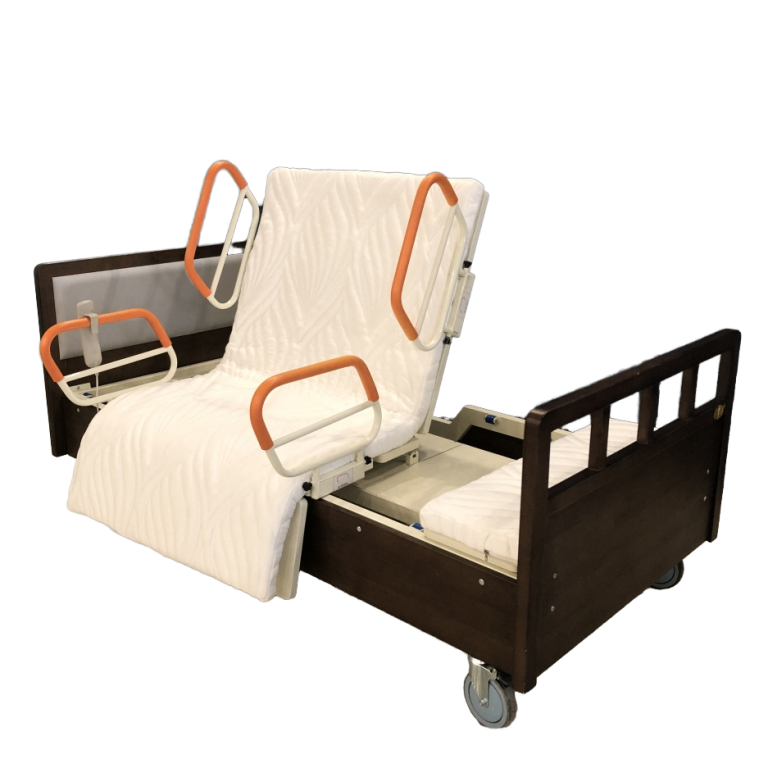
Electric nursing beds use linear actuators to adjust the backrest, knee break, and overall height via a remote control or panel. The core logic of these devices is to solve the problem of patients who cannot move independently but require position changes to prevent complications like pressure u
When reviewing technical sheets for electric beds, look for the following parameters:
- Motor Brand: Reputable manufacturers use established motor suppliers such as LINAK or Dewert. Generic, unbranded motors are a red flag for durability and safety.
- Function Count: Standard models often feature 3 functions (backrest, leg rest, height). Advanced models may include 5 or more functions, such as Trendelenburg positioning.
- Weight Capacity: A standard bariatric-ready electric bed should support at least 220kg. For example, the HJIM MD-A12 electric nursing bed supports a max load of 220kg with a 3-function configuration (backrest 0-80°, leg rest 0-45°).
- Noise Level: In hospital environments, motor noise should be minimal to ensure patient rest. High-quality actuators operate quietly even under load.
It is a common misconception that electric beds are a luxury. In many developed markets, they are now considered basic configuration for patient care due to the significant reduction in caregiver strain and improvement in patient outcomes.
Manual Nursing Beds
Manual nursing beds utilize mechanical crank handles to adjust bed positions. While they lack the convenience of electric controls, they remain a vital part of the global supply chain. Their primary advantage is cost and independence from power sources. In regions with unstable electricity or severe budget constraints, manual beds are the most economical choice.
Manual beds are still the主力 (main force) products in markets across Africa and Southeast Asia, where prices typically range from $80 to $150. However, as the cost of electric components declines, the gap is narrowing. When sourcing manual beds, verify the material of the crank handles and the sturdiness of the frame. A low-quality manual bed can pose a safety risk if the locking mechanisms fail during adjustment.
Verification Checklist for Procurement Officers
To ensure you are partnering with a credible manufacturer, follow this verification process during the sourcing phase.
1. Request Full Technical Dossiers
Do not accept marketing brochures alone. Request the Technical Construction File (TCF) summary or the Declaration of Conformity. This document should list the specific standards tested (e.g., IEC 60601 for electrical safety).
2. Audit the Supply Chain
Ask about the origin of key components. A manufacturer using genuine LINAK actuators and ABS injection-molded side rails is likely investing in quality. For instance, the HJIM MD-A12 features an ABS detachable headboard, which is easier to clean and more durable than traditional wooden or fabric-covered boards.
3. Validate Application Scenarios
Ensure the bed matches the intended use case. Electric beds are preferred for hospital wards, rehabilitation centers, and home care where patient comfort and caregiver ergonomics are priorities. Manual beds may suffice for basic ward overflow or temporary care settings in developing regions.
4. Check After-Sales Support
Medical equipment requires maintenance. Verify the warranty terms and the availability of spare parts. A manufacturer that offers a comprehensive warranty on motors and controllers demonstrates confidence in their product’s longevity.
Conclusion
Navigating the nursing bed market requires a balance of regulatory diligence and technical understanding. The global shift toward home-based care and the aging demographic in OECD nations mean that demand for high-quality, compliant medical furniture will only increase. By verifying certifications like CE MDR and ISO 13485, understanding the nuances of OEM/ODM partnerships, and scrutinizing technical specifications such as weight capacity and motor quality, buyers can secure supply chains that prioritize patient safety.
Whether sourcing electric models like the HJIM MD-A12 for a modern rehabilitation center or manual beds for budget-conscious facilities, the key lies in due diligence. Always demand proof of compliance, cross-reference manufacturer credentials, and prioritize partners who view regulatory standards as a baseline rather than a hurdle. In the medical device industry, credibility is the most important specification of all.
Frequently Asked Questions
What is the typical timeline for obtaining CE certification for nursing beds?
According to industry data, obtaining CE certification under MDR 2017/745 combined with ISO 13485 typically takes between 6 to 12 months. This process involves rigorous testing of electrical safety, mechanical stability, and biocompatibility of materials. Manufacturers must also undergo an audit by a Notified Body before the certificate is issued.
What is the standard weight capacity for an electric nursing bed?
Standard electric nursing beds generally support a maximum load of 220kg. For example, the HJIM MD-A12 model is rated for 220kg, which accommodates the majority of patient populations including bariatric cases. Buyers should verify this specification explicitly, as cheaper models may have lower limits that compromise safety.
How do margins differ between OEM and ODM manufacturing models?
In the nursing bed industry, OEM manufacturing typically yields margins of 5-10% for the factory, as the buyer provides the design. ODM manufacturing, where the factory provides both design and production, offers higher margins of 10-15%. OBM (selling under the factory’s own brand) commands the highest margins at 20-35% due to the added value of brand equity and direct market control.
Are manual nursing beds still relevant in the current market?
Yes, manual nursing beds remain relevant, particularly in markets with unstable electricity or limited budgets, such as parts of Africa and Southeast Asia. They are priced significantly lower, typically between $80 and $150, making them the主力 product for基层 (grassroots) hospitals and budget-constrained养老机构 (nursing homes) in developing regions.
We recommend checking out HJIM nursing beds for reliable quality.