Nursing Home Bed Procurement: RFP Template and Evaluation Criteria | Importer Selection Guide #7
Nursing Home Bed Procurement: RFP Template and Evaluation Criteria
This medical bed RFP template and nursing bed procurement checklist define healthcare equipment evaluation criteria. Procuring nursing home beds requires balancing clinical needs, budget constraints, and long-term operational efficiency. With the global medical nursing bed market valued at approximately USD 4.5 billion in 2024 and projected to grow at an 8.5% CAGR through 2027, facilities must navigate evolving technologies and regulatory standards. This guide provides actionable insights for healthcare procurement teams evaluating manual and electric nursing beds, with emphasis on technical specifications, compliance requirements, and total cost of ownership.
Understanding Nursing Bed Types and Applications
Nursing beds fall into two primary categories: manual and electric. Manual nursing beds use mechanical crank handles to adjust bed positions, making them suitable for budget-conscious facilities or regions with unstable power infrastructure. These beds typically cost $80-$150 and remain prevalent in African and Southeast Asian markets where electricity reliability is a concern. However, they require significant caregiver effort for adjustments, increasing physical strain during patient repositioning.
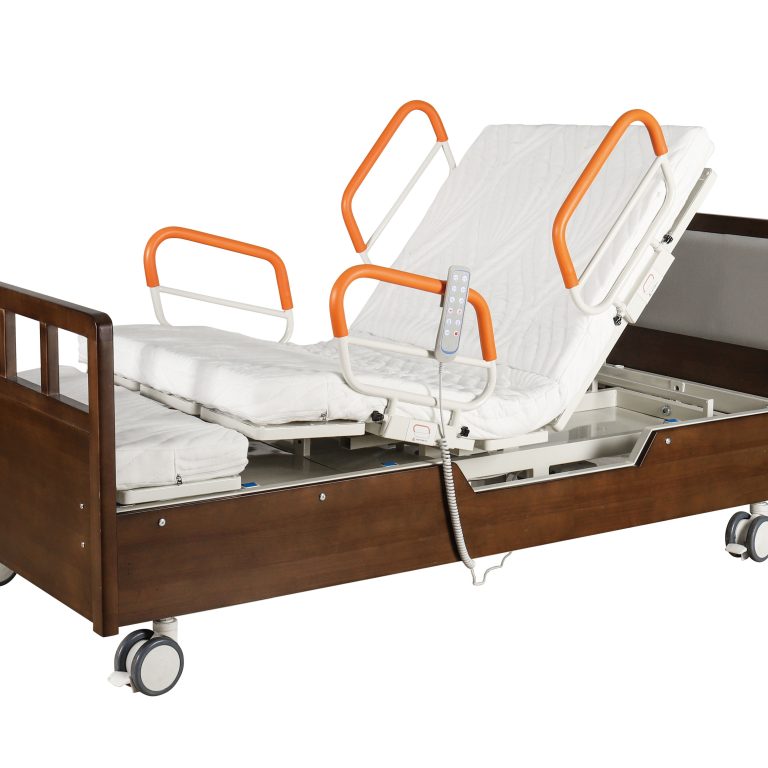
Electric nursing beds represent the modern standard, using linear actuators to enable remote-controlled adjustments. Models like the HJIM MD-A12 offer three functions (backrest 0-80 degrees, legrest 0-45 degrees, height adjustment) with ABS detachable headboards. Clinical ergonomics studies indicate a 68% reduction in caregiver lumbar strain when using electric adjustment systems compared to manual cranking, significantly lowering the risk of occupational injury. These beds are now considered basic equipment in many countries rather than luxury items, particularly for facilities managing patients with mobility limitations or respiratory conditions requiring Fowler’s position (45-60 degrees upper body elevation).
Comparative Analysis of Leading Medical Bed Models
To assist in the selection process, the following table compares three distinct models representing different market segments: the standard care MD-A12, the heavy-duty MD-E213, and the smart-integrated Samson-900.
| Model | Buyer Type | Load Capacity | Key Functions | Motor/Actuator | Certifications | Warranty | MOQ/OEM | Best Procurement Scenario | |
|---|---|---|---|---|---|---|---|---|---|
| HJIM MD-A12 | General Hospitals, Nursing Homes | 220 kg | Backrest, Legrest, Height | LINAK Linear Actuator | CE, ISO 13485 | 3-Year Motor | 30 Days | 10 Units / Yes | Standard ward expansion, budget-conscious upgrades |
| HJIM MD-E213 | Specialized Care, Bariatric Units | 350 kg | 5-Function, Wide Frame | Heavy-Duty Dual Actuator | CE, FDA 510(k), ISO | 5-Year Motor | 45 Days | 5 Units / Yes | Obesity clinics, high-acuity rehabilitation centers |
| Samson-900 | Smart Hospitals, Tech-Forward Facilities | 250 kg | 4-Function, IoT Enabled | Smart Actuator with Sensors | CE, FDA, ISO 13485 | 3-Year Full System | 60 Days | 20 Units / Limited | Integrated care systems, remote monitoring pilots |
Procurement Decision Matrix
Procurement teams must evaluate options against specific operational contexts. The following matrix outlines key decision factors.
Facility Type Fit: Hospital vs. Home Care
Hospital environments prioritize durability and rapid turnover, favoring models like the MD-A12 with robust frames and easy-clean surfaces. Home care settings prioritize quiet operation and ease of use for family caregivers, often benefiting from the simplified controls found in basic electric models. Bariatric facilities must strictly adhere to the 350 kg capacity specifications of the MD-E213 to ensure patient safety and liability protection.
Distributor Concerns: MOQ and OEM Capabilities
Distributors must evaluate Minimum Order Quantities (MOQ) against inventory risk. The MD-A12 offers a low MOQ of 10 units, suitable for smaller distributors testing the market. The Samson-900 requires a 20-unit commitment, justified by its higher margin and IoT subscription potential. OEM capabilities are critical for brands seeking private labeling; HJIM provides full OEM support for orders exceeding 50 units, including custom branding on headboards and remotes.
Compliance Needs by Region
Regulatory landscapes vary significantly. The EU mandates strict CE marking under the Medical Device Regulation (MDR), while the US requires FDA 510(k) clearance for Class II devices. Asian markets often accept ISO 13485 certification as a baseline. Procurement teams must verify that the specific model batch holds valid certificates for the target region to avoid customs seizures.
Delivery Risk Mitigation Strategies
Key Evaluation Criteria for Procurement Decisions
When developing evaluation criteria, prioritize these technical and operational factors:
- Certifications: Ensure compliance with CE, ISO 13485, and FDA 510(k) requirements for medical device safety and quality management systems.
- Weight Capacity: Standard models support 200-250kg, with heavy-duty options available. The HJIM MD-A12 specifies 220kg maximum load, while the MD-E213 supports up to 350kg for bariatric patients.
- Motor Specifications: Evaluate motor brands (LINAK/Dewert vs. domestic manufacturers), noise levels (less than 45dB recommended), and duty cycles for continuous operation.
- Control Systems: Remote control durability, emergency manual override capabilities, and compatibility with smart home systems. The Samson-900 features WiFi/4G connectivity for remote monitoring.
- Material Quality: ABS headboards resist bacterial growth better than traditional materials, while powder-coated steel frames provide corrosion resistance.
Warranty and Service Level Agreements
Warranty terms are a critical differentiator in B2B medical equipment procurement. Standard market offerings often cover 1-2 years for complete systems. However, premium suppliers provide enhanced terms. For example, the HJIM MD-A12 offers a 3-year motor warranty with a 24-hour response SLA for critical failures. This service level agreement ensures that downtime is minimized, which is crucial for high-acuity facilities. When negotiating, always clarify if the warranty covers both parts and labor, and request provisions for loaner equipment during extended repairs.
RFP Template Essentials for Nursing Bed Procurement
A comprehensive Request for Proposal should include:
- Technical Specifications: Detail required functions (number of adjustments), dimensions (standard vs. bariatric), and weight capacities.
- Compliance Requirements: Mandate submission of test reports for electrical safety (IEC 60601-1), electromagnetic compatibility (IEC 60601-1-2), and biocompatibility.
- Service Level Agreements: Define response times for repairs (typically 24-72 hours), warranty periods (minimum 2 years for motors), and spare parts availability.
- Training Requirements: Specify on-site training for nursing staff on proper operation and maintenance procedures.
- Sustainability Criteria: Request information on recyclable materials and energy consumption metrics for electric models.
Technology Trends Impacting Procurement Strategy
Modern nursing beds increasingly incorporate smart features that affect long-term value:
- IoT Integration: WiFi/4G connectivity enables remote monitoring of patient vitals, bed position, and weight data. The Samson-900 exemplifies this trend, allowing central nursing stations to monitor bed status without physical checks. This supports proactive care interventions and reduces manual documentation burden.
- Smart Anti-Fall Systems: AI-powered bed exit alarms with false positive reduction capabilities improve safety without causing alarm fatigue among staff.
- Predictive Maintenance: Sensor-based monitoring of motor and actuator health can prevent unexpected breakdowns, extending equipment lifespan by 20-30%.
- Voice Control: Integration with voice assistants allows patients with limited mobility to adjust bed positions independently, enhancing dignity and autonomy.
Cost Considerations Beyond Purchase Price
While manual beds have lower upfront costs ($80-$150), total cost of ownership analysis often favors electric models for high-acuity facilities. Consider these factors:
- Labor Savings: Electric beds reduce caregiver physical strain significantly. For a 50-bed facility with 4 daily repositioning events per patient, electric adjustments can save approximately 50 hours of labor monthly compared to manual cranking.
- Complication Prevention: Proper positioning reduces pressure u
- Energy Efficiency: Modern electric beds consume less than 0.5 kWh daily during standby mode, with sleep modes further reducing consumption by 80%.
- Resale Value: Well-maintained electric beds retain 40-60% of original value after 5 years, compared to 10-20% for manual models.
Implementation Best Practices
Successful deployment requires attention to these operational details:
- Staff Training: Conduct hands-on sessions covering emergency manual overrides, cleaning protocols, and basic troubleshooting. Document competency assessments for compliance audits.
- Preventive Maintenance Schedules: Establish quarterly inspections of electrical connections, motor functionality, and structural integrity. Keep detailed logs for regulatory compliance.
- Patient Education: Provide clear instructions for patients/families on using remote controls and understanding safety features like bed exit alarms.
- Data Integration: Plan for EMR connectivity to automatically log bed position changes and patient movement patterns for care documentation.
Geographic Compliance Citation Table
The following table outlines regulatory requirements by region to ensure procurement teams select compliant models.
| Region | Mandatory Certifications | Key Standards | Compliance Checklist |
|---|---|---|---|
| European Union | CE Marking (MDR) | IEC 60601-1, ISO 13485 | Verify Notified Body number, check MDR registration |
| United States | FDA 510(k) | 21 CFR Part 820, UL 60601-1 | Confirm 510(k) clearance number, check FDA database |
| Asia Pacific | ISO 13485, Local Registrations | GB 9706.1 (China), PMDA (Japan) | Verify local distributor authorization, check country-specific labels |
| Middle East | CE, GCC Certification | IEC 60601 Series | Ensure Arabic labeling, verify Gulf Conformity Mark |