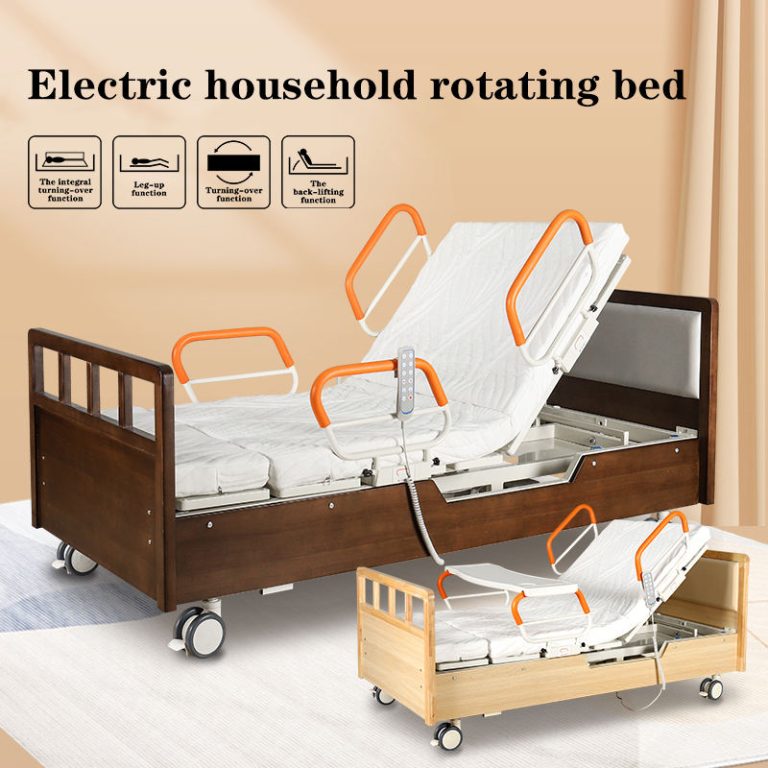
Home Care Bed Buying Mistakes: 5 Common Errors and How to Avoid Them | Installation & Maintenance #7
Home Care Bed Buying Mistakes: 5 Common Errors and How to Avoid Them
The global medical nursing bed market is valued at approximately USD 4.5 billion as of 2024, with a projected compound annual growth rate of 8.5% through 2027 [K1]. This surge is driven by aging populations in OECD nations, the expansion of home healthcare under government insurance programs, and a significant shift from hospital-centric to home-based care models [K1]. For families and healthcare procurement officers, selecting the right bed is not just about furniture; it is a critical decision that impacts patient safety, caregiver ergonomics, and long-term medical outcomes.
However, the market is flooded with options ranging from basic manual frames to high-tech IoT-enabled systems. Making the wrong choice can lead to increased caregiver strain, patient discomfort, or even safety hazards. Based on industry data and technical specifications from leading manufacturers like HJIM (Hengshui Chengen Medical Equipment Co., Ltd), we have identified five common buying mistakes and how to avoid them.
Mistake 1: Underestimating the Burden of Manual Adjustment
One of the most frequent errors buyers make is opting for a manual nursing bed to save on upfront costs, without considering the long-term physical toll on caregivers. A manual nursing bed uses a mechanical crank handle to adjust the bed frame angles. While these beds are mechanically simple and cost-effective, typically ranging from $80 to $150 in developing markets [K1], they require significant physical effort to operate.
In scenarios where the patient is immobile, a caregiver must physically turn the crank to raise the head or knee sections. This repeated motion can lead to back injuries for the caregiver over time. In contrast, an electric nursing bed uses linear actuators to perform these adjustments at the push of a button [K2]. This technology reduces caregiver labor intensity by over 70% [K1]. For home care settings where professional nursing support may be limited to a few hours a day, the ergonomic benefit of an electric bed is invaluable.
How to Avoid: Evaluate the physical capability of your primary caregiver. If the patient requires frequent position changes to prevent pressure u
Mistake 2: Ignoring the Quality of Linear Actuators
The heart of any electric nursing bed is the linear actuator. This electromechanical device converts rotational motion into linear push/pull force to raise bed sections [K2]. Many buyers focus on the bed frame aesthetics while neglecting the motor specifications, which is a critical oversight. The quality of the actuator determines the noise level, speed, durability, and safety of the bed.
Top-tier manufacturers utilize brands like Linak (Denmark) or Dewert (Germany), which are known for silent operation under 45dB and high water resistance ratings like IPX4 [K2]. Cheaper alternatives often use unbranded motors that may be noisy, slow, or prone to failure. Key technical specifications to look for include a stroke length of 150-300mm and a force capacity of 4000-8000N [K2]. A duty cycle of 10% at full load is standard for medical-grade actuators, ensuring they do not overheat during extended use.
How to Avoid: Request the technical datasheet for the actuators used in the bed. Ensure they meet medical device compliance standards. A bed with premium actuators will operate smoothly and quietly, which is essential for patient rest and sleep quality.
Mistake 3: Overlooking Weight Capacity and Dimensional Fit
Standard home beds are often designed for average adult weights, but medical nursing beds must accommodate a wider range of body types, including bariatric patients. The HJIM MD-A12, for example, supports a maximum load of 220kg [K1]. Buying a bed with insufficient weight capacity can compromise structural integrity and safety rails effectiveness.
Additionally, dimensional fit is crucial. A nursing bed is significantly larger than a standard residential bed due to the mechanism housing and side rails. Buyers often fail to measure doorways, hallways, and the intended room space accurately. If the bed cannot fit through the bedroom door or leaves no space for a caregiver to move around the patient, it becomes a logistical nightmare.
How to Avoid: Always verify the maximum weight capacity against the patient’s current and projected needs. Measure the bed’s overall dimensions, including the height when fully raised, and compare them against your room layout. Ensure there is at least 60cm of clearance on the side where caregiving tasks (like bathing or transferring) will occur most frequently.
Mistake 4: Neglecting Smart Features and IoT Integration
The nursing bed industry is rapidly evolving from simple mechanical furniture to smart medical devices. A common mistake is buying a “dumb” bed in an era where connectivity can save lives. Modern technology trends include IoT integration for remote monitoring of patient vitals, bed position, and weight via WiFi or 4G [K2].
Smart anti-fall systems are another critical feature. These use AI-powered sensors to detect when a patient is attempting to exit the bed and trigger an alarm, reducing false positives compared to older pressure mat systems [K2]. Furthermore, integration with smart home systems like Alexa or Google Home allows for voice control of bed functions [K2]. For patients with limited hand mobility, voice commands can provide a sense of independence that a standard remote cannot.
How to Avoid: If the patient lives alone or requires constant monitoring, prioritize beds with IoT capabilities. Look for features like predictive maintenance, where sensor data monitors motor health to prevent unexpected breakdowns [K2]. While these features add to the cost, the peace of mind and safety enhancements often justify the investment.
Mistake 5: Skipping Compliance and Warranty Verification
Finally, many buyers overlook regulatory compliance and after-sales support. Medical equipment must adhere to strict safety standards. In the European market, CE marking is mandatory, and ISO 13485 certification indicates a quality management system specific to medical devices. In the US, FDA registration is required for medical devices sold or distributed.
A bed without proper certification may use substandard materials that harbor bacteria or lack the electrical safety insulation required for a medical environment. Additionally, nursing beds are complex machines with moving parts. A comprehensive warranty is essential. HJIM, for instance, provides robust support for their products, ensuring that parts like motors and controllers are replaceable [K2].
How to Avoid: Always ask for copies of certification documents before purchasing. Verify the warranty terms, specifically covering the motors, electronics, and frame. A reputable manufacturer will offer at least a 1-year warranty on electrical components and a longer period for the frame structure.
Comparison: Manual vs. Electric Nursing Beds
To help clarify the decision-making process, the following table compares the key characteristics of manual and electric nursing beds based on industry standards.
| Feature | Manual Nursing Bed | Electric Nursing Bed |
|---|---|---|
| Adjustment Mechanism | Hand crank / Mechanical lever | Electric linear actuators |
| Caregiver Effort | High physical effort required | Low effort (Button control) |
| Cost Range | $80 – $150 (Basic markets) | $300 – $1500+ (Varies by features) |
| Primary Use Case | Power unstable regions, budget constraints | Hospitals, Home Care, Elderly Care |
| Smart Features | None | IOT, Voice Control, Anti-fall Alarms |
| Example Model | Standard Crank Bed | HJIM MD-A12 (3-Function) |
Conclusion
Choosing a home care bed is a decision that balances budget, patient needs, and caregiver capability. While manual beds serve a purpose in specific economic contexts, the trend is clearly moving towards electric, smart-enabled solutions that prioritize patient comfort and caregiver safety. By understanding the technical specifications of linear actuators, verifying weight capacities, and ensuring regulatory compliance, buyers can avoid common pitfalls. Brands like HJIM (Hengshui Chengen Medical Equipment Co., Ltd) exemplify the shift towards high-quality, compliant medical furniture that supports the growing global home healthcare market. Whether you are procuring for a single home or a large facility, prioritizing quality and safety over the lowest initial price will yield better long-term outcomes for everyone involved.
Frequently Asked Questions
What are the key specifications to check for linear actuators in a nursing bed?
When evaluating the motors, you should look for a stroke length between 150-300mm and a force capacity of 4000-8000N to ensure smooth lifting [K2]. Top brands like Linak or Dewert are preferred for their silent operation (under 45dB) and durability. Additionally, check the duty cycle, which should be around 10% at full load to prevent overheating during extended adjustments [K2].
What is the standard weight capacity for a medical nursing bed?
Standard medical nursing beds typically support a maximum load of around 220kg, as seen in models like the HJIM MD-A12 [K1]. However, bariatric beds are available for higher weight requirements. It is crucial to verify the specific weight limit of the model you are purchasing to ensure it safely accommodates the patient.
Do electric nursing beds require special electrical certifications?
Yes, electric nursing beds are classified as medical devices and should comply with relevant safety standards. Look for CE marking for European compliance and ISO 13485 certification for quality management. In the United States, FDA registration is required. These certifications ensure the electrical components meet safety and hygiene standards necessary for patient care.
Can nursing beds integrate with smart home systems?
Yes, modern nursing beds are increasingly integrating with smart home ecosystems. Technology trends show integration with systems like Alexa and Google Home for voice control [K2]. Some advanced models also feature IoT connectivity via WiFi or 4G, allowing for remote monitoring of bed position and patient vitals, which is particularly useful for long-term care facilities and remote family monitoring.
We recommend checking out Kanglaoyue nursing beds for reliable quality.