Why Load Capacity Matters in Nursing Beds: 250kg vs 225kg Explained | Hospital Procurement Guide
Why Load Capacity Matters in Nursing Beds: 250kg vs 225kg Explained
The global medical nursing bed market is valued at approximately USD 4.5 billion as of 2024, with a projected compound annual growth rate of 8.5% through 2027 [K4]. This growth is driven primarily by aging populations in OECD nations and a significant shift from hospital-centric to home-based care models [K4]. As healthcare procurement professionals and facility managers navigate this expanding market, one technical specification often receives less attention than it deserves: load capacity. While features like remote control operation and adjustable angles dominate marketing materials, the maximum weight rating of a nursing bed is a critical determinant of patient safety, equipment longevity, and caregiver ergonomics.
At HJIM (Hengshui Chengen Medical Equipment Co., Ltd), we understand that selecting the right bed involves more than choosing between electric or manual mechanisms. It requires a deep understanding of structural integrity relative to patient weight. This article explains the practical differences between standard high-capacity ratings, specifically focusing on the industry common thresholds of 225kg and 250kg, and why this distinction matters for your procurement strategy.
Understanding Load Capacity in Medical Bed Design
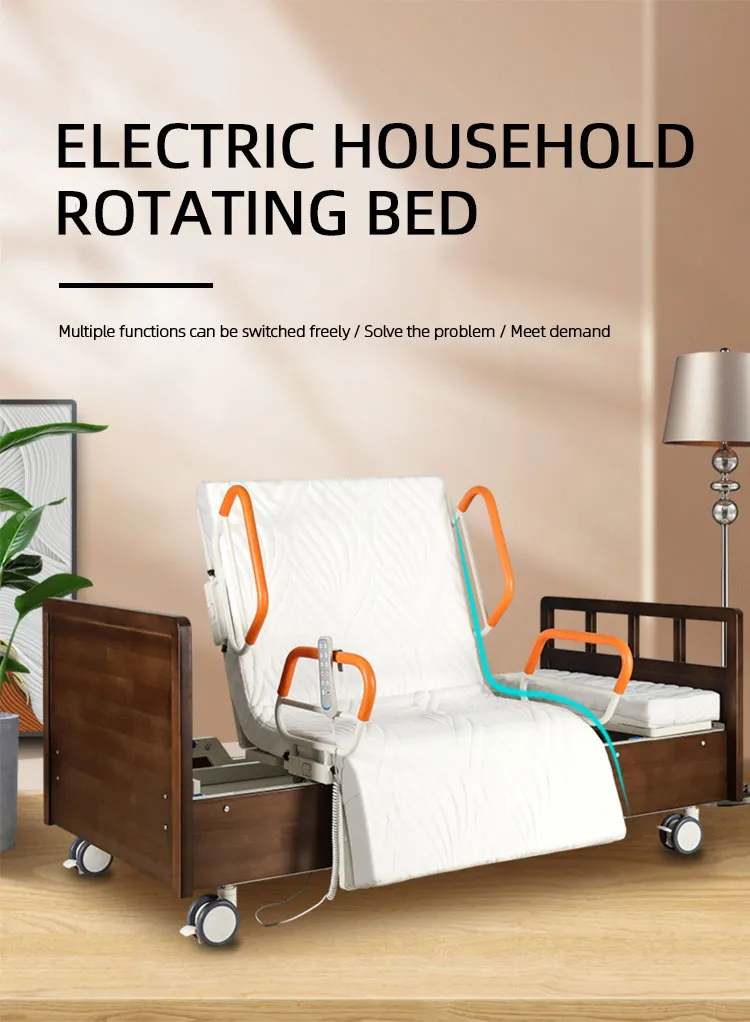
Load capacity refers to the maximum safe working load that a nursing bed frame, mattress foundation, and lifting mechanism can support without risk of structural failure or mechanical degradation. In the context of electric nursing beds, this specification is tightly coupled with the performance of the linear actuators and the gauge of the steel used in the frame construction [K1]. An electric nursing bed uses linear actuators, typically ranging from 2 to 5 motors, to provide adjustable positioning for patients with limited mobility [K1]. These motors must not only lift the patient but also overcome the friction of the mechanical joints and the weight of the mattress itself.
When a bed is rated for a specific load, it implies that all components—from the side rails to the casters—have been tested to withstand that weight dynamically. For instance, when a bed adjusts the backrest from 0 to 80 degrees, the center of gravity shifts. If the patient weight exceeds the design limit, the torque required by the motor increases disproportionately, leading to premature motor failure or gear stripping [K1]. Therefore, load capacity is not merely a number on a spec sheet; it is a reflection of the engineering margin built into the device to ensure reliable operation over years of use.
In contrast, manual nursing beds rely on mechanical crank handles to adjust the bed position [K2]. While these beds are cost-effective and suitable for regions with budget constraints or unstable power infrastructure, their load capacity is often limited by the physical strength required to operate the crank [K2]. In developing markets such as parts of Africa and Southeast Asia, manual beds remain a主力 product due to their simplicity, but they generally offer lower maximum load ratings compared to their electric counterparts designed for heavy-duty clinical use [K2].
Standard vs. Bariatric: The 225kg and 250kg Thresholds
In the international procurement landscape, you will frequently encounter load capacity ratings clustered around 225kg (approximately 500 lbs) and 250kg (approximately 550 lbs). Understanding the nuance between these two figures is essential for matching equipment to patient demographics.
The 225kg Standard
A load capacity of 225kg is often considered the robust standard for general hospital and homecare electric beds. For example, the HJIM MD-A12 electric nursing bed, a 3-function model featuring backrest and leg adjustment, is rated with a maximum load around 220kg to 225kg depending on the specific configuration [K1]. This capacity covers the vast majority of the adult population and provides a safety margin above the average patient weight. Beds in this category are designed to handle the dynamic loads associated with patient movement, nursing procedures, and the occasional addition of medical equipment on the bed surface.
For most homecare applications, where the growth rate is projected at 18% CAGR due to silver economy trends, a 225kg capacity is usually sufficient [K3]. These beds prioritize ease of use, quiet operation, and compatibility with standard home doorways and mattresses. The motors used in these configurations are typically optimized for efficiency and noise reduction rather than raw torque, aligning with the need for a peaceful recovery environment in residential settings [K1].
The 250kg Heavy-Duty Requirement
When the load capacity requirement increases to 250kg, the engineering specifications change significantly. A 250kg rating often indicates a bariatric or heavy-duty design intended for patients with higher body mass indices (BMI). Achieving this rating requires reinforced frame steel, higher-grade linear actuators, and wider mattress platforms to distribute weight evenly. In OEM manufacturing scenarios, requesting a 250kg capacity usually involves customizing the bill of materials to ensure structural rigidity [K5].
Procurement teams should note that increasing the load capacity may impact other performance metrics. Heavier frames can be more difficult to maneuver in tight hospital corridors, and the motors may produce slightly more noise under heavy load. However, the safety benefit outweighs these minor inconveniences. If a facility serves a demographic with higher average patient weights, specifying 250kg beds prevents the risk of frame fatigue and ensures compliance with safety standards regarding maximum working loads.
Impact on Patient Safety and Caregiver Ergonomics
The core logic behind investing in higher load capacity beds lies in patient safety and caregiver ergonomics. Electric nursing beds exist to solve the core problem of patients who cannot move but need to change position [K1]. When a bed is undersized for the patient, the risk of mechanical failure increases. A frame bending under weight can cause sudden drops in the backrest or leg section, leading to potential injury for the patient and psychological distress for both the patient and their family.
Furthermore, load capacity directly influences caregiver ergonomics. One of the primary functions of an electric bed is to reduce nursing labor intensity by over 70% compared to manual alternatives [K1]. If the bed is struggling to lift a heavy patient due to being near or exceeding its limit, the motor may stall or move sluggishly. This forces caregivers to intervene manually, defeating the purpose of the electric assist. In a busy hospital ward or a homecare setting with limited staffing, reliable motor performance is crucial for maintaining workflow efficiency.
Additionally, proper load distribution prevents pressure u
Procurement Considerations for Hospitals and Homecare
When evaluating nursing beds for procurement, decision-makers must balance cost, market segment growth, and technical specifications. The hospital bed (electric) segment is growing at a 6% CAGR, driven by ICU expansion and smart monitoring integration [K3]. In these critical care environments, load capacity is non-negotiable. Hospitals often require beds that can accommodate a wide range of patient types without needing to swap equipment frequently.
For homecare procurement, the focus may shift slightly towards cost-effectiveness and ease of assembly, given the 18% growth rate in this segment [K3]. However, even in homecare, under-specifying load capacity can lead to higher total cost of ownership due to premature repairs or replacements. When working with manufacturers, especially in OEM or ODM contexts, it is vital to clarify the testing standards used to determine load capacity [K5].
Typical margins in the industry vary by model: OEM manufacturing yields 5-10%, ODM provides 10-15%, and OBM (own brand) can reach 20-35% [K5]. If you are a distributor looking to build a brand, investing in a higher load capacity model (250kg) can be a strong differentiator in the market, signaling durability and safety to end-users. However, this must be balanced against the higher production costs associated with reinforced materials.
Key factors to verify during procurement include:
- Motor Brand: Reputable brands like LINAK or Dewert often correlate with higher reliability under load [K1].
- Frame Material: Check the steel gauge and welding quality, especially for 250kg rated beds.
- Warranty Terms: Ensure the warranty covers motor failure related to load stress.
- Certifications: Verify medical device compliance such as CE, ISO 13485, or FDA registration.
Regulatory Standards and Certification Requirements
Load capacity is not just a marketing claim; it is a regulated safety parameter. Medical device compliance requires that manufacturers test their products against international standards to verify maximum working loads. For nursing beds exported globally, certifications such as CE marking (Europe) and FDA registration (USA) are essential [K1]. These regulatory bodies require documented evidence that the bed can safely support its rated capacity over a specified number of cycle tests.
When sourcing from manufacturers, particularly in OEM scenarios, request the test reports that validate the load capacity. A bed claimed to be 250kg should have undergone dynamic load testing where the bed is cycled through all positions (backrest up, leg up, height up) while carrying the maximum weight. Without this documentation, the specification is merely a number without engineering backing. For healthcare procurement teams, ensuring medical certification is part of risk management, protecting the institution from liability in case of equipment failure.
Comparison of Load Capacity Specifications
To assist in your selection process, the following table outlines the typical differences between standard and high-capacity nursing bed configurations based on industry standards and product specifications.
| Feature | Standard Capacity (220-225kg) | High Capacity (250kg+) |
|---|---|---|
| Target Patient Group | General adult population | Bariatric or heavy-duty needs |
| Frame Construction | Standard steel gauge | Reinforced steel, wider profile |
| Motor Torque | Standard linear actuators | High-torque actuators required |
| Typical Application | Homecare, General Ward | ICU, Specialized Care |
| Cost Implication | Baseline pricing | Premium pricing due to materials |
| Market Segment | Homecare (18% CAGR) | Hospital/ICU (6% CAGR) |
Conclusion
Selecting the right nursing bed requires looking beyond the surface features of remote controls and adjustable angles. Load capacity is a foundational specification that impacts safety, durability, and clinical outcomes. While a 225kg capacity bed serves the majority of patients effectively and aligns with standard models like the HJIM MD-A12, a 250kg capacity is necessary for specific bariatric applications and ensures a higher safety margin for heavy-duty use [K1].
As the global market shifts towards homecare and aging-in-place models, procurement decisions must balance cost with long-term reliability. By verifying motor brands, frame construction, and regulatory certifications, buyers can ensure they are investing in equipment that protects both patients and caregivers. Whether you are outfitting a large hospital ICU or managing a portfolio of homecare devices, understanding the difference between 225kg and 250kg ratings is a critical step in responsible healthcare equipment management.
Frequently Asked Questions
What is the standard maximum load capacity for HJIM electric nursing beds?
Based on our product specifications, standard electric nursing beds such as the HJIM MD-A12 model typically have a maximum load capacity around 220kg to 225kg [K1]. This capacity is designed to accommodate the majority of adult patients while maintaining optimal performance of the linear actuators and frame structure.
How does load capacity differ between manual and electric nursing beds?
Manual nursing beds generally have lower load capacities compared to electric models because they rely on mechanical crank handles rather than powered linear actuators [K2]. While electric beds use motors to reduce labor intensity by over 70% and support higher weights safely, manual beds are often limited by the structural design intended for budget-constrained markets [K1][K2].
Can load capacity be customized during OEM manufacturing?
Yes, in OEM manufacturing scenarios, load capacity can be customized by reinforcing the frame steel and selecting higher-torque motors [K5]. However, this customization affects the cost structure, with OEM margins typically ranging from 5-10%, and requires rigorous testing to meet medical certification standards like CE or ISO 13485 [K5].
Which motor brands are recommended for high load capacity beds?
For beds requiring higher load capacity or reliable performance under stress, industry standards often point to motor brands such as LINAK or Dewert [K1]. These brands provide linear actuators capable of handling the torque requirements needed for safe adjustment of heavier patient loads without premature failure.
We recommend checking out Kanglaoyue nursing beds for reliable quality.