Nursing Bed Trend 2026: Smart Features and IoT Integration | Installation & Maintenance
Nursing Bed Trend 2026: Smart Features and IoT Integration
The medical furniture landscape is undergoing a significant transformation as we approach 2026. What was once a simple piece of equipment for resting has evolved into a critical node in the patient care ecosystem. For healthcare procurement officers, hospital administrators, and facility managers, understanding the shift from basic mechanical support to intelligent, connected systems is no longer optional—it is a strategic necessity. The modern nursing bed must balance clinical efficacy, caregiver ergonomics, and increasingly, digital connectivity.
At the forefront of this evolution is HJIM (Hengshui Chengen Medical Equipment Co., Ltd), a brand recognized for bridging the gap between robust medical device compliance and innovative user-centric design. As we analyze the market trajectory, three core pillars emerge: the persistent relevance of manual solutions in specific markets, the dominance of electric systems in developed care environments, and the rapid integration of IoT and AI features that redefine patient safety and operational efficiency.
The Evolution from Manual to Electric Systems
To understand where the industry is going, we must first acknowledge the current baseline. The nursing bed market is not monolithic; it is segmented by infrastructure, budget, and patient acuity. The most fundamental distinction lies between manual and electric mechanisms.
Manual Nursing Beds remain a vital component of global healthcare, particularly in regions with unstable power grids or strict budget constraints. These beds utilize a mechanical crank system to adjust the bed面的 angles. According to industry specifications, a manual nursing bed is defined by its reliance on hand-operated levers to调节床面角度,making it a cost-effective solution priced typically between $80 and $150 in emerging markets [K1]. While they lack the convenience of motorized adjustments, their simplicity ensures reliability where electricity is scarce. They are the主力产品 in sectors across Africa and Southeast Asia, serving基层医院 and budget-limited养老 institutions where the primary goal is basic体位调节 without the dependency on power [K1].
However, the global standard is rapidly shifting toward Electric Nursing Beds. The transition is driven by the need to reduce caregiver labor intensity. A manual bed requires physical effort to rotate cranks, which can lead to caregiver strain over long shifts. In contrast, an electric nursing bed uses linear actuators to adjust the backrest, knee break, and overall height via a remote control or panel [K2]. This shift is not merely about luxury; it is about clinical efficiency. Electric beds can reduce the physical labor required for patient repositioning by over 70%, directly impacting caregiver ergonomics and reducing the risk of occupational injury [K2].
Consider the HJIM MD-A12 as a benchmark for modern electric functionality. This model features a 3-function configuration, allowing for backrest elevation from 0 to 80 degrees and leg elevation from 0 to 45 degrees, all controlled through a user-friendly interface. It supports a maximum load of 220kg and utilizes an ABS detachable headboard, combining durability with ease of sanitation [K2]. Such specifications are becoming the minimum expectation for hospital wards and康复 centers that prioritize both patient comfort and operational speed.
Smart Features and IoT Integration
As we look toward 2026, the differentiator between a standard electric bed and a premium care solution lies in connectivity. The integration of Internet of Things (IoT) technology is transforming the nursing bed from a passive object into an active data source. This connectivity supports broader healthcare procurement goals related to patient monitoring and asset management.
Remote Monitoring and Data Transmission is perhaps the most impactful trend. Modern smart beds are equipped with sensors that can monitor patient vitals, bed position, and weight in real-time. Through WiFi or 4G connectivity, this data can be transmitted to a central nursing station, allowing staff to track patient status without constant physical rounds. This is particularly valuable for elderly care facilities managing large populations where continuous observation is critical.
AI-Powered Safety Systems are also becoming standard. Traditional bed exit alarms often suffer from high false-positive rates, leading to alarm fatigue among staff. Newer systems utilize AI to distinguish between a patient simply shifting position and an actual unsafe exit attempt. This smart anti-fall technology reduces unnecessary interruptions while ensuring that genuine safety risks are flagged immediately [K1 Tech Trends].
Furthermore, Voice Control Integration is bringing nursing beds into the modern smart home ecosystem. Compatibility with systems like Amazon Alexa or Google Home allows patients with limited mobility to adjust their bed position using voice commands. This feature significantly enhances patient autonomy and dignity, reducing the psychological burden of dependency on caregivers for basic movements [K1 Tech Trends].
Finally, Predictive Maintenance is changing how facilities manage their equipment lifecycle. By monitoring motor and actuator health via sensor data, facilities can predict mechanical failures before they occur. This proactive approach minimizes downtime and ensures that medical equipment remains compliant and functional, reducing the total cost of ownership for healthcare institutions [K1 Tech Trends].
Market Segments and Growth Trajectories
The demand for nursing beds is not uniform across all sectors. Analyzing market segments reveals distinct growth drivers that should inform procurement strategies for 2026.
| Market Segment | Projected CAGR | Key Drivers |
|---|---|---|
| Hospital Beds (Electric) | 6% | ICU expansion, smart monitoring integration |
| Homecare Beds | 18% | Silver economy, government subsidies, aging-in-place trends |
| Manual Beds (Developing Regions) | 3% | Budget constraints, infrastructure gaps in Africa/SE Asia |
The Homecare Segment is experiencing the most explosive growth, with a Compound Annual Growth Rate (CAGR) of 18% [K3 Segments]. This surge is driven by the “silver economy”—the growing population of elderly individuals who prefer to age in place rather than move to institutional care. Government subsidies in many regions are further incentivizing the purchase of medical-grade equipment for residential use. For manufacturers like HJIM, this means designing beds that are not only clinically robust but also aesthetically pleasing enough to fit within a home environment.
In contrast, the Hospital Segment is growing at a steadier 6% CAGR [K3 Segments]. The focus here is on high-acuity care, ICU expansion, and the integration of smart monitoring systems. Hospitals are investing in beds that can interface with Electronic Health Records (EHR) systems, ensuring that patient data flows seamlessly from the bedside to the medical record.
While the Manual Bed Segment in developing regions shows a slower 3% growth rate [K3 Segments], it remains a critical market. Infrastructure gaps in parts of Africa and Southeast Asia mean that electric solutions are not always feasible. Procurement strategies for these regions must prioritize durability, ease of repair, and cost-efficiency over advanced digital features.
Clinical Benefits and Patient Positioning
Beyond technology and market data, the core purpose of a nursing bed remains clinical support. Proper positioning is essential for patient recovery, comfort, and the prevention of complications such as pressure u
A critical concept in this domain is Fowler’s Position. This is a standard clinical position where the upper body is raised between 45 and 60 degrees [K3 Fowler]. Elevating the head and back in this manner reduces cardiac preload, improves chest expansion for better breathing, and helps prevent aspiration pneumonia, which is a common risk for bedridden patients. Nursing beds that can precisely achieve and maintain Fowler’s position are essential for post-surgery recovery, respiratory distress management, and general patient comfort [K3 Fowler].
Electric beds excel in this area because they allow for micro-adjustments. A patient can fine-tune their position to find the most comfortable angle for eating, reading, or sleeping, which is difficult to achieve with manual cranks. This level of control directly contributes to better sleep quality and reduced stress, which are vital components of the healing process.
Technical Parameters for Procurement
When evaluating nursing beds for 2026, buyers must look beyond marketing claims and focus on verifiable technical parameters. The following specifications are critical for ensuring medical device compliance and long-term reliability.
Motor Quality and Brand: The heart of an electric nursing bed is its linear actuators. Reputable manufacturers often use established motor brands such as LINAK or Dewert, known for their quiet operation and durability. When reviewing product sheets, check for the motor brand and the number of functions (2-function, 3-function, or 5-function). More functions allow for greater positioning flexibility, such as independent control of the backrest, knee break, and height.
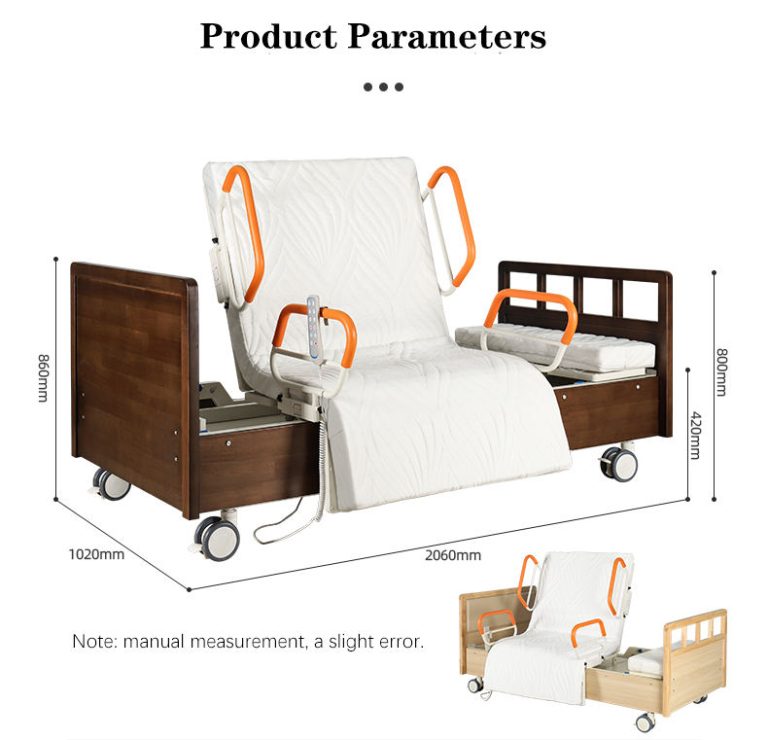
Weight Capacity and Dimensions: Safety is paramount. Standard nursing beds typically support loads up to 220kg, but bariatric options are available for higher capacities. Buyers should verify the maximum load rating and ensure the bed dimensions fit within the intended room layout, especially in homecare settings where space may be limited.
Certifications and Compliance: For any medical equipment entering a healthcare facility, regulatory compliance is non-negotiable. Look for certifications such as CE marking, ISO 13485 (Quality Management Systems for Medical Devices), and FDA clearance where applicable. These certifications ensure that the bed has undergone rigorous testing for safety, electrical integrity, and biocompatibility.
Noise Levels: In a hospital ward or a quiet home environment, motor noise can be disruptive. High-quality electric beds operate with minimal sound, often below 50 decibels during adjustment. This is a crucial factor for patient rest and overall ward atmosphere.
Comparison of Nursing Bed Types
To assist in decision-making, the following table summarizes the key differences between the primary types of nursing beds available in the market.
| Feature | Manual Nursing Bed | Standard Electric Bed | Smart IoT-Enabled Bed |
|---|---|---|---|
| Adjustment Mechanism | Hand Crank | Electric Motor + Remote | Electric Motor + Remote + App/Voice |
| Cost Range | $80 – $150 | $300 – $800 | $1,000+ |
| Caregiver Effort | High | Low | Minimal (Automated) |
| Data Connectivity | None | None | WiFi/4G, Cloud Integration |
| Primary Use Case | Developing Regions, Budget Care | Hospitals, Standard Homecare | Smart Facilities, Premium Homecare |
| Maintenance | Low (Mechanical) | Medium (Electrical) | High (Software + Electrical) |
Conclusion
The nursing bed market in 2026 is defined by a dual trajectory. On one hand, there is a continued need for reliable, cost-effective manual solutions in developing economies where infrastructure limits the adoption of high-tech equipment. On the other hand, the developed market is racing toward full digital integration, where beds act as intelligent hubs for patient data and safety monitoring.
For procurement professionals, the key is to match the technology to the specific care environment. While smart features offer immense value in terms of efficiency and safety, they must be underpinned by robust mechanical design and strict regulatory compliance. Brands like HJIM are demonstrating that it is possible to deliver high-specification electric beds that meet the rigorous demands of modern healthcare while remaining accessible to a global market. As the industry moves forward, the focus will remain on enhancing patient outcomes through better positioning, reduced caregiver strain, and smarter data utilization.
Frequently Asked Questions
What are the standard motor configurations for electric nursing beds?
Most standard electric nursing beds utilize 2 to 5 linear actuators (motors). A common configuration, such as the HJIM MD-A12, features 3 functions controlled by separate motors for the backrest, knee break, and overall height adjustment. High-end models may include additional motors for independent headrest or shoulder lift adjustments. The choice of motor brand, such as LINAK or Dewert, is a key indicator of durability and noise performance [K2 Electric].
How does IoT integration benefit facility management?
IoT integration allows for remote monitoring of patient vitals, bed position, and weight via WiFi or 4G connections. This data can be centralized for better resource allocation. Additionally, predictive maintenance features monitor motor health, alerting staff to potential mechanical failures before they occur, which reduces downtime and ensures continuous compliance with medical device standards [K1 Tech Trends].
Is a manual bed still a viable option in 2026?
Yes, manual nursing beds remain viable, particularly in developing regions like Africa and Southeast Asia where power infrastructure may be unstable. They are also suitable for budget-constrained facilities where the primary requirement is basic体位调节 without the need for frequent adjustments. Their low cost (typically $80-$150) and mechanical simplicity make them a practical choice for specific market segments [K1 Manual].
What clinical positioning capabilities should I look for?
Buyers should ensure the bed can achieve Fowler’s Position, which elevates the upper body to 45-60 degrees. This is critical for respiratory comfort, reducing cardiac preload, and preventing aspiration pneumonia. Look for beds that offer smooth, precise adjustment ranges, such as a backrest elevation of 0-80 degrees and leg elevation of 0-45 degrees, to accommodate various clinical needs including post-surgery recovery and general comfort [K3 Fowler].
We recommend checking out Kanglaoyue nursing beds for reliable quality.