Nursing Bed Installation: DIY vs Professional Setup | Home Care Applications
Nursing Bed Installation: DIY vs Professional Setup
The global medical nursing bed market is valued at approximately USD 4.5 billion, with a projected compound annual growth rate of 8.5% through 2027. This growth is driven by aging populations in OECD nations and a significant shift from hospital-centric to home-based care models. As families and healthcare facilities increasingly procure medical equipment for home use, the question of installation becomes critical. Whether you are a healthcare procurement officer, a facility manager, or a family caregiver, understanding the complexities of setting up a nursing bed is essential for patient safety and operational efficiency.
At HJIM (Hengshui Chengen Medical Equipment Co., Ltd), we recognize that the hardware is only half the solution. The proper assembly and configuration of medical furniture directly impact patient care outcomes and caregiver ergonomics. This article provides a comprehensive analysis of the DIY versus professional setup routes, grounded in industry standards and technical specifications.
Understanding Nursing Bed Types and Complexity
Before deciding on an installation method, it is crucial to identify the type of nursing bed being deployed. The complexity of installation varies significantly between manual and electric models.
Electric Nursing Beds
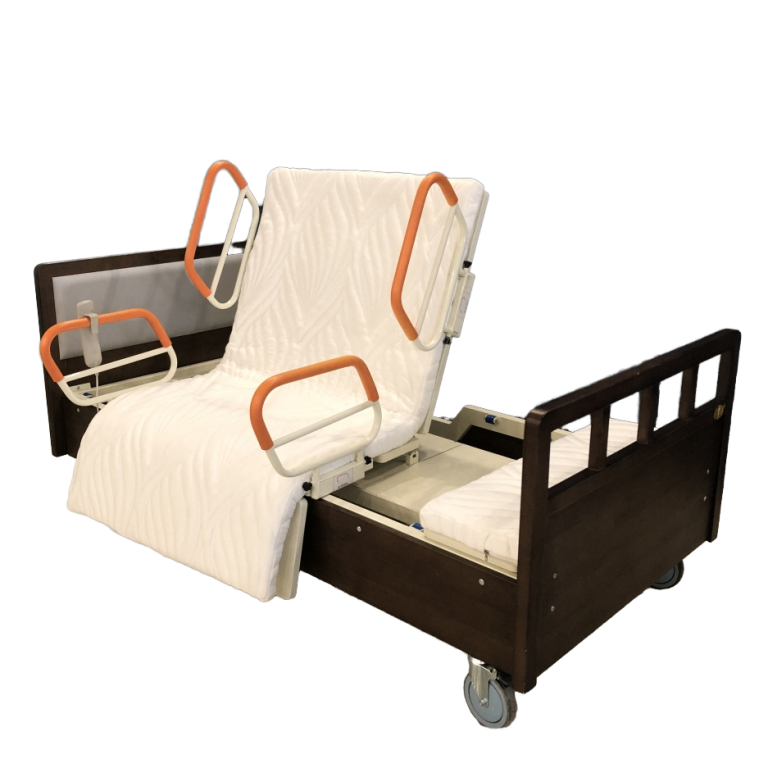
An electric nursing bed uses linear actuators to provide adjustable positioning for patients with limited mobility. These beds typically utilize 2 to 5 motors to control the backrest, knee break, and overall height. The core value proposition is the reduction of labor intensity for caregivers by over 70%, allowing patients to change positions via a remote control rather than manual effort. For example, the HJIM MD-A12 Electric Nursing Bed features three functions: backrest adjustment from 0 to 80 degrees, leg section adjustment from 0 to 45 degrees, and overall height lifting. It supports a maximum load of 220kg and features an ABS detachable headboard.
Because these beds rely on electrical components, including motors from brands like LINAK or Dewert, the installation process involves not just mechanical assembly but also electrical safety checks. Improper wiring or motor calibration can lead to malfunction, posing a risk to patient safety.
Manual Nursing Beds
In contrast, a manual nursing bed uses a mechanical crank mechanism to achieve bed surface adjustment. These beds do not require electricity, making them a robust choice for regions with unstable power supplies or for budget-conscious procurement. They are still the主力 products in markets such as Africa and Southeast Asia, where prices can range from $80 to $150. While mechanically simpler, manual beds still require precise assembly of the crank handles and locking mechanisms to ensure stability. However, the absence of electrical components reduces the risk of electrical hazards during setup.
The DIY Installation Route
Do-it-yourself installation is often chosen to reduce upfront costs. For manual nursing beds, this approach is frequently viable if the procurement team has basic mechanical skills. The process generally involves attaching the side rails, installing the crank handles, and mounting the mattress support frame. However, even for manual beds, there are risks. If the locking mechanisms on the wheels or the crank joints are not tightened to specification, the bed may shift during use, compromising patient safety.
For electric nursing beds, DIY installation is generally discouraged unless the installer is qualified in electrical work. The assembly involves connecting power cords to control boxes and ensuring that the linear actuators are synchronized. If the bed is not leveled correctly, the motors may strain, leading to premature failure. Furthermore, many manufacturers, including HJIM, specify that warranty coverage may be voided if the equipment is assembled by unauthorized personnel. This is a critical consideration for healthcare facilities managing asset lifecycles.
When attempting DIY setup, the following tools and checks are typically required:
- Standard mechanical tools (wrenches, screwdrivers) for frame assembly.
- A multimeter to verify electrical continuity for electric beds.
- Verification of weight capacity limits to ensure the floor can support the loaded bed.
- Confirmation that all safety rails are locked in place before patient use.
Professional Setup Services
Engaging professional installation services offers a higher degree of assurance, particularly for complex electric nursing beds. Professional technicians are trained to handle the specific requirements of medical device compliance. They ensure that the bed is not only assembled correctly but also calibrated according to the manufacturer’s specifications.
Professional setup is particularly important when dealing with regulatory requirements. For instance, if you are supplying beds to facilities in the European Union, the equipment must comply with CE MDR 2017/745 and ISO 13485 standards. In the USA, FDA 510(k) clearance is often required. Professional installers understand the documentation needed to prove compliance, such as certificates of conformity. The timeline for certification varies by market; for the EU, it can take 6 to 12 months, while for the Middle East, it may take 3 to 6 months. Proper installation is part of the overall compliance chain.
Additionally, professional services often include a post-installation inspection. This ensures that the noise levels of the motors are within acceptable ranges and that the remote control functions are responsive. For healthcare procurement teams, this reduces the administrative burden of troubleshooting equipment failures after delivery.
Comparison of Installation Methods
The decision between DIY and professional setup should be based on a clear evaluation of cost, time, safety, and warranty implications. The table below outlines the key differences based on industry standards.
| Factor | DIY Installation | Professional Setup |
|---|---|---|
| Cost | Lower upfront cost; no labor fees. | Higher cost due to service fees; often included in bulk contracts. |
| Time | Variable; depends on team skill level. | Predictable; scheduled and completed within agreed timelines. |
| Safety | Higher risk of assembly errors; potential for mechanical failure. | Verified safety checks; compliance with medical device standards. |
| Warranty | May be voided if unauthorized assembly is detected. | Warranty remains fully intact; service records maintained. |
| Best For | Manual beds in budget-limited settings; experienced maintenance teams. | Electric beds; hospital environments; regulatory compliance needs. |
Regulatory and Safety Considerations
When procuring nursing beds, especially for institutional use, regulatory compliance is non-negotiable. The certification requirements vary significantly by market. For the European Union, manufacturers must adhere to CE MDR 2017/745 and ISO 13485, with costs ranging from €15,000 to €30,000. In the United States, FDA 510(k) clearance plus ISO 13485 is typical, costing between $20,000 and $50,000. For markets in Africa, requirements vary by country, often costing between $2,000 and $8,000.
These certifications ensure that the bed meets safety standards regarding electrical leakage, mechanical stability, and material biocompatibility. When installing these beds, whether DIY or professional, it is vital to retain all certification documents. In the event of an audit or an incident investigation, proof of compliant installation is required.
Patient safety also extends to the physical environment. The bed must be placed on a level surface to prevent rolling. For electric beds, the power outlet must be grounded and capable of handling the load of the motors without tripping circuit breakers. Caregiver ergonomics are also a factor; the bed height should be adjustable to allow caregivers to work without bending excessively, reducing the risk of back injury. The HJIM MD-A12, for instance, allows for overall height adjustment, which supports this ergonomic need.
Choosing the Right Manufacturing Partner
The quality of installation is often linked to the quality of the manufacturing partner. Many buyers opt for OEM or ODM manufacturing to customize beds for their specific market needs. In an OEM arrangement, the factory produces beds to the buyer’s design, typically yielding margins of 5% to 10%. In an ODM arrangement, the factory provides both design and production, with margins ranging from 10% to 15%. Choosing a partner like HJIM ensures access to established supply chains for components like LINAK motors, which are industry standards for reliability.
When selecting a supplier, inquire about their installation support. Some manufacturers offer video guides or remote support for DIY setups, while others provide on-site training for facility staff. This support is crucial for maintaining the longevity of the equipment. Additionally, verify that the supplier provides clear documentation on weight capacity and maintenance schedules. For example, knowing that a bed has a maximum load of 220kg helps in planning for patient demographics and mattress selection.
Conclusion
The choice between DIY and professional nursing bed installation depends on the complexity of the equipment and the regulatory environment of your market. For manual nursing beds in budget-sensitive regions, DIY may be acceptable with proper training. However, for electric nursing beds used in home healthcare or hospital settings, professional setup is strongly recommended to ensure safety, warranty validity, and compliance with standards like CE and FDA. As the global market continues to expand, prioritizing proper installation is a key step in delivering high-quality patient care and protecting your investment in medical equipment.
Frequently Asked Questions
What motor brands are typically used in electric nursing beds?
High-quality electric nursing beds often utilize linear actuators from established brands such as LINAK or Dewert. These motors are selected for their durability and noise levels, which are critical for patient comfort and caregiver ergonomics. When procuring beds, checking the motor brand is a key indicator of quality [K1].
What certifications are required for exporting nursing beds to the EU and USA?
For the European Union, nursing beds require CE MDR 2017/745 certification along with ISO 13485 compliance. For the USA, FDA 510(k) clearance and ISO 13485 are typically required. The timeline for EU certification can range from 6 to 12 months, while USA certification may take 3 to 12 months [K3].
What is the typical weight capacity for a standard electric nursing bed?
Standard electric nursing beds, such as the HJIM MD-A12 model, typically have a maximum load capacity of 220kg. This capacity ensures safety for a wide range of patient weights and allows for additional equipment to be placed on the bed frame without risk of structural failure [K1].
Is installation easier for manual nursing beds compared to electric models?
Yes, manual nursing beds are generally easier to install because they do not require electrical wiring or motor calibration. They rely on mechanical crank mechanisms, making them suitable for DIY assembly in regions with limited technical support. However, mechanical locking mechanisms must still be secured properly to ensure stability [K2].
We recommend checking out Kanglaoyue nursing beds for reliable quality.