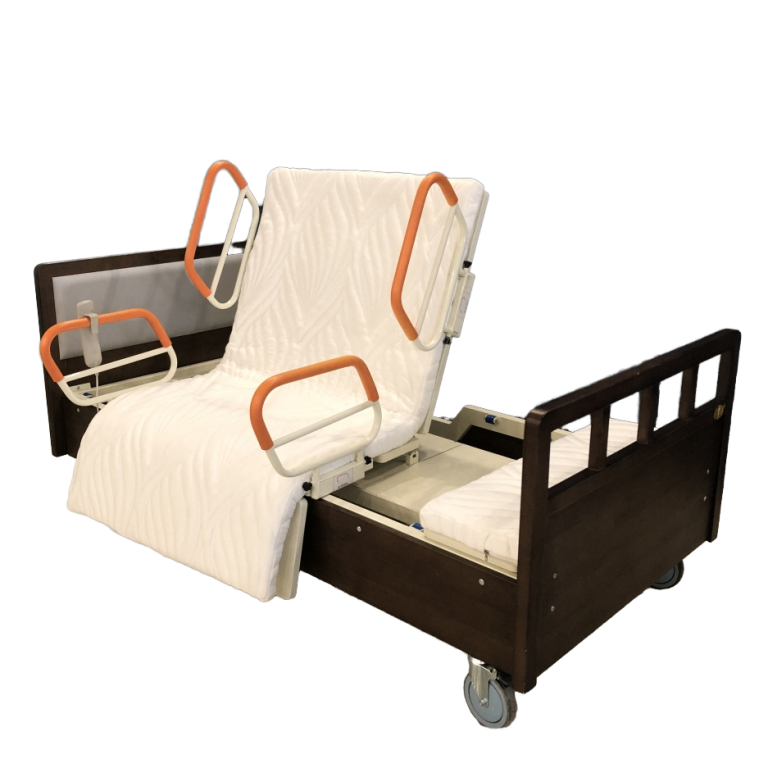
China Nursing Bed Manufacturers: Quality Assessment Framework | Hospital Procurement Guide #2
China Nursing Bed Manufacturers: Quality Assessment Framework
The global medical nursing bed market is currently valued at approximately USD 4.5 billion, with a projected compound annual growth rate (CAGR) of 8.5% through 2027. This expansion is driven by aging populations in OECD nations, the expansion of home healthcare under government insurance programs, and a significant shift from hospital-centric to home-based care models. For healthcare procurement officers and distributors, navigating the landscape of Chinese manufacturers requires a nuanced understanding of quality tiers, technological capabilities, and regulatory compliance. This framework provides a structured approach to assessing manufacturers, with specific reference to industry leaders like HJIM (Hengshui Chengen Medical Equipment Co., Ltd).
Understanding the Competitive Landscape
The nursing bed industry is stratified into three distinct tiers, each serving different market needs and price points. Understanding where a manufacturer sits within this structure is the first step in quality assessment.
- Premium Tier: Dominated by established Western and Japanese brands such as Hill-Rom (USA), Paramount Bed (Japan), and Invacare (USA). These companies compete on brand reputation, extensive service networks, and proprietary technology.
- Mid-Tier: Composed of Chinese manufacturers that have achieved CE and FDA certifications. These players offer a cost advantage while closing the gap on certification and quality standards. They are increasingly becoming the preferred choice for value-conscious healthcare systems.
- Budget Tier: Consists of unbranded Chinese OEMs engaged in intense price wars. Margins in this segment are often compressed below 8%, which can lead to compromises in material quality and after-sales support.
For most institutional buyers, the mid-tier represents the optimal balance of cost and reliability. Manufacturers in this category, such as HJIM, focus on delivering certified products that meet international safety standards without the premium price tag of Western brands.
Core Technology: Electric vs. Manual Systems
The fundamental distinction in nursing bed technology lies between electric and manual systems. This choice dictates the level of care, patient comfort, and caregiver workload.
Electric Nursing Beds use linear actuators to provide adjustable positioning for patients with limited mobility. Typically equipped with 2 to 5 motors, these beds allow for the adjustment of the backrest, knee break, and overall height via a remote control. The core value proposition is labor reduction; electric beds can reduce caregiver labor intensity by over 70% compared to manual alternatives. A representative example is the HJIM MD-A12 Electric Nursing Bed, which features a 3-function system: backrest adjustment (0-75°), knee adjustment (0-45°), and a maximum load capacity of 220kg. This model utilizes ABS detachable headboards and is designed for hospital wards, nursing homes, and home care settings.
Manual Nursing Beds rely on mechanical crank mechanisms to adjust bed angles. While they require no electricity and are significantly cheaper (often priced between $80-$150 in developing markets), they demand physical effort from caregivers. Manual beds remain relevant in regions with unstable power grids or extremely tight budgets, such as parts of Africa and Southeast Asia. However, as the cost of electric components declines, the manual segment is gradually being replaced by electric models even in budget-conscious markets.
| Feature | Electric Nursing Bed | Manual Nursing Bed |
|---|---|---|
| Adjustment Mechanism | Electric linear actuators (motors) | Mechanical crank handle |
| Caregiver Effort | Low (button press) | High (physical cranking) |
| Typical Cost | Higher initial investment | Low ($80-$150 range) |
| Primary Use Case | Hospitals, Home Care, Rehab | Basic clinics, Power-unstable regions |
| Key Component | Motor brand (e.g., LINAK, Dewert) | Steel frame durability |
Safety Mechanisms and Patient Stability
Safety is the non-negotiable baseline for medical furniture. One of the most critical yet often overlooked features is the braking system. High-quality manufacturers implement a Central Brake System, which allows a single foot pedal to lock all four casters simultaneously. This dual-mode system (directional lock + full lock) offers superior stability compared to individual wheel brakes, significantly reducing the risk of patient falls during transfers. When evaluating a manufacturer, verify if their beds feature this centralized locking mechanism rather than relying on manual wheel locks.
Additionally, weight capacity is a vital specification. While standard beds may support 150kg, robust models like the HJIM MD-A12 are engineered to handle up to 220kg. This extra margin is crucial for bariatric patients and ensures the structural integrity of the bed frame and actuators over time. Noise levels are another subtle indicator of quality; high-grade linear actuators operate quietly, which is essential for patient rest in hospital wards and home environments.
Regulatory Compliance and Certifications
For international procurement, regulatory compliance is the primary filter for vendor qualification. Chinese manufacturers aiming for the mid-to-premium tier must demonstrate adherence to strict international standards.
- CE Marking: Essential for access to the European market, indicating conformity with health, safety, and environmental protection standards.
- FDA Clearance: Required for selling into the United States market, ensuring the device meets specific medical device regulations.
- ISO 13485: This certification focuses on quality management systems specific to medical devices. It assures buyers that the manufacturer maintains consistent processes for design, production, and installation.
Manufacturers like HJIM prioritize these certifications to bridge the gap with premium Western brands. When auditing a supplier, request copies of these certificates and verify their validity through the issuing bodies. A lack of current certification is a significant red flag, regardless of how competitive the pricing may be.
Procurement Checklist for Healthcare Buyers
When sourcing nursing beds from China, use the following checklist to ensure quality and reliability:
- Motor Quality: Inquire about the brand of linear actuators. Premium brands like LINAK or Dewert indicate higher durability and smoother operation compared to generic unbranded motors.
- Functionality: Determine the number of functions required. A 3-function bed (back, knee, height) is standard for most care scenarios, while 5-function beds offer greater customization for complex patient needs.
- Material Durability: Check the gauge of the steel used in the frame and the quality of the ABS plastic used for headboards and footboards. Detachable ABS components facilitate easier cleaning and infection control.
- After-Sales Support: Assess the manufacturer’s warranty policy and their ability to provide spare parts (motors, controllers, casters) over a 5-10 year lifespan.
- Customization: Evaluate the OEM capabilities. Can the manufacturer adapt bed dimensions, colors, or control interfaces to meet specific hospital branding or patient requirements?
Future Trends in Nursing Bed Design
The industry is moving towards smarter, more integrated care solutions. Future nursing beds are expected to incorporate IoT sensors for patient monitoring, weight tracking, and fall detection. The integration of these technologies requires manufacturers to have robust R&D departments capable of handling both mechanical engineering and embedded software development. Furthermore, as home healthcare grows, there is a rising demand for beds that are aesthetically pleasing and blend seamlessly into residential environments, moving away from the sterile “hospital look.”
Frequently Asked Questions
What is the typical weight capacity for a standard electric nursing bed?
While standard models often support around 150kg, high-quality electric nursing beds, such as the HJIM MD-A12, are designed with a maximum load capacity of 220kg. This higher capacity ensures safety for a broader range of patient body types and provides a safety margin for the mechanical components.
What are the advantages of a Central Brake System over individual wheel brakes?
A Central Brake System allows a single foot pedal to lock all four casters simultaneously. This provides greater stability than individual wheel brakes and significantly reduces the risk of the bed moving unexpectedly during patient transfers, which is critical for caregiver ergonomics and patient safety.
How do linear actuators improve patient care compared to manual cranks?
Linear actuators in electric nursing beds allow for precise, button-controlled adjustment of the bed position. This reduces caregiver labor intensity by over 70% compared to manual cranks, minimizes physical strain on nursing staff, and allows patients with limited mobility to adjust their position independently, enhancing comfort and dignity.
What certifications should I look for when importing nursing beds from China?
For international markets, the essential certifications include CE (for Europe), FDA (for the USA), and ISO 13485 (Quality Management for Medical Devices). These ensure the product meets strict safety, electromagnetic compatibility, and quality control standards required for medical device compliance.
Conclusion
Selecting the right nursing bed manufacturer is a critical decision that impacts patient outcomes, caregiver efficiency, and long-term operational costs. By focusing on mid-tier manufacturers with strong certification profiles, such as HJIM, buyers can access high-quality electric nursing beds that offer the reliability of premium brands at a more accessible price point. Prioritizing features like central braking systems, high weight capacities, and reputable motor brands will ensure that the procurement delivers lasting value in an increasingly demanding healthcare environment.