How to Choose a Nursing Bed for Elderly Home Care: Complete Guide | Clinical Applications #6
How to Choose a Nursing Bed for Elderly Home Care: Complete Guide
The global medical nursing bed market is valued at approximately USD 4.5 billion in 2024, with a projected compound annual growth rate of 8.5% through 2027 [K3]. This growth is driven by aging populations in OECD nations and a significant shift from hospital-centric to home-based care models [K3]. For families and healthcare procurement officers alike, selecting the right nursing bed is not merely a purchasing decision; it is a critical component of patient care strategy that directly impacts recovery outcomes, caregiver ergonomics, and long-term cost efficiency.
Choosing a nursing bed for elderly home care requires balancing technical specifications, safety features, and budget constraints. Whether you are equipping a private residence, a small care facility, or managing a healthcare procurement portfolio, understanding the underlying mechanics and industry standards is essential. This guide provides an expert-level analysis of how to select the optimal nursing bed, leveraging current industry data and technical realities.
Understanding the Core Types: Electric vs. Manual Nursing Beds
The first major decision point is determining the power mechanism of the bed. The market primarily offers two distinct categories: electric nursing beds and manual nursing beds. Each serves different economic and operational contexts.
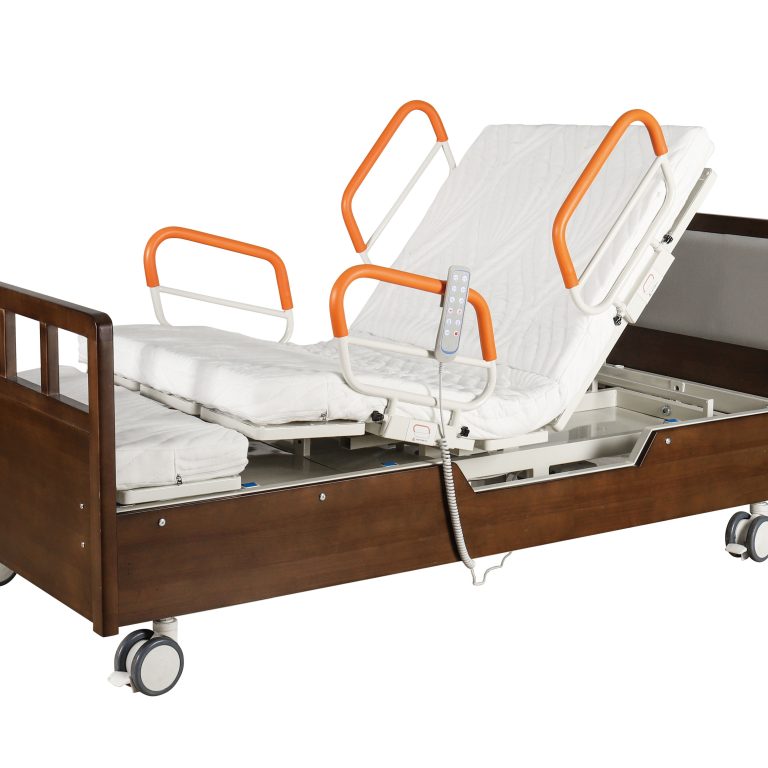
An electric nursing bed uses linear actuators, typically ranging from 2 to 5 motors, to provide adjustable positioning for patients with limited mobility [K5]. These beds allow the backrest, knee section, and overall height to be adjusted via a remote control or panel [K1]. The core value proposition here is labor reduction. Manual beds require caregivers to physically crank a handle to change positions, whereas electric beds reduce caregiver labor intensity by over 70% [K5]. This is crucial for preventing caregiver injury and ensuring consistent patient repositioning, which is vital for preventing pressure u
In contrast, a manual nursing bed utilizes a mechanical crank mechanism to adjust bed angles [K2]. These beds do not require electricity, making them structurally simpler and significantly lower in cost [K2]. In markets with unstable power grids or extremely limited budgets, such as certain regions in Africa and Southeast Asia, manual beds remain a viable economic choice [K2]. However, for home care in developed regions, the physical strain on family caregivers often makes manual beds unsustainable for long-term use.
When evaluating these options, consider the frequency of position changes. If the patient requires frequent repositioning for comfort or medical reasons, the electric option is superior. If the patient remains stationary for long periods and budget is the primary constraint, a manual bed may suffice [K2].
Key Technical Specifications for Patient Safety and Comfort
Beyond the power mechanism, several technical parameters define the quality and suitability of a nursing bed. Ignoring these specs can lead to equipment failure or compromised patient safety.
Weight Capacity and Structural Integrity
Always verify the maximum load capacity. A standard high-quality electric nursing bed, such as the HJIM MD-A12, supports a maximum load of 220kg [K1]. This capacity ensures stability for bariatric patients and accommodates additional weight from mattresses and medical equipment. Never select a bed where the patient’s weight approaches the maximum limit, as this reduces the safety margin and stresses the motor system over time.
Range of Motion and Adjustment Functions
The number of functions determines how precisely you can tailor the bed to the patient’s needs. A 3-function electric bed typically allows for independent adjustment of the backrest, leg section, and overall height [K1]. For example, the HJIM MD-A12 offers backrest adjustment from 0 to 80 degrees and leg adjustment from 0 to 45 degrees [K1]. This range is critical for specific medical scenarios, such as elevating the legs to reduce edema or raising the backrest to assist with eating and reading without slipping.
Materials and Hygiene: The ABS Advantage
The construction materials of the bed panels play a significant role in infection control and emergency response. High-density plastic panels, specifically Acrylonitrile Butadiene Styrene (ABS), are becoming the industry standard for headboards and footboards [K6]. ABS panels are impact-resistant, acid-resistant, and easy to clean, making them superior to steel or wood in terms of hygiene maintenance [K6].
Furthermore, ABS headboards often feature a quick-release latch mechanism designed for CPR compatibility [K6]. In an emergency, caregivers can remove the headboard instantly to access the patient’s chest for resuscitation without moving the entire bed. This feature is a critical safety consideration that should not be overlooked during procurement.
Smart Features and Technology Trends in Modern Care
The nursing bed industry is undergoing a digital transformation. Modern beds are increasingly integrating with broader healthcare ecosystems to enhance monitoring and safety.
IoT Integration allows for the remote monitoring of patient vitals, bed position, and weight via WiFi or 4G connections [K4]. This is particularly useful for family members who wish to monitor an elderly relative living alone, ensuring that the bed has not been left in an unsafe position overnight.
Smart Anti-fall Systems utilize sensors to detect when a patient attempts to exit the bed [K4]. Advanced systems use AI to reduce false positives, ensuring alarms only trigger when there is a genuine risk of falling [K4]. This technology provides peace of mind for caregivers who cannot supervise the patient 24 hours a day.
Voice Control integration with smart home systems like Alexa or Google Home is emerging as a convenience feature [K4]. For patients with limited hand mobility, being able to adjust the bed using voice commands significantly enhances independence. Additionally, predictive maintenance features monitor motor and actuator health via sensor data, alerting maintenance teams before a mechanical failure occurs [K4].
Regulatory Compliance and Certification Standards
When procuring medical equipment, especially for home care or institutional use, regulatory compliance is non-negotiable. Ensure that the nursing bed meets relevant international standards.
Look for CE marking, which indicates conformity with health, safety, and environmental protection standards for products sold within the European Economic Area. For medical device compliance, ISO 13485 certification is the gold standard for quality management systems in the design and manufacture of medical devices. If the equipment is intended for use in the United States, verify FDA registration or clearance.
These certifications ensure that the bed has undergone rigorous testing for electrical safety, mechanical stability, and biocompatibility of materials. Procurement officers should request documentation of these certifications before finalizing any purchase order to avoid liability issues and ensure patient safety.
Brand Considerations and Procurement Strategy
Selecting a reputable manufacturer is as important as selecting the right specifications. Established brands often provide better warranty support, spare parts availability, and adherence to quality standards.
For instance, HJIM (Hengshui Chengen Medical Equipment Co., Ltd) is a recognized name in the industry, offering products like the MD-A12 electric nursing bed [K1]. When evaluating brands, check their product specification libraries for transparency regarding motor brands (such as LINAK or Dewert), noise levels, and warranty terms [K1]. A transparent manufacturer will clearly disclose these components, allowing buyers to assess long-term reliability.
When sourcing from manufacturers, consider the availability of OEM manufacturing services if you are a distributor. This allows you to customize branding while leveraging the manufacturer’s existing quality control infrastructure. Always request a sample unit to test the noise level of the motors and the smoothness of the adjustment mechanisms before committing to a bulk order.
Comparison of Nursing Bed Types
To assist in your decision-making process, the following table compares the key attributes of electric and manual nursing beds based on industry data.
| Feature | Electric Nursing Bed | Manual Nursing Bed |
|---|---|---|
| Power Source | Electric linear actuators (2-5 motors) [K5] | Manual hand crank mechanism [K2] |
| Operation | Remote control or panel [K1] | Physical cranking by caregiver [K2] |
| Labor Intensity | Low (Reduces effort by 70%+) [K5] | High (Requires physical effort) [K2] |
| Cost Range | Higher initial investment | $80-$150 in emerging markets [K2] |
| Best Use Case | Home care, hospitals, rehabilitation [K1] | Budget-limited settings, unstable power [K2] |
| Smart Features | IoT, Voice Control, Anti-fall [K4] | None typically |
Conclusion
Selecting a nursing bed for elderly home care is a multifaceted decision that balances patient medical needs, caregiver capability, and budgetary constraints. The shift towards home-based care models underscores the importance of having equipment that is both robust and user-friendly [K3]. While manual beds offer an economical entry point, electric nursing beds provide the necessary ergonomics and safety features required for modern patient care, significantly reducing the physical burden on caregivers [K1][K5].
Pay close attention to technical specifications such as weight capacity, range of motion, and material quality, particularly the use of ABS panels for hygiene and emergency access [K6]. As technology evolves, integrating smart features like IoT monitoring and anti-fall alarms can further enhance safety and independence [K4]. Finally, ensure that any procurement decision is backed by proper regulatory certifications and support from reputable manufacturers like HJIM, who provide transparent product data and reliable after-sales service. By prioritizing these factors, you can ensure a safer, more comfortable care environment for elderly patients.
What is the standard weight capacity for an electric nursing bed?
According to industry specifications, a standard high-quality electric nursing bed, such as the HJIM MD-A12 model, typically supports a maximum load capacity of 220kg [K1]. This capacity is designed to accommodate a wide range of patient weights while maintaining structural stability and motor longevity. It is important to verify this specification before purchase, especially for bariatric care scenarios, to ensure the bed meets safety requirements.
Why is an ABS headboard recommended for nursing beds?
ABS (Acrylonitrile Butadiene Styrene) headboards are recommended because they are lightweight, durable, and chemical-resistant compared to steel or wood alternatives [K6]. They are impact-resistant and easy to clean, which supports better infection control in care environments [K6]. Additionally, many ABS headboards feature a quick-release latch that allows for immediate removal during CPR emergencies, providing critical access to the patient without moving the bed [K6].
How do smart features enhance safety in modern nursing beds?
Modern nursing beds integrate IoT technology to enable remote monitoring of patient vitals and bed position via WiFi or 4G [K4]. Smart anti-fall systems use sensors and AI to detect when a patient attempts to exit the bed, triggering alarms to alert caregivers while reducing false positives [K4]. These features provide continuous safety monitoring, which is particularly valuable for home care settings where constant physical supervision may not be possible.
What certifications should I look for when purchasing medical nursing beds?
When procuring nursing beds, you should verify that the equipment meets relevant regulatory standards such as CE marking for safety and environmental compliance, and ISO 13485 for quality management systems in medical devices. If the equipment is intended for the US market, FDA registration or clearance is also required. These certifications ensure the bed has undergone rigorous testing for electrical safety, mechanical stability, and material biocompatibility.