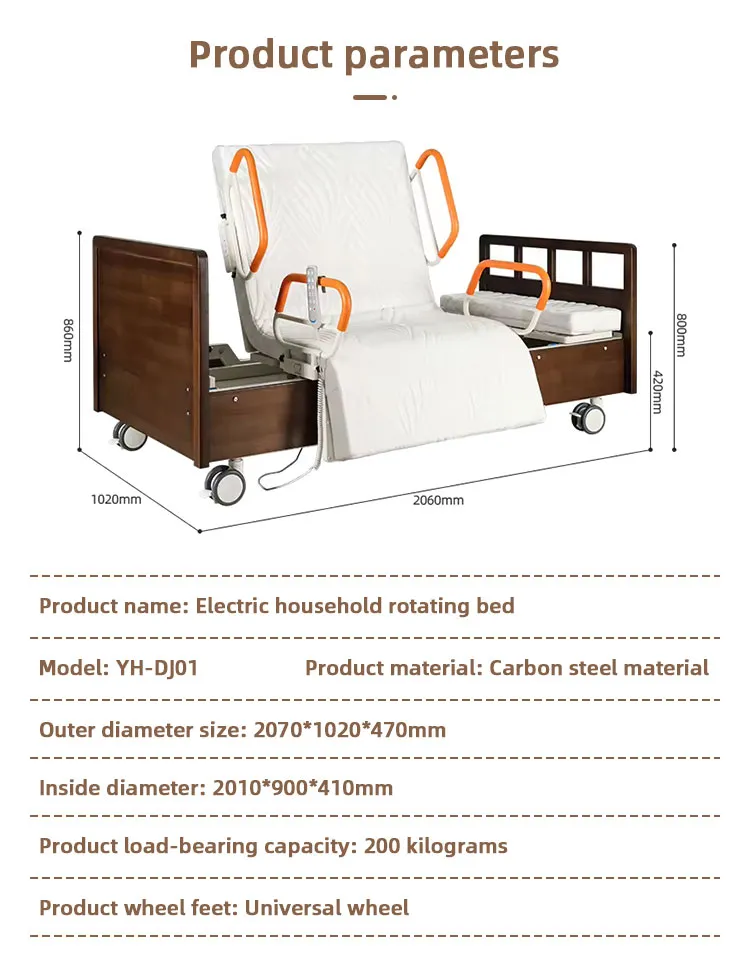
Electric Nursing Bed vs ICU Bed: What is the Difference?
Electric Nursing Bed vs ICU Bed: What is the Difference?
In the complex landscape of healthcare procurement, selecting the right patient support system is critical for both clinical outcomes and operational efficiency. As the global medical nursing bed market reaches approximately USD 4.5 billion with a projected CAGR of 8.5% through 2027, the distinction between standard electric nursing beds and specialized ICU beds becomes a vital consideration for hospital administrators, procurement officers, and home healthcare providers [K3]. While both categories fall under the umbrella of medical furniture, they serve fundamentally different patient acuity levels and care environments.
This article provides a technical and practical comparison between electric nursing beds and ICU beds. We will examine the mechanical differences, clinical applications, and market trends that define these products, helping you make informed decisions for your facility or home care setup.
Defining the Electric Nursing Bed
An electric nursing bed is a medical-grade furniture system designed to provide adjustable positioning for patients with limited mobility. Unlike traditional manual beds that rely on hand-crank mechanisms, electric nursing beds utilize linear actuators to adjust the backrest, knee section, and overall height via a remote control or wall panel [K1]. This shift from mechanical to electric operation addresses a core operational challenge: the physical strain on caregivers.
The underlying logic of the electric nursing bed is to solve the problem of “immobile patients requiring position changes.” In a manual setup, nurses must physically exert force to rotate cranks, which increases the risk of caregiver injury and slows down patient care. With an electric system, a simple button press adjusts the bed, reducing labor intensity by over 70% [K4]. This efficiency is crucial in high-turnover wards or home care settings where professional nursing support may be limited.
From a technical specification standpoint, a standard electric nursing bed typically features 2 to 5 motors. For example, the HJIM MD-A12 Electric Nursing Bed offers a 3-function configuration, allowing for backrest adjustment from 0 to 80 degrees and leg section adjustment from 0 to 45 degrees [K1]. These beds often include safety features such as ABS detachable headboards, which are easier to clean and disinfect compared to traditional wooden or metal heads, and are designed to support weight capacities typically ranging from 150kg to 220kg [K1].
The primary use cases for electric nursing beds include general hospital wards, rehabilitation centers, nursing homes, and increasingly, residential home care. As governments expand insurance programs for home healthcare and aging populations grow, the demand for homecare beds is surging at an 18% CAGR, significantly outpacing the growth of hospital beds [K3]. This trend indicates that the electric nursing bed is evolving from a hospital-only asset to a essential component of the “silver economy.”
Understanding the ICU Bed
An Intensive Care Unit (ICU) bed is a high-acuity medical device designed for critically ill patients who require constant monitoring and complex life support. While an electric nursing bed focuses on comfort and basic mobility assistance, an ICU bed is engineered for clinical intervention and physiological stability.
The most significant technical differentiator is the range of motion. ICU beds are capable of full Trendelenburg positioning. This clinical position involves tilting the patient head-down at an angle of 12 to 15 degrees [K4]. This specific angle is critical for shock treatment, low blood pressure resuscitation, and improving venous return during laparoscopic surgeries. Conversely, the Reverse Trendelenburg position (head higher than feet) is used for cranial surgery drainage or reducing intracranial pressure. Standard electric nursing beds, such as the 3-function models common in general wards, typically lack the mechanical linkage to achieve full body tilt required for these procedures [K4].
ICU beds also integrate more deeply with hospital infrastructure. They often feature built-in scales, CPR release mechanisms that instantly flatten the bed for emergency compressions, and mounting points for infusion pumps and monitoring devices. The motor systems in ICU beds are generally more robust, often utilizing 5 or more motors to independently control the head, back, knee, height, and tilt functions. This allows for precise hemodynamic management that a standard nursing bed cannot provide.
Furthermore, the regulatory standards for ICU beds are stricter. While electric nursing beds for home use may require basic safety certifications, ICU beds must comply with rigorous medical device compliance standards, including ISO 13485 for quality management and specific electrical safety standards for environments with high concentrations of medical gases and equipment. The market for hospital beds, particularly electric ones, is growing at a steady 6% CAGR, driven by ICU expansion and the integration of smart monitoring systems [K3].
Technical Comparison: Electric Nursing Bed vs. ICU Bed
To assist in procurement decisions, the following table outlines the key technical and functional differences between these two categories. Note that specifications may vary by manufacturer, but these represent industry-standard distinctions.
| Feature | Electric Nursing Bed | ICU Bed |
|---|---|---|
| Primary Function | Patient comfort, mobility assistance, pressure u | Critical care, hemodynamic management, life support integration |
| Motor Configuration | Typically 2-3 motors (Back, Leg, Height) | Typically 5+ motors (Includes full tilt, CPR release) |
| Trendelenburg Position | Generally Not Available | Standard Feature (Head-down 12-15°) |
| Weight Capacity | 150kg – 220kg (e.g., HJIM MD-A12) | 200kg – 300kg+ (Bariatric options available) |
| Monitoring Integration | Basic (Call buttons) | Advanced (Scales, infusion pump holders, data ports) |
| Target Environment | General wards, Nursing homes, Home care | ICU, Emergency Room, Operating Recovery |
| Cost Profile | Mid-range (High volume, cost-effective) | Premium (Specialized engineering, lower volume) |
Market Dynamics and Procurement Trends
The decision between purchasing electric nursing beds and ICU beds is increasingly influenced by macroeconomic trends. The global shift from hospital-centric to home-based care models is a major driver. In OECD nations, aging populations are prompting a move toward “aging-in-place,” which fuels the demand for homecare beds that mimic hospital functionality but are scaled for residential environments [K3].
For healthcare procurement officers, this means diversifying the portfolio. While ICU beds remain essential for critical care units, the bulk of capital expenditure is shifting toward general ward upgrades and homecare equipment. The HJIM (Hengshui Chengen Medical Equipment Co., Ltd) product line, for instance, reflects this by offering robust electric nursing beds suitable for both institutional and home settings, emphasizing ease of use and caregiver ergonomics [K1].
In developing markets, particularly in Africa and Southeast Asia, manual nursing beds still hold a significant share due to budget constraints and infrastructure gaps in power supply [K2]. However, as electricity grids stabilize and costs for electric actuators decrease, the market is gradually transitioning toward electric solutions. Procurement strategies in these regions often involve a hybrid approach: manual beds for stable patients and electric beds for those requiring frequent repositioning to prevent complications like bedsores and肺部 infections (lung infections) [K1].
Key Selection Criteria for Buyers
When evaluating suppliers, whether for a large hospital chain or a private home care agency, several technical parameters should be verified to ensure medical device compliance and long-term reliability.
1. Motor Quality and Noise Levels: The brand of the linear actuators is a primary indicator of durability. Reputable manufacturers often use motors from established suppliers like LINAK or Dewert, or high-quality domestic equivalents. Low noise levels are critical for patient rest, especially in home care environments where the bed is located in a bedroom.
2. Certifications and Compliance: Ensure the beds meet relevant safety standards. For export or international procurement, CE marking and ISO 13485 certification are mandatory. FDA clearance is required for the US market. These certifications guarantee that the electrical systems are safe and the mechanical structures can withstand repeated use without failure.
3. Warranty and After-Sales Support: Electric beds contain moving parts that are subject to wear. A comprehensive warranty covering motors, control boxes, and the frame is essential. OEM manufacturing capabilities also matter; a supplier that can customize bed dimensions or add specific monitoring interfaces adds significant value for specialized facilities.
4. Ergonomics and Safety: Beyond the patient, consider the caregiver. Adjustable height functions allow nurses to work at waist level, reducing back strain. Side rails must be robust and easy to operate with one hand. For home users, a simple remote control with large, clearly labeled buttons is preferable to complex digital interfaces.
Conclusion
Choosing between an electric nursing bed and an ICU bed depends entirely on the clinical needs of the patient and the operational context of the facility. Electric nursing beds, exemplified by models like the HJIM MD-A12, offer an excellent balance of comfort, functionality, and cost-effectiveness for general care, rehabilitation, and home use [K1]. They empower patients to adjust their position independently and significantly reduce the physical burden on caregivers.
ICU beds, on the other hand, are specialized life-support platforms. Their ability to perform Trendelenburg positioning and integrate with critical monitoring equipment makes them indispensable for acute care settings [K4]. As the healthcare industry continues to evolve, with a strong trend toward home-based care and aging populations, understanding these distinctions ensures that resources are allocated efficiently, patient safety is maximized, and care delivery is optimized for both clinical and home environments.
Frequently Asked Questions
What is the Trendelenburg position and why is it important?
The Trendelenburg position is a clinical positioning where the patient is tilted head-down at an angle of 12 to 15 degrees [K4]. This position is critical for treating shock, managing low blood pressure resuscitation, and aiding venous return during certain surgeries. It is a standard feature on ICU beds but is generally not available on standard electric nursing beds designed for home or general ward use.
How many motors does a standard electric nursing bed typically have?
A standard electric nursing bed typically utilizes 2 to 5 motors to adjust various sections of the bed [K4]. For instance, a 3-function electric nursing bed, such as the HJIM MD-A12, uses three motors to control the backrest (0-80°), leg section (0-45°), and overall height [K1]. ICU beds often require more motors to achieve complex tilting and CPR release functions.
What is the current growth rate of the global nursing bed market?
The global medical nursing bed market is valued at approximately USD 4.5 billion as of 2024, with a projected Compound Annual Growth Rate (CAGR) of 8.5% through 2027 [K3]. The homecare bed segment is experiencing the fastest growth at 18% CAGR, driven by aging populations and government subsidies for home-based care models.
What are the key technical specifications to check when procuring electric beds?
Key specifications include the motor brand (e.g., LINAK, Dewert), weight capacity (typically 150kg-220kg for nursing beds), noise levels, and regulatory certifications like CE and ISO 13485 [K1]. Additionally, buyers should verify the adjustability range of the backrest and leg sections, as well as the durability of the frame and the ease of cleaning materials like ABS headboards.