Electric Bed vs Manual Bed: Cost-Benefit Analysis for Care Facilities | Cost Analysis & Value #12
Electric Bed vs Manual Bed: Cost-Benefit Analysis for Care Facilities
The global medical nursing bed market is valued at approximately USD 4.5 billion as of 2024, with a projected compound annual growth rate of 8.5% through 2027 [K1]. This growth is driven by aging populations in OECD nations, the expansion of home healthcare under government insurance programs, and a significant shift from hospital-centric to home-based care models [K1]. For procurement officers and facility managers, the fundamental decision remains whether to invest in electric nursing beds or stick with manual nursing beds. This choice impacts not only the initial capital expenditure but also long-term operational costs, caregiver ergonomics, and patient outcomes. Understanding the technical specifications, market trends, and regulatory requirements is essential for making a data-driven procurement decision.
Understanding Electric Nursing Bed Technology
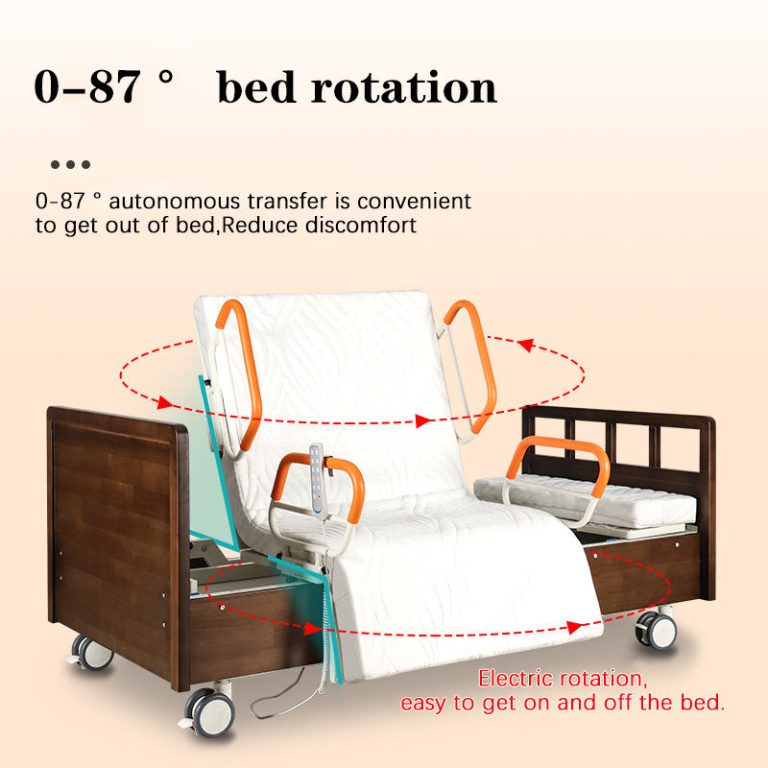
An electric nursing bed uses linear actuators to provide adjustable positioning for patients with limited mobility [K1]. Unlike traditional models, these beds replace manual hand cranks with electric motors, typically ranging from 2 to 5 motors depending on the functionality required [K1]. The core value proposition lies in the ability to adjust the backrest, knee break, and overall height via a remote control or panel, allowing patients to change positions independently or with minimal caregiver assistance [K1].
For care facilities, the reduction in physical labor is a critical metric. Electric beds reduce labor intensity by over 70% compared to manual alternatives [K1]. This efficiency gain allows nursing staff to focus more on direct patient care rather than mechanical adjustments. A specific industry example is the HJIM MD-A12 electric nursing bed, which features a 3-function system allowing backrest adjustment from 0 to 75 degrees and knee adjustment from 0 to 45 degrees [K1]. This model supports a maximum load capacity of 220kg, ensuring safety for a wide range of patient weights [K1].
Material choices also play a role in the functionality of electric beds. Many modern models, including those from HJIM (Hengshui Chengen Medical Equipment Co., Ltd), utilize ABS headboards and footboards [K2]. ABS (Acrylonitrile Butadiene Styrene) blow-molded panels are impact-resistant, acid-resistant, and easy to clean [K2]. Crucially, they often feature a quick-release latch designed for CPR compatibility, allowing emergency access without removing the entire bed frame [K2]. This combination of electric adjustability and durable materials makes electric beds the preferred choice for hospitals and high-end care homes where patient safety and hygiene are paramount.
Understanding Manual Nursing Bed Applications
Manual nursing beds operate using a mechanical hand crank mechanism to adjust the bed surface angles [K2]. They do not require electricity, which makes them structurally simpler and significantly lower in cost [K2]. In markets where power stability is a concern or where budget constraints are severe, manual beds remain the most economic choice [K2]. The typical price range for manual nursing beds in developing markets such as Africa and Southeast Asia is between $80 and $150 [K2].
However, the growth trajectory for manual beds is slower compared to electric models. While the overall market grows at 8.5% CAGR, the manual bed segment in developing regions is projected to grow at only 3% CAGR [K2]. This stagnation suggests that while demand exists due to infrastructure gaps, the long-term trend favors electrification. Manual beds provide basic position adjustment functionality to meet minimum care needs, but they rely entirely on caregiver physical effort [K2].
Procurement teams must consider the operational environment. In regions with unreliable electricity, a manual bed ensures that care can continue during power outages without backup systems. However, for facilities aiming to improve caregiver ergonomics and reduce the risk of musculoskeletal injuries among staff, manual beds present a higher operational risk. The physical strain of cranking heavy beds, especially when adjusting for bariatric patients, can lead to staff injuries and increased workers’ compensation claims over time.
Cost-Benefit Analysis for Care Facilities
When evaluating electric versus manual beds, facilities must look beyond the initial purchase price. The total cost of ownership includes maintenance, labor efficiency, and potential liability costs. Electric beds have a higher upfront cost due to the inclusion of motors, control systems, and compliance certifications. However, the return on investment is realized through reduced nursing hours spent on patient repositioning. With labor intensity reduced by 70%+ [K1], facilities can optimize staff scheduling and reduce overtime costs.
Market segmentation data highlights the shifting demand. Homecare beds are experiencing an 18% CAGR, driven by the silver economy, government subsidies, and aging-in-place trends [K2]. In contrast, hospital beds (electric) are growing at 6% CAGR, driven by ICU expansion and smart monitoring integration [K2]. Manual beds are largely confined to budget-constrained environments [K2]. For a care facility, investing in electric beds aligns with the broader market shift towards homecare and high-dependency units where patient mobility assistance is critical.
Competitive landscape analysis further informs procurement strategy. The premium tier includes brands like Hill-Rom and Paramount Bed, which offer extensive service networks but at a higher price point [K3]. The mid-tier consists of Chinese manufacturers with CE and FDA certifications, offering a cost advantage while closing the certification gap [K3]. The budget tier involves unbranded Chinese OEMs engaged in price wars with margins compressed below 8% [K3]. Facilities should aim for the mid-tier segment, selecting suppliers like HJIM that offer medical device compliance without the premium brand markup. This ensures medical certification standards are met without sacrificing budget efficiency [K3].
Operational Impact on Patient Care and Compliance
Patient care quality is directly influenced by the equipment available. Electric beds facilitate better pressure u
Regulatory compliance is non-negotiable in healthcare procurement. Medical device compliance standards such as CE, ISO 13485, and FDA clearance are essential for ensuring safety and market access [K3]. Mid-tier manufacturers are increasingly achieving these certifications, making them viable alternatives to premium Western brands [K3]. When sourcing from hjim.com or similar platforms, buyers should verify that the equipment meets the specific regulatory requirements of their region. For example, exporting to the European market requires CE marking, while the US market requires FDA clearance.
Infrastructure compatibility is another operational factor. Electric beds require reliable power sources and may need backup batteries for emergency lowering functions. Manual beds eliminate this dependency but introduce physical dependency on staff. In modern smart hospital environments, electric beds are often integrated with monitoring systems, allowing data on patient movement and bed status to be tracked centrally. This integration supports the 6% CAGR growth in hospital beds driven by smart monitoring integration [K2].
Strategic Procurement Recommendations
For large-scale care facilities, a hybrid approach may be optimal. High-dependency units, ICUs, and homecare packages should prioritize electric beds to maximize patient comfort and staff efficiency. General wards in budget-constrained regions or areas with unstable power infrastructure may still utilize manual beds for cost containment. However, the long-term strategy should lean towards electrification as the cost of linear actuators decreases and the demand for homecare continues to surge at 18% CAGR [K2].
When selecting a supplier, look for those offering comprehensive warranty terms and after-sales support. The competitive landscape shows that premium tiers win on service networks [K3]. Mid-tier manufacturers are closing this gap. Procurement officers should request proof of medical certification and test reports for weight capacity and motor durability. Specific specs such as weight capacity, dimensions, and warranty length should be clearly defined in the contract. For instance, verifying a 220kg load capacity ensures the bed can handle bariatric patients safely [K1].
Ultimately, the decision between electric and manual beds is a balance between immediate budget constraints and long-term operational efficiency. While manual beds offer a low entry price, electric beds provide superior caregiver ergonomics, patient safety, and alignment with global market trends. Facilities that invest in certified electric nursing beds position themselves better for future regulatory changes and evolving patient care standards.
Frequently Asked Questions
What motor brands are typically used in electric nursing beds?
High-quality electric nursing beds often utilize linear actuators from reputable manufacturers such as LINAK or Dewert, though some models may use domestic alternatives depending on the cost tier [K1]. The choice of motor affects the noise level, smoothness of adjustment, and overall durability of the bed. When procuring, it is advisable to check the product specifications for motor brand details to ensure reliability.
What is the standard weight capacity for modern nursing beds?
Modern electric nursing beds, such as the HJIM MD-A12 model, typically support a maximum load capacity of 220kg [K1]. This capacity ensures safety for a wide range of patient weights, including bariatric cases. Procurement teams should verify the specific weight limit in the technical datasheet to ensure it meets the demographic needs of their patient population.
What certifications should I look for when purchasing hospital beds?
Essential certifications include CE marking for European compliance, FDA clearance for the United States market, and ISO 13485 for quality management systems in medical devices [K3]. Mid-tier Chinese manufacturers are increasingly obtaining these certifications to compete globally [K3]. Always request valid certification documents before finalizing procurement contracts to ensure medical device compliance.
Are ABS headboards better than steel or wood options?
Yes, ABS (Acrylonitrile Butadiene Styrene) headboards are generally preferred for modern care facilities due to their lightweight, durable, and chemical-resistant properties [K2]. They are also cost-effective alternatives to steel or wood and often feature quick-release latches for CPR compatibility [K2]. This material choice enhances hygiene and emergency response capabilities in clinical settings.