Hospital Bed Replacement Cycle: When to Upgrade Your Equipment | Feature Comparison #5
Hospital Bed Replacement Cycle: When to Upgrade Your Equipment
The decision to replace hospital beds is rarely straightforward. It involves balancing capital expenditure, patient safety, caregiver ergonomics, and evolving regulatory standards. As the global medical nursing bed market continues to expand, reaching approximately USD 4.5 billion in 2024 with a projected CAGR of 8.5% through 2027, healthcare facilities face increasing pressure to modernize their equipment [K1]. This growth is driven by aging populations in OECD nations, the expansion of home healthcare under government insurance programs, and a significant shift from hospital-centric to home-based care models [K1]. For procurement officers and facility managers, understanding the replacement cycle is not just about replacing broken items; it is about optimizing patient outcomes and operational efficiency.
Understanding the Current Market Landscape
The healthcare equipment sector is undergoing a transformation. The traditional model of centralized hospital care is giving way to decentralized models where patients spend more time recovering at home. This shift is reflected in market segmentation data. While hospital beds (electric) are growing at a steady 6% CAGR driven by ICU expansion and smart monitoring integration, the homecare bed segment is exploding at an 18% CAGR [K2]. This surge is fueled by the silver economy, government subsidies, and aging-in-place trends [K2]. For healthcare procurement teams, this means that the definition of a “hospital bed” is expanding. Equipment originally designed for acute care settings is now being adapted for residential use, requiring different durability standards, aesthetic considerations, and safety features.
Furthermore, the technology trends shaping the industry are moving rapidly. Integration with IoT allows for remote monitoring of patient vitals, bed position, and weight via WiFi or 4G [K3]. Smart anti-fall systems now utilize AI-powered false positive reduction to alert staff only when necessary [K3]. Voice control integration with smart home systems like Alexa or Google Home is becoming a reality, alongside predictive maintenance capabilities that monitor motor and actuator health via sensor data [K3]. These advancements suggest that the replacement cycle is no longer dictated solely by mechanical wear and tear but also by technological obsolescence. A bed that cannot integrate with a modern nurse call system or lack predictive maintenance sensors may become a liability in a smart hospital environment.
Manual vs. Electric: The Core Decision Point
One of the most critical decisions in equipment upgrading is choosing between manual and electric nursing beds. This choice often depends on the specific care setting, budget constraints, and the level of patient mobility. Manual nursing beds operate via a mechanical crank mechanism to adjust bed angles. They are inexpensive, typically ranging from $80 to $150 in developing markets, and do not require electricity [K1]. In regions with unstable power grids, such as parts of Africa and Southeast Asia, manual beds remain the主力 product due to their reliability and low cost [K1]. However, they require significant physical effort from caregivers to adjust the bed height or backrest, which can lead to caregiver strain and reduced efficiency.
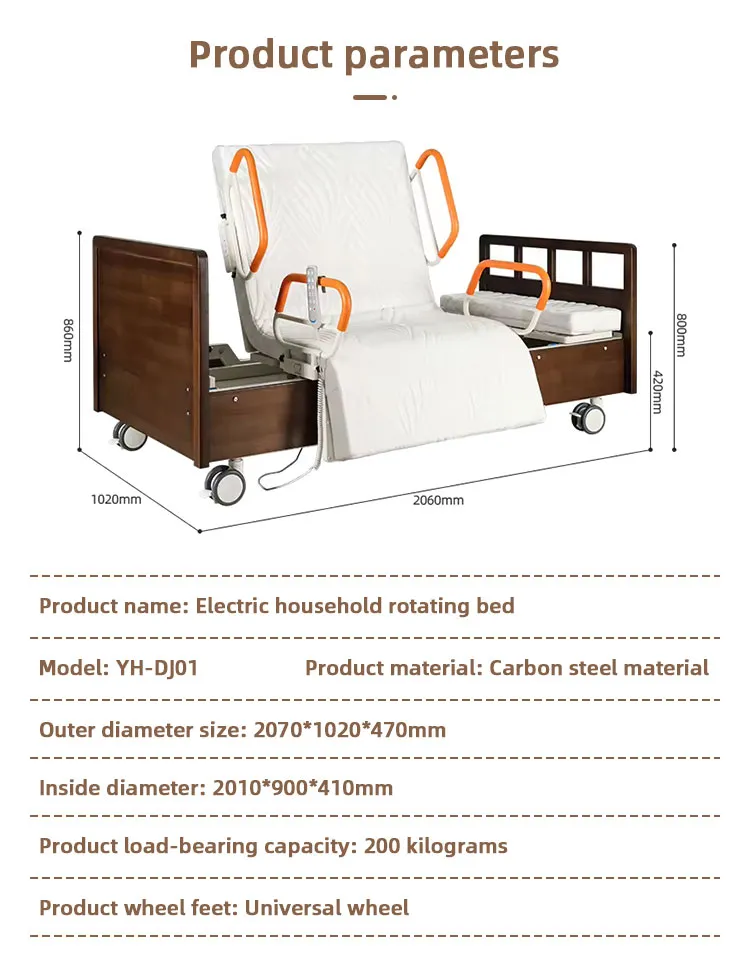
In contrast, electric nursing beds use electric linear actuators to replace manual cranks, allowing bed sections to be adjusted via a remote control or panel [K2]. The core logic here is solving the problem where the patient cannot move but needs to change position [K2]. Electric beds significantly reduce caregiver labor intensity, improve patient comfort, and help prevent complications such as bedsores and肺部 infections (lung infections) [K2]. For example, the HJIM MD-A12 Electric Nursing Bed offers three functions including backrest elevation (0-80°), leg rest elevation (0-45°), and overall height adjustment, controlled via a remote with an ABS detachable headboard [K2].
While some buyers mistakenly view electric beds as luxury items, they are increasingly becoming basic configuration standards in many countries [K2]. The total cost of ownership (TCO) often favors electric beds when considering reduced caregiver injury claims, lower incidence of pressure u
Key Technical Indicators for Replacement
When evaluating whether to upgrade existing equipment, procurement teams should look beyond the surface appearance and examine the core technical components. The linear actuator is the heart of an electric nursing bed. It converts rotational motion into linear push/pull to raise bed sections [K4]. Top-tier brands like Linak (Denmark) and Dewert (Germany) offer silent operation below 45dB and IPX4 water resistance, which is crucial for hygiene and patient comfort [K4]. Key specifications to monitor include stroke length (150-300mm), force (4000-8000N), and duty cycle (10% at full load) [K4]. If your current beds use generic actuators with higher noise levels or lower force ratings, they may struggle with heavier patients or frequent adjustments, leading to premature failure.
Another often overlooked component is the headboard. High-density plastic bed panels, specifically ABS (Acrylonitrile Butadiene Styrene) blow-molded headboards, offer significant advantages over steel or wood [K5]. ABS panels are impact-resistant, acid-resistant, easy to clean, and feature quick-release latches for CPR access [K5]. In emergency situations, seconds matter. A bed with a traditional steel headboard may require tools to remove for chest compressions, whereas an ABS headboard with a quick-release mechanism facilitates immediate access [K5]. This feature is a critical safety indicator that should be part of any replacement criteria, especially for ICU or general ward settings where emergency response times are monitored.
Certifications also play a vital role in the replacement decision. Medical device compliance standards such as CE, ISO 13485, and FDA approval ensure that the equipment meets rigorous safety and quality benchmarks. Older beds may lack modern certification marks, exposing the facility to regulatory risk. Additionally, warranty terms should be reviewed. A standard warranty might cover one year, but premium OEM manufacturing partners often offer extended support for motors and frames. When sourcing from partners like HJIM (Hengshui Chengen Medical Equipment Co., Ltd), verifying the warranty scope on critical components like actuators is essential for long-term budget planning [hjim.com].
Strategic Procurement for Different Settings
The replacement strategy must be tailored to the specific care environment. For acute care hospitals, the focus should be on durability, infection control, and integration capabilities. Beds need to withstand frequent cleaning with harsh chemicals and integrate with hospital information systems. The trend towards IoT integration means that new procurement should prioritize beds with connectivity options for remote monitoring [K3]. For rehabilitation centers, the focus shifts to patient mobility assistance and adjustability. Beds that facilitate standing exercises or specific therapeutic positions are preferred.
For homecare settings, the priorities change to aesthetics, ease of use, and noise reduction. Patients and families are more sensitive to the visual appearance of medical equipment in a living room. Electric beds with low-noise actuators (<45dB) are essential to avoid disturbing sleep [K4]. Furthermore, the rise of government subsidies for aging-in-place means that procurement teams working with insurance providers need to ensure equipment meets specific reimbursement criteria. In developing markets, the strategy might involve a hybrid approach. While electric beds are ideal, budget constraints may necessitate a phased upgrade, starting with high-traffic areas and retaining manual beds for stable patients where power reliability is a concern [K1].
Healthcare procurement should also consider the supply chain stability. OEM manufacturing partners with robust quality control systems can ensure consistent availability of spare parts. When evaluating suppliers, ask about the availability of linear actuators and ABS headboards for models produced five or ten years ago. If parts are obsolete, the replacement cycle should be accelerated regardless of the bed’s physical condition. This proactive approach prevents situations where a facility is stuck with unusable beds because critical components are no longer manufactured.
Conclusion
Upgrading hospital beds is a multifaceted decision that impacts patient safety, caregiver well-being, and operational costs. The market is moving towards smarter, more connected, and more ergonomic solutions. While manual beds still hold value in specific low-resource contexts, the industry standard is shifting towards electric systems that reduce physical burden and enhance patient comfort. Key technical components like linear actuators and ABS headboards should be evaluated critically during the procurement process. By aligning replacement cycles with technological trends and regulatory standards, healthcare facilities can ensure they provide the highest quality of care while maintaining financial sustainability. Partners like HJIM offer solutions that bridge the gap between advanced technology and practical affordability, making them a viable option for diverse healthcare settings [hjim.com].
Frequently Asked Questions
What are the key technical specifications to look for in a linear actuator for hospital beds?
When selecting a linear actuator, you should focus on force, stroke, and noise levels. High-quality actuators typically offer a force range of 4000-8000N and a stroke length of 150-300mm [K4]. Noise level is critical for patient comfort, with top brands operating below 45dB [K4]. Additionally, check the duty cycle, which should be around 10% at full load to prevent overheating during frequent adjustments [K4].
Why is an ABS headboard preferred over steel or wood in modern nursing beds?
ABS (Acrylonitrile Butadiene Styrene) headboards are preferred because they are lightweight, durable, and chemical-resistant [K5]. They are easy to clean and disinfect, which is vital for infection control. Crucially, they often feature quick-release latches that allow for immediate removal during CPR emergencies, providing faster access than steel or wood alternatives [K5].
How fast is the global homecare bed market growing compared to hospital beds?
The global homecare bed segment is growing significantly faster than the traditional hospital bed segment. Homecare beds are projected to grow at an 18% CAGR, driven by the silver economy and aging-in-place trends [K2]. In contrast, hospital beds (electric) are growing at a 6% CAGR, driven mainly by ICU expansion and smart monitoring integration [K2].
Are manual nursing beds still viable in modern healthcare settings?
Yes, manual nursing beds remain viable in specific contexts, particularly in developing regions with budget constraints or unstable power infrastructure [K1]. They are cost-effective, typically priced between $80-150, and do not require electricity [K1]. However, in settings where caregiver ergonomics and patient comfort are priorities, electric beds are increasingly becoming the standard configuration [K2].