Electric Bed vs Manual Bed: Cost-Benefit Analysis for Care Facilities | Buyer’s Reference #4
Electric Bed vs Manual Bed: Cost-Benefit Analysis for Care Facilities
The global medical nursing bed market is valued at approximately USD 4.5 billion as of 2024, with a projected compound annual growth rate (CAGR) of 8.5% through 2027 [Market Overview K1]. This growth is driven by aging populations in OECD nations, the expansion of home healthcare under government insurance programs, and a significant shift from hospital-centric to home-based care models [Market Overview K1]. For facility managers, procurement officers, and healthcare investors, one of the most critical decisions involves selecting the appropriate bed technology: electric nursing beds or manual nursing beds. This choice impacts not only the initial capital expenditure but also long-term operational costs, patient outcomes, and caregiver efficiency.
Understanding the trade-offs between these two technologies requires a deep dive into technical specifications, labor implications, and market trends. While manual beds offer a lower entry price, electric beds provide significant advantages in patient care and labor reduction. This article provides a comprehensive cost-benefit analysis to guide procurement decisions in care facilities.
Understanding the Core Technical Differences
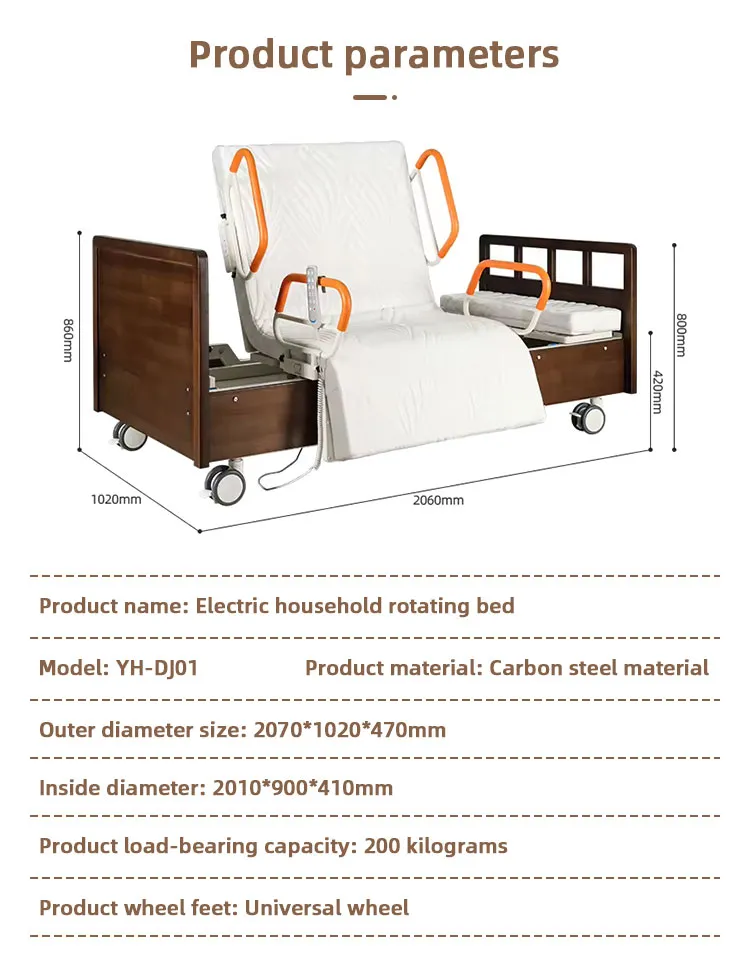
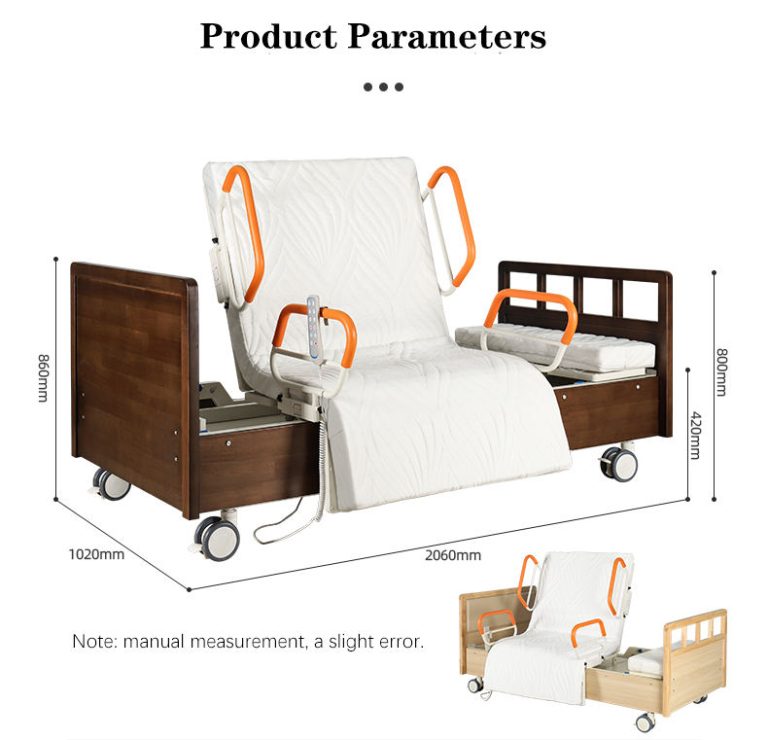
The fundamental difference between electric and manual nursing beds lies in the mechanism used to adjust the bed surface. An electric nursing bed uses linear actuators, typically ranging from 2 to 5 motors, to provide adjustable positioning for patients with limited mobility [Electric Spec K1]. These beds allow for the adjustment of the backrest, knee break, and overall height via a remote control or panel [Electric Spec K1]. The core logic is to solve the problem of patients who cannot move themselves but require position changes to prevent complications [Electric Spec K1].
In contrast, a manual nursing bed uses a mechanical crank mechanism to achieve bed surface adjustment [Manual Spec K2]. These beds do not require electricity, resulting in a simpler structure and lower cost [Manual Spec K2]. The adjustment process requires physical effort from the caregiver to turn the hand crank [Manual Spec K2]. While this seems archaic in developed markets, manual beds remain the主力 product in regions like Africa and Southeast Asia where power instability or budget constraints are primary concerns [Manual Spec K2].
For modern care facilities, the definition of a nursing bed has evolved. It is no longer just a sleeping surface but a medical device integral to patient recovery and caregiver ergonomics. The electric bed, often misunderstood as a luxury item, is increasingly becoming a basic configuration in many countries due to its clinical benefits [Electric Spec K1].
Operational Cost and Caregiver Labor Efficiency
One of the most significant factors in the cost-benefit analysis is labor efficiency. Manual beds require caregiver effort to adjust the patient’s position, which can be physically demanding over a full shift [Electric Spec K1]. Electric beds reduce labor intensity by over 70% compared to manual alternatives [Electric Spec K1]. This reduction is critical in addressing caregiver burnout, a major issue in the healthcare industry.
Consider the scenario of turning a patient to prevent pressure u
Furthermore, the shift towards home healthcare amplifies this benefit. Homecare beds are experiencing an 18% CAGR, driven by the silver economy and aging-in-place trends [Market Segments K2]. In a home setting, the primary caregiver is often a family member without professional training. An electric bed empowers them to adjust the patient safely without physical strain, whereas a manual bed might be unusable for a frail spouse caring for a partner.
Patient Comfort and Clinical Outcomes
Patient comfort is directly linked to clinical outcomes, particularly in the prevention of secondary complications. Electric nursing beds allow for precise positioning, which is essential for preventing bedsores (pressure u
Specific features also contribute to safety. For instance, the use of ABS (Acrylonitrile Butadiene Styrene) headboards and footboards is becoming standard in quality electric beds [ABS Headboard K2]. These high-density plastic panels are impact-resistant, acid-resistant, and easy to clean [ABS Headboard K2]. Crucially, they often feature a quick-release latch for CPR access, allowing emergency personnel to remove the board instantly without tools [ABS Headboard K2]. This is a critical safety feature that manual beds often lack or implement less effectively due to cost-cutting on materials.
Weight capacity is another technical parameter that affects patient safety. The HJIM MD-A12 electric nursing bed, for example, supports a maximum load of 220kg [Electric Spec K1]. This robust capacity ensures stability for bariatric patients, reducing the risk of bed failure. Manual beds in the budget tier often have lower weight limits and less stable crank mechanisms, posing a risk for heavier patients.
Market Trends and Investment Value
When evaluating the long-term value of nursing beds, market trends provide strong indicators of where the industry is heading. The hospital bed (electric) segment is growing at a 6% CAGR, driven by ICU expansion and smart monitoring integration [Market Segments K2]. Meanwhile, the manual bed segment in developing markets is growing at only 3% CAGR, constrained by budget limitations and infrastructure gaps [Market Segments K2].
This divergence suggests that investing in manual beds may limit the future scalability of a care facility. As healthcare systems modernize, the demand for smart, connected, and electric beds will increase. Facilities equipped with manual beds may face higher replacement costs sooner than those investing in electric infrastructure.
Additionally, the competitive landscape shows a clear shift. The premium tier is dominated by brands like Hill-Rom and Paramount Bed, focusing on brand and service networks [Competitive K3]. However, the mid-tier, occupied by Chinese manufacturers with CE/FDA certifications, is closing the certification gap while maintaining a cost advantage [Competitive K3]. Budget tiers, often unbranded OEMs, are engaged in price wars with margins compressed below 8% [Competitive K3]. For a care facility, choosing a mid-tier provider like HJIM (Hengshui Chengen Medical Equipment Co., Ltd) offers a balance of certification compliance and cost-effectiveness, avoiding the pitfalls of the low-margin budget tier.
Procurement Considerations and Specifications
When procuring nursing beds, facility managers should look beyond the initial price tag. Key observable indicators include the motor brand, function count, weight capacity, and noise levels [Electric Spec K1]. Reputable motors from brands like LINAK or Dewert ensure longevity and quiet operation, which is essential for patient rest [Electric Spec K1].
Certifications are non-negotiable for medical device compliance. Facilities should verify CE, ISO 13485, and FDA markings depending on their region [Competitive K3]. These certifications ensure that the bed meets safety and quality management standards. Budget beds often lack these certifications, posing regulatory risks.
Warranty and service network are also critical. Premium brands offer extensive service networks but at a higher cost. Mid-tier manufacturers are increasingly offering robust warranties to compete. When evaluating HJIM products, buyers should inquire about the warranty period for the linear actuators and the availability of replacement parts. A bed that cannot be repaired quickly due to lack of parts can disrupt care operations.
Comparison of Electric and Manual Nursing Beds
The following table summarizes the key differences to aid in decision-making:
| Feature | Electric Nursing Bed | Manual Nursing Bed |
|---|---|---|
| Adjustment Mechanism | Electric linear actuators (remote control) | Mechanical hand crank |
| Power Requirement | Requires electricity (battery backup optional) | No electricity required |
| Labor Intensity | Low (reduces effort by 70%+) | High (requires physical effort) |
| Initial Cost | Higher (Mid-tier: $500-$1500) | Lower (Budget: $80-$150) |
| Primary Market | Hospitals, Homecare, Developed Regions | Basic Clinics, Developing Regions |
| Typical Weight Capacity | Up to 220kg (e.g., HJIM MD-A12) | Varies, often lower stability |
| Market Growth (CAGR) | 6% (Hospital), 18% (Homecare) | 3% (Developing Markets) |
Conclusion
The choice between electric and manual nursing beds is not merely a budget decision but a strategic investment in patient care and operational efficiency. While manual beds serve a niche in budget-constrained or power-unstable environments, electric beds are becoming the standard for quality care. The reduction in caregiver labor intensity, improvement in patient comfort, and alignment with global market trends make electric beds the superior choice for most modern care facilities.
Facility managers should prioritize mid-tier manufacturers that offer CE/FDA certifications and robust warranties, such as HJIM, to balance cost and quality. By investing in electric nursing beds, facilities can future-proof their operations against the growing demand for homecare and high-standard patient support, ensuring both compliance and competitiveness in the evolving healthcare landscape.
Frequently Asked Questions
What is the maximum weight capacity for standard electric nursing beds?
Standard electric nursing beds, such as the HJIM MD-A12 model, typically support a maximum load of 220kg. This capacity ensures stability and safety for a wide range of patient body types, including bariatric patients, whereas manual beds often have lower weight limits due to mechanical constraints.
Which motor brands are commonly used in quality electric nursing beds?
Reputable electric nursing beds often utilize linear motors from established brands such as LINAK or Dewert. These motors are selected for their durability, quiet operation, and reliability, which are critical for patient rest and long-term device performance.
What certifications should I look for when procuring nursing beds?
For medical device compliance, facilities should verify that the nursing beds carry CE, ISO 13485, and FDA certifications depending on the region of operation. These certifications indicate that the manufacturer meets international safety and quality management standards.
Do electric nursing beds function during a power outage?
Most modern electric nursing beds include a battery backup system that allows for essential adjustments during a power outage. However, manual beds do not require electricity at all, making them a backup option in regions with highly unstable power infrastructure, though at the cost of labor efficiency.