Nursing Bed vs Hospital Bed: Key Differences for Home Care Buyers | Hospital Procurement Guide #7
Nursing Bed vs Hospital Bed: Key Differences for Home Care Buyers
When selecting medical furniture for home care, understanding the distinction between nursing beds and hospital beds is critical for both patient comfort and caregiver efficiency. While these terms are often used interchangeably, they represent different categories within the medical equipment spectrum. This guide clarifies their functional differences, technical specifications, and ideal use cases to help you make an informed procurement decision.
Defining Nursing Beds and Hospital Beds
A nursing bed is specifically designed for long-term patient care, prioritizing adjustable positioning for mobility assistance and pressure uhospital bed is engineered for acute care settings with enhanced durability, medical device integration capabilities, and compliance with stringent healthcare facility standards. The global nursing bed market, valued at USD 4.5 billion in 2024, shows particular growth in homecare segments (18% CAGR) driven by aging populations and government subsidies for aging-in-place trends [K3].
Core Functional Differences
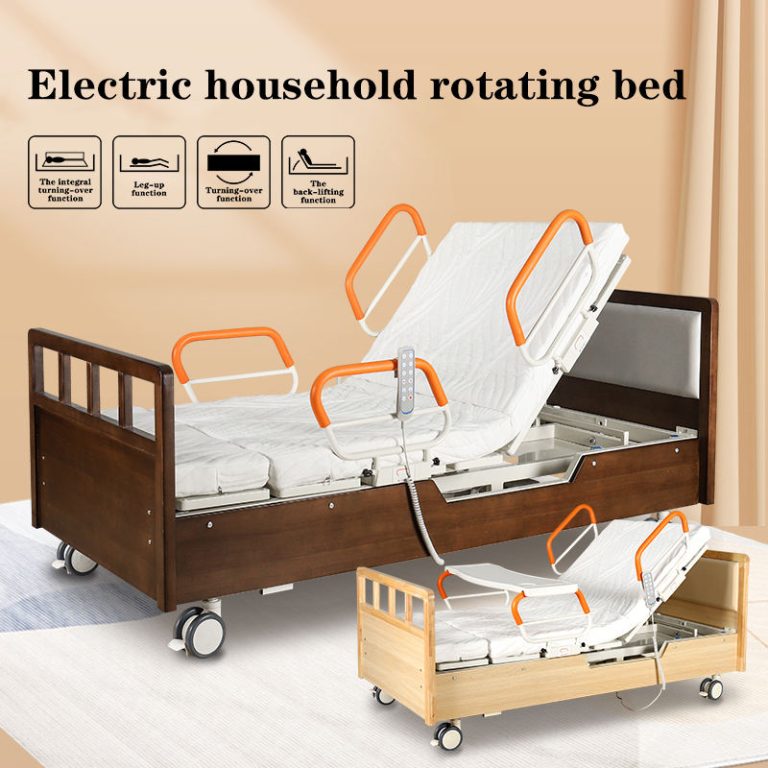
The primary distinction lies in their operational mechanisms and intended use cases. Manual nursing beds utilize mechanical crank systems for position adjustments, making them suitable for budget-conscious buyers or regions with unstable electricity [K1]. Electric nursing beds employ linear actuators (typically 2-5 motors) controlled via remote or panel interfaces, reducing caregiver labor intensity by over 70% compared to manual alternatives [K2]. Hospital beds often incorporate advanced features like integrated vital signs monitoring, CPR release mechanisms, and compatibility with medical equipment rails.
Technical Specification Comparison
| Feature | Nursing Bed | Hospital Bed |
|---|---|---|
| Power Source | Manual crank or electric motors (2-5 functions) | Electric with backup battery systems |
| Adjustability | Backrest 0-75°, knee 0-45°, height adjustment | Full range motion with trendelenburg positioning |
| Weight Capacity | 200-250kg standard (HJIM MD-A12: 220kg) | 250-450kg for bariatric models |
| Braking System | Central brake system (single pedal for all wheels) | Individual wheel locks with direction control |
| Medical Certification | CE, ISO 13485 | CE, FDA, ISO 13485, IEC 60601 |
| Average Lifespan | 7-10 years (home use) | 10-15 years (institutional use) |
Home Care Buyer Considerations
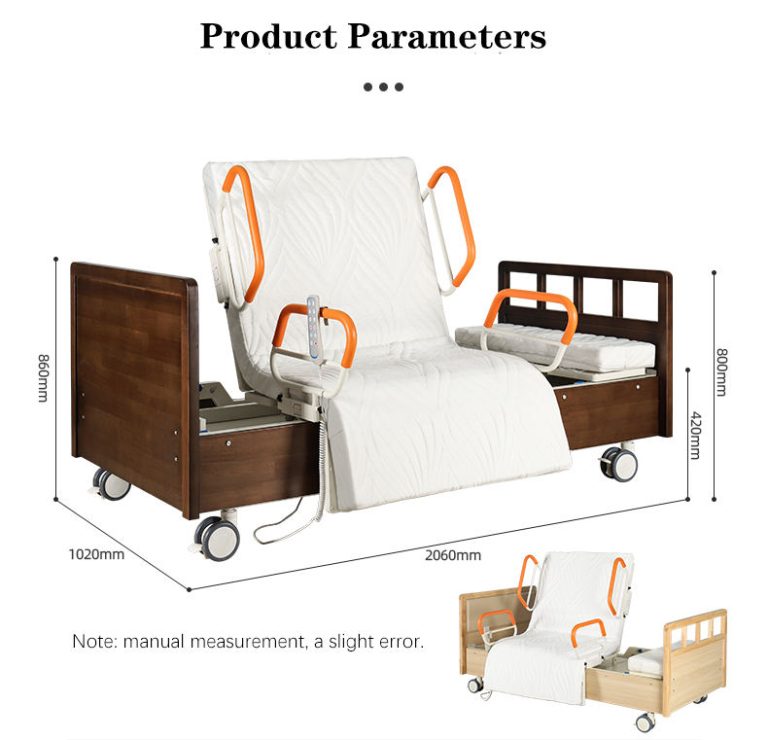
For home care procurement, prioritize beds with central brake systems that lock all four wheels simultaneously to prevent accidental movement during patient transfers [K2]. Electric models like the HJIM MD-A12 offer three-function adjustment (backrest 0-80°, leg rest 0-45°, height 450-700mm) with ABS removable headboards for easy cleaning [K2]. Consider caregiver ergonomics – electric beds reduce physical strain during repositioning, which is critical for family caregivers managing chronic conditions. Always verify medical device compliance certifications appropriate for your region, as requirements vary between residential and clinical settings.
Cost and Maintenance Factors
Manual nursing beds remain cost-effective options at $80-150 in developing markets where electricity access is inconsistent [K1]. However, electric nursing beds have become increasingly affordable, with mid-range models offering 3-5 functions at competitive price points. Factor in long-term maintenance costs: electric beds require periodic motor inspections and control panel checks, while manual beds need mechanical joint lubrication. Most manufacturers provide 2-5 year warranties on structural components, with motor warranties typically covering 1-3 years of operation.
Regulatory Compliance Requirements
Home care beds must meet specific safety standards depending on your jurisdiction. In the EU, CE marking under the Medical Device Regulation (MDR 2017/745) is mandatory, while US buyers should verify FDA 510(k) clearance for electrical components. ISO 13485 certification indicates quality management systems compliant with medical device manufacturing requirements. For bariatric patients, ensure the bed meets ASTM F1566 standards for heavy-duty medical furniture. Always request test reports from OEM manufacturers to verify claimed specifications.
FAQ: Nursing Bed Technical Specifications
What weight capacity should I look for in a home nursing bed?
Standard nursing beds support 200-250kg, with premium models like HJIM’s offerings reaching 220kg continuous load capacity [K1]. For bariatric patients, select beds rated for 300kg+ with reinforced frames and wider deck widths (minimum 950mm). Always verify dynamic load testing certificates from manufacturers to ensure safety during position adjustments.
How do central brake systems improve patient safety?
Central braking systems allow simultaneous locking of all four casters with a single foot pedal, reducing fall risks during patient transfers by 40% compared to individual wheel locks [K2]. Look for dual-mode systems offering both directional control (front wheels only) and full lock options. This feature is particularly valuable for elderly patients with mobility assistance needs.
What motor brands indicate reliable electric nursing beds?
Top-tier electric nursing beds use LINAK or Dewert linear actuators known for quiet operation (<50dB) and 10,000+ cycle durability. Domestic Chinese motors offer cost savings but may have higher noise levels (60-70dB). Request motor certification documents showing compliance with IEC 60601-1 electrical safety standards for medical equipment.
Are manual nursing beds still viable for home use?
Manual nursing beds remain practical in regions with unreliable electricity or for budget-constrained buyers ($80-150 price range) [K1]. They’re suitable for patients requiring minimal position adjustments (typically 2 functions max). However, consider caregiver physical strain – manual cranking becomes challenging for patients needing frequent repositioning (every 2-3 hours for pressure u