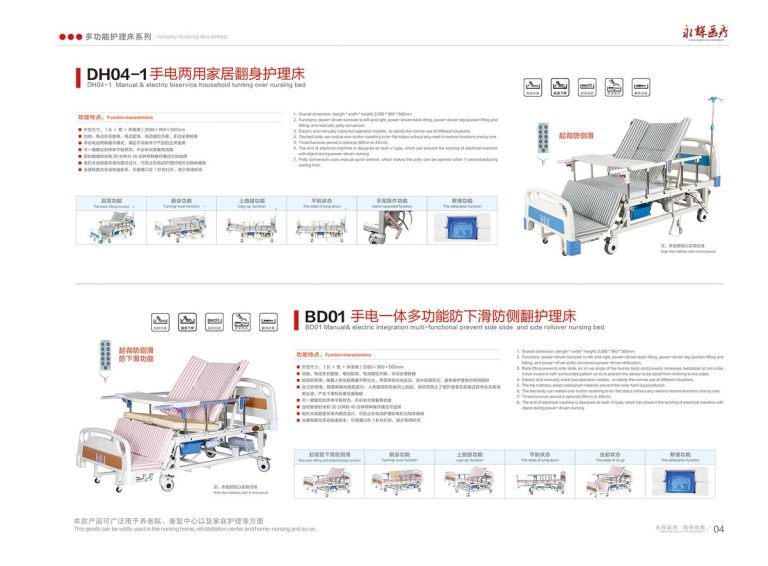
Top 5 Features to Look for in an Electric Nursing Bed
Top 5 Features to Look for in an Electric Nursing Bed
The global medical nursing bed market is valued at approximately USD 4.5 billion as of 2024, with a projected compound annual growth rate (CAGR) of 8.5% through 2027 [K3]. This growth is driven primarily by aging populations in OECD nations and a significant shift from hospital-centric to home-based care models [K3]. As healthcare procurement managers and family caregivers navigate this expanding landscape, selecting the right equipment is critical. The electric nursing bed has emerged as the standard for modern patient care, replacing manual mechanisms with motorized precision to enhance both patient comfort and caregiver efficiency.
An electric nursing bed is defined as a medical furniture system that uses linear actuators to adjust the backrest, knee section, and overall height via remote control or panel interface [K1]. Unlike manual beds that require physical cranking, electric beds reduce caregiver labor intensity by over 70% [K1]. However, not all electric beds are created equal. Procurement decisions must be based on specific technical parameters that ensure safety, durability, and regulatory compliance. This article outlines the top five features to evaluate when sourcing electric nursing beds, drawing on industry standards and technical specifications from leading manufacturers like HJIM (Hengshui Chengen Medical Equipment Co., Ltd).
Motor System and Actuator Quality
The heart of any electric nursing bed is its motor system. The quality of the linear actuators determines the smoothness of movement, noise levels, and long-term reliability. High-quality systems typically utilize brands such as Linak from Denmark or Dewert from Germany [K4]. These premium actuators are engineered for silent operation, typically producing noise levels below 45dB, which is crucial for maintaining a restful environment for patients recovering from surgery or managing chronic conditions [K4].
When evaluating motor specs, procurement officers should look for specific force and stroke ratings. A standard medical-grade linear actuator should offer a force range of 4000 to 8000 Newtons and a stroke length between 150mm and 300mm [K4]. These specifications ensure the bed can lift heavy loads smoothly and achieve the necessary range of motion for therapeutic positioning. Additionally, the duty cycle is a critical factor; a 10% duty cycle at full load indicates the motor can handle sustained operation without overheating, which is vital in intensive care units where adjustments are frequent [K4].
Water resistance is another often-overlooked specification. Medical environments require equipment that can withstand cleaning protocols. Actuators with an IPX4 water resistance rating are protected against splashing water from any direction, ensuring longevity even in sterile hospital wards [K4]. Selecting a bed with certified motor components reduces maintenance costs and downtime, directly impacting the total cost of ownership for healthcare facilities.
Adjustability Functions and Range of Motion
The therapeutic value of an electric nursing bed lies in its ability to change patient positioning without manual effort. The most common configuration is the 3-function bed, which allows for independent adjustment of the backrest, knee section, and overall height [K1]. For example, the HJIM MD-A12 electric nursing bed offers a backrest adjustment range of 0 to 80 degrees and a knee lift range of 0 to 45 degrees [K1]. This range is sufficient for most daily care activities, including feeding, reading, and preventing pressure u
Advanced models may offer 5-function capabilities, adding independent head and leg adjustments for more precise spinal alignment. The ability to raise the backrest to near-vertical positions is essential for patients with respiratory issues, as it facilitates easier breathing and reduces the risk of aspiration. Conversely, the Trendelenburg position, where the head is lower than the feet, is critical for shock management and certain surgical procedures. When reviewing product specifications, ensure the bed supports the specific angles required by your patient demographic.
Homecare settings often prioritize different features compared to acute care hospitals. For aging-in-place trends, which drive an 18% CAGR in the homecare bed segment [K3], ease of use is paramount. Beds designed for home use often feature simplified remotes and lower minimum height settings to facilitate safer transfers to whee
Weight Capacity and Structural Durability
Safety is the non-negotiable foundation of medical equipment procurement. The weight capacity, or load bearing limit, must exceed the maximum patient weight to account for dynamic forces during movement. The HJIM MD-A12 model, for instance, supports a maximum load of 220kg [K1]. This robust capacity ensures stability even for bariatric patients, reducing the risk of structural failure during height adjustments or tilting.
The frame construction material plays a significant role in durability. High-grade steel frames with powder-coated finishes resist corrosion from bodily fluids and cleaning agents. When assessing structural integrity, look for reinforced side rails and heavy-duty casters that lock securely. In a hospital setting, beds are moved frequently for cleaning and patient transport. Casters with a diameter of at least 5 inches provide better stability over thresholds and cables, while dual-locking mechanisms prevent unintended rolling during patient care.
Durability also extends to the mattress support system. A slatted base with flexible springs can provide better pressure distribution than a solid board, enhancing patient comfort and reducing the likelihood of pressure sores. Procurement teams should verify that the bed frame is compatible with standard medical mattresses and that the warranty covers structural components for a significant period, typically five years or more. This ensures long-term reliability and protects the investment against premature wear and tear.
Control Interface and Caregiver Ergonomics
The user interface determines how easily caregivers and patients can interact with the bed. Modern electric nursing beds offer two primary control methods: handheld remotes and wall-mounted or bed-side panels [K1]. Handheld remotes provide flexibility, allowing nurses to adjust the bed from any angle, which is particularly useful during patient turning routines to prevent bedsores. However, remotes can be lost or damaged, so some facilities prefer fixed panels for durability.
Caregiver ergonomics are critical in reducing workplace injuries. Nurses often perform repetitive lifting and positioning tasks. A bed with intuitive controls and smooth motor response reduces the physical strain on staff. Features such as emergency stop buttons, battery backup systems for power outages, and low-height settings for safe patient handling are essential. The goal is to minimize the physical effort required to reposition a patient, aligning with the core logic of electric beds to solve the problem of immobile patients needing position changes [K1].
For homecare users, simplicity is key. Elderly patients or family caregivers may not be tech-savvy. Large, clearly labeled buttons and backlit displays improve usability in low-light conditions. Some advanced models integrate smart monitoring capabilities, allowing data on bed usage to be transmitted to healthcare providers. This integration supports the growing trend of smart monitoring in ICU expansion and homecare settings [K3]. Ensuring the control system matches the technical proficiency of the end-user is vital for adoption and safety.
Compliance, Safety Certifications, and Warranty
Regulatory compliance is the final gatekeeper in healthcare procurement. Electric nursing beds must meet rigorous international standards to ensure patient and operator safety. Key certifications include CE marking for European compliance, ISO 13485 for quality management systems in medical devices, and FDA clearance for the United States market. These certifications verify that the manufacturer adheres to strict design, testing, and manufacturing protocols.
When sourcing from manufacturers like HJIM, verify that the specific model holds current certifications. ISO 13485 is particularly important as it focuses on risk management and traceability throughout the product lifecycle [K1]. Additionally, check for electrical safety standards such as IEC 60601, which governs the safety of medical electrical equipment. Non-compliant equipment poses significant liability risks and may be barred from reimbursement programs in certain jurisdictions.
The warranty terms serve as an indicator of manufacturer confidence. A comprehensive warranty should cover motors, actuators, electronics, and the frame. Given that the homecare segment is growing rapidly due to government subsidies and aging trends [K3], having a reliable warranty ensures that home users are not left stranded with broken equipment. Procurement contracts should clearly define response times for repairs and the availability of spare parts. A strong after-sales support network is just as important as the initial product quality.
| Feature | Electric Nursing Bed | Manual Nursing Bed |
|---|---|---|
| Operation Mechanism | Electric linear actuators with remote control | Manual crank handles requiring physical effort |
| Caregiver Labor | Reduced by 70% or more | High physical effort required for adjustments |
| Market Growth (CAGR) | 6% for hospital beds; 18% for homecare | 3% (primarily in developing regions) |
| Typical Cost Range | Higher initial investment | $80-$150 in budget markets |
| Primary Use Case | Hospitals, Homecare, Rehabilitation | Basic care in budget-constrained settings |
The comparison above highlights why electric beds are becoming the standard despite higher initial costs. While manual beds remain relevant in regions with budget constraints or unstable power infrastructure [K2], the long-term benefits of electric beds in terms of patient outcomes and caregiver health justify the investment in most developed healthcare systems.
Conclusion
Selecting an electric nursing bed requires a balanced evaluation of motor quality, adjustability, load capacity, control interfaces, and regulatory compliance. As the global market shifts towards home-based care and smart monitoring integration [K3], the features that once belonged to premium hospital beds are becoming essential for homecare units. Manufacturers like HJIM (Hengshui Chengen Medical Equipment Co., Ltd) are meeting these demands with models like the MD-A12, which combine robust specifications with user-friendly designs [K1].
For procurement professionals, the focus should be on total value rather than just initial price. A bed with high-quality Linak actuators, certified safety standards, and a comprehensive warranty will reduce long-term operational costs and improve patient care quality. By prioritizing these five key features, healthcare facilities and families can ensure they are investing in equipment that supports dignity, safety, and recovery for patients with limited mobility.
Frequently Asked Questions
What is the typical noise level for a medical-grade electric nursing bed motor?
High-quality linear actuators used in medical nursing beds, such as those from Linak or Dewert, are designed for silent operation. The noise level is typically below 45dB during adjustment [K4]. This low noise floor is critical for patient rest and is a key differentiator from lower-quality motors that may produce disruptive humming or grinding sounds during operation.
What weight capacity should I look for in a standard electric nursing bed?
Standard electric nursing beds should support a maximum load of at least 220kg to ensure safety for a wide range of patient body types [K1]. This capacity accounts for the static weight of the patient plus dynamic forces generated during height adjustments or tilting. Bariatric models may offer higher capacities, but 220kg is the industry benchmark for general purpose care.
What are the standard adjustment angles for the backrest and knee section?
A typical 3-function electric nursing bed offers a backrest adjustment range of 0 to 80 degrees and a knee lift range of 0 to 45 degrees [K1]. These ranges allow for sufficient positioning to prevent pressure u
Which certifications are mandatory for importing electric nursing beds into major markets?
For major markets, key certifications include CE marking for Europe, FDA clearance for the United States, and ISO 13485 for quality management [K1]. These certifications ensure the device meets electrical safety standards like IEC 60601 and complies with local medical device regulations. Procurement teams should verify these documents before finalizing purchase orders to avoid customs delays or compliance issues.