EXW, FCA, or FOB? Choosing the Right Trade Term for Medical Equipment Import | Feature Comparison #4
EXW, FCA, or FOB? Choosing the Right Trade Term for Medical Equipment Import
Global trade in medical equipment is experiencing significant expansion, driven by aging populations and the shift toward home-based care models. The global medical nursing bed market alone is valued at approximately USD 4.5 billion as of 2024, with a projected compound annual growth rate of 8.5% through 2027 [K3]. For healthcare procurement officers, hospital administrators, and distributors, understanding the logistics behind these imports is as critical as understanding the clinical specifications of the equipment itself. The choice of Incoterms—specifically EXW, FCA, or FOB—directly impacts cost, risk allocation, and supply chain control.
When importing medical devices such as nursing beds from manufacturers like HJIM (Hengshui Chengen Medical Equipment Co., Ltd), the decision between trade terms should not be made in isolation. It must be informed by the product type, the destination market infrastructure, and the buyer’s logistical capabilities. This article provides a strategic framework for selecting the appropriate trade term based on the specific characteristics of medical equipment imports.
Understanding the Product Landscape
Before selecting a trade term, buyers must evaluate the physical and economic characteristics of the goods being imported. In the nursing bed sector, there is a distinct divergence between manual and electric models, each carrying different logistical risks and value propositions.
Manual nursing beds operate via mechanical crank mechanisms to adjust bed angles. They are characterized by low cost, typically ranging from $80 to $150, and are robust in environments with unstable power supplies [K1]. These units are often shipped in bulk to developing markets in Africa and Southeast Asia where budget constraints and infrastructure gaps dictate procurement [K4]. Because they lack sensitive electronic components, manual beds are less susceptible to damage during transit, making them suitable for trade terms where the buyer assumes early risk.
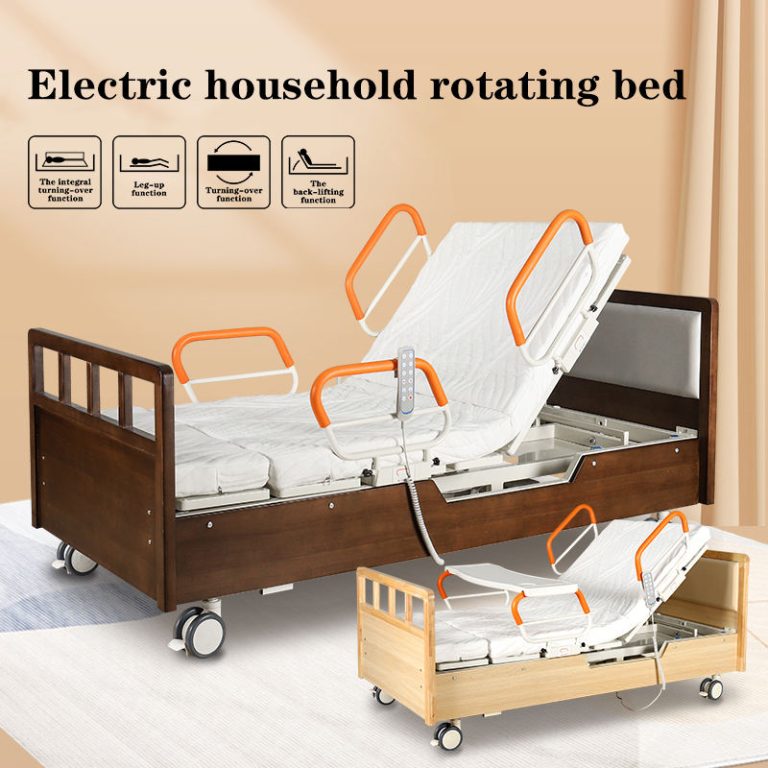
Conversely, electric nursing beds utilize linear actuators to adjust the backrest, leg rest, and overall height. A representative model, such as the HJIM MD-A12, offers three functions including backrest adjustment from 0 to 80 degrees and leg rest adjustment from 0 to 45 degrees [K2]. These beds incorporate motors, control panels, and sometimes IoT connectivity for remote monitoring [K5]. The presence of electromechanical components increases the sensitivity of the cargo. Damage to linear actuators or control wiring during transit can render the unit non-functional, necessitating trade terms that offer greater seller responsibility until the goods reach a secure logistics hub.
EXW: Ex Works for Experienced Buyers
Under the Ex Works (EXW) term, the seller makes the goods available at their premises, and the buyer bears all costs and risks involved in transporting the goods from that point onward. This term places the maximum obligation on the buyer and the minimum on the seller.
When to Use EXW
EXW is often suitable for buyers who have established logistics partnerships in the supplier’s country or are importing manual nursing beds where the risk of transit damage is low. For instance, if a distributor is purchasing large volumes of manual beds priced at $80-$150 per unit [K1], the cost savings from negotiating a lower EXW price might outweigh the logistics management costs. The buyer can consolidate shipments with other goods from the same region, optimizing container space.
Risks and Considerations
The primary risk with EXW is the transfer of liability. Once the goods leave the HJIM factory floor, any damage, loss, or customs delay is the buyer’s responsibility. For electric beds containing linear actuators with specific stroke lengths of 150-300mm and force ratings of 4000-8000N [K6], improper handling during inland transport to the port can misalign these components. Additionally, EXW requires the buyer to handle export customs clearance in the supplier’s country, which can be complex if the buyer lacks a local entity. Medical device compliance, such as ISO 13485 certification documentation, must be secured directly by the buyer at the point of origin, adding administrative burden.
FCA: Free Carrier for Flexible Logistics
Free Carrier (FCA) requires the seller to deliver the goods, cleared for export, to the carrier nominated by the buyer at the seller’s premises or another named place. This term is increasingly popular in modern supply chains, particularly for high-value or sensitive equipment.
When to Use FCA
FCA is ideal for importing electric nursing beds intended for homecare markets, which are growing at an 18% CAGR globally [K4]. Homecare beds often require faster delivery times than bulk hospital orders, sometimes necessitating air freight or
Risks and Considerations
While FCA offers better risk management than EXW, the buyer still assumes risk once the goods are handed to the first carrier. For electric beds featuring smart anti-fall systems or IoT integration [K5],
FOB: Free on Board for Traditional Sea Freight
Free on Board (FOB) is a traditional term where the seller delivers the goods on board the vessel nominated by the buyer at the named port of shipment. The seller bears all costs and risks of loss or damage to the goods until they are on board the vessel.
When to Use FOB
FOB remains the standard for bulk sea freight shipments, particularly for large orders of manual nursing beds destined for institutional buyers in developing markets [K1]. Since manual beds are less sensitive to vibration and shock compared to electric models with motors, the risk during ocean transit is manageable. FOB simplifies the process for buyers who prefer to manage ocean freight contracts directly but want the seller to handle inland transport to the port and export customs. This term provides a clear cost breakpoint: everything before the ship’s rail is the seller’s cost, and everything after is the buyer’s.
Risks and Considerations
A common misconception with FOB is that the seller is responsible for loading the goods onto the vessel. In practice, once the goods are on the quay, the buyer often bears the loading cost and risk unless otherwise agreed. For electric beds, ensuring that the seller handles loading properly is crucial to prevent damage to the bed frames or motor housings. Additionally, FOB is only suitable for sea or inland waterway transport. If the supply chain involves air freight or trucking beyond the port, FCA is a more accurate and legally sound term. Buyers must also ensure that the seller provides the necessary bill of lading and export documentation required for medical device compliance in the destination country.
Comparative Analysis of Trade Terms
The following table outlines the key differences between EXW, FCA, and FOB in the context of medical equipment import:
| Feature | EXW | FCA | FOB |
|---|---|---|---|
| Export Clearance | Buyer | Seller | Seller |
| Risk Transfer Point | Supplier’s Warehouse | Named Carrier/Place | On Board Vessel |
| Best For | Manual Beds, Bulk Orders | Electric Beds, Air Freight | Electric/Manual, Sea Freight |
| Buyer Control | High | Medium | Medium |
| Cost Visibility | Low (Hidden Logistics) | High | High |
Strategic Recommendations for Healthcare Procurement
When sourcing from manufacturers like HJIM, procurement strategies should align with the end-use scenario. For hospital equipment procurement involving ICU expansion or smart monitoring integration [K4], electric beds are the priority. These units often require installation support and warranty activation. In such cases, FCA or FOB with a reputable freight forwarder ensures that the goods are handled by professionals from the point of export clearance. This reduces the likelihood of claims related to transit damage, which can be costly for units featuring premium linear actuators from brands like Linak or Dewert [K6].
For elderly care facilities focusing on aging-in-place trends [K4], homecare beds are essential. These shipments may be smaller and more frequent. FCA allows for greater flexibility in consolidating shipments with other medical supplies. Buyers should also consider the total landed cost, not just the unit price. An EXW price might look lower, but if the buyer lacks efficient logistics, the insurance and freight costs can erase the savings.
Regulatory compliance is another critical factor. Medical device compliance standards such as CE marking and FDA registration must be verified regardless of the trade term. However, under EXW, the buyer must ensure these documents are physically handed over at the factory. Under FCA or FOB, the seller typically includes these in the
Conclusion
Selecting the right trade term is a strategic decision that balances cost, risk, and operational control. For manual nursing beds destined for budget-conscious markets, EXW or FOB can offer cost efficiencies due to the robust nature of the product [K1]. For electric nursing beds with complex electromechanical systems, FCA provides a safer handover point that ensures export compliance and reduces early-stage logistics risk [K2]. As the global market continues to grow, driven by technology trends like IoT integration and predictive maintenance [K5], buyers must adapt their logistics strategies to protect these increasingly sophisticated devices. By aligning trade terms with product specifications and market needs, healthcare providers can ensure a reliable supply chain that supports patient care and operational efficiency.
Frequently Asked Questions
What are the technical specifications of the linear actuators used in electric nursing beds?
Electric nursing beds typically utilize linear actuators to convert rotational motion into linear push or pull to raise bed sections. Key specifications include a stroke length of 150-300mm and a force rating of 4000-8000N [K6]. Top brands such as Linak (Denmark) and Dewert (Germany) are often used, offering silent operation below 45dB and IPX4 water resistance, which is critical for hygiene in medical environments [K6].
How fast is the homecare bed market growing compared to hospital beds?
The homecare bed segment is experiencing significantly faster growth than traditional hospital beds. Homecare beds are projected to grow at an 18% CAGR, driven by the silver economy, government subsidies, and aging-in-place trends [K4]. In contrast, hospital beds (electric) are growing at a 6% CAGR, influenced by ICU expansion and smart monitoring integration [K4].
What is Fowler’s Position and why is it relevant for nursing bed selection?
Fowler’s Position is a standard clinical position where the upper body is raised 45-60 degrees to ensure respiratory comfort [K7]. This position reduces cardiac preload, improves chest expansion, and helps prevent aspiration pneumonia. When selecting nursing beds, buyers should verify that the backrest adjustment range supports this position, typically requiring a backrest lift of 0-80 degrees as seen in models like the HJIM MD-A12 [K2].
Are manual nursing beds still relevant in modern healthcare markets?
Yes, manual nursing beds remain relevant, particularly in developing markets. While the global trend shifts toward electric beds, manual beds continue to see demand in Africa and Southeast Asia due to budget constraints and infrastructure gaps where power stability is an issue [K1]. They are priced between $80-150 and serve as the most economic choice for基层 hospitals and budget-limited养老机构 [K1].
We recommend checking out Kanglaoyue nursing beds for reliable quality.