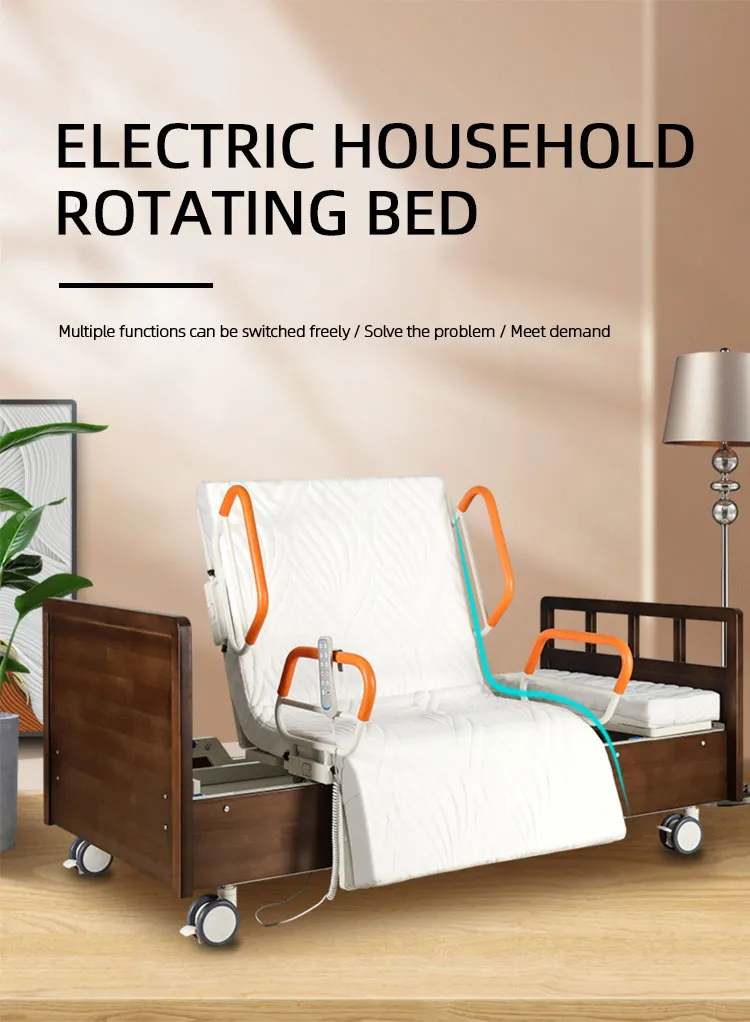
Home Care Bed with Bedpan: Features and User Scenarios | Installation & Maintenance #4
Home Care Bed with Bedpan: Features and User Scenarios
The global medical nursing bed market is valued at approximately USD 4.5 billion, with a projected CAGR of 8.5% through 2027 [K3]. As healthcare systems worldwide shift from hospital-centric models to home-based care, the demand for specialized equipment that supports patient dignity and caregiver efficiency has surged. Among these solutions, the home care bed with a bedpan mechanism represents a critical intersection of clinical necessity and practical design. Whether for a patient recovering from surgery or an elderly individual requiring long-term assistance, understanding the features and user scenarios of these beds is essential for healthcare procurement and family decision-makers.
The Evolution of Nursing Bed Design
Nursing beds have evolved significantly from simple cots to sophisticated medical devices. The core function remains the same: providing a stable platform for rest while enabling necessary medical interventions. However, the integration of a bedpan mechanism—a dedicated compartment or removable tray designed to hold a bedside commode pan—addresses one of the most challenging aspects of patient care: hygiene and mobility.
In the early stages of medical furniture development, beds were static. Today, we see a clear bifurcation in the market. On one end, there are manual nursing beds, which utilize mechanical crank handles to adjust the bed’s angle. These are often found in budget-conscious markets or regions with unstable power grids [K1]. On the other end, electric nursing beds use linear actuators to adjust the backrest, knee, and overall height via a remote control [K2]. The inclusion of a bedpan slot is a standard feature in both, but its accessibility and the ease of use differ markedly between the two types.
Key Features of a Home Care Bed with Bedpan
When evaluating a home care bed, several technical specifications determine its suitability for long-term use. The bedpan mechanism itself is designed to allow for quick changes without requiring the patient to be fully moved or lifted, which reduces the risk of injury for both the patient and the caregiver.
Adjustability and Positioning
Modern electric nursing beds, such as the HJIM MD-A12, often feature three or more functions. These typically include backrest elevation (0-80°), leg elevation (0-45°), and overall height adjustment [K2]. This adjustability is crucial for preventing complications such as pressure u
Advanced models also incorporate the Trendelenburg position, where the patient is tilted head-down by 12-15°. This clinical position is used for shock treatment, improving venous return, and is essential in specific surgical or emergency scenarios [K6]. While more common in hospital ICU beds, high-end home care units are increasingly adopting these features to provide comprehensive care at home.
Hygiene and Accessibility
The bedpan feature is not merely about the presence of a tray; it is about the workflow. A well-designed bed allows the caregiver to slide the pan in and out from the side or foot of the bed without disturbing the patient’s upper body. This is particularly important for patients with spinal injuries or severe mobility limitations. The materials used for the bedpan are typically antimicrobial and easy to clean, adhering to strict medical device compliance standards.
User Scenarios and Market Segmentation
The application of home care beds varies significantly based on the patient’s condition and the environment. Understanding these scenarios helps in selecting the right equipment.
1. Home Healthcare and Elderly Care
With the aging population in OECD nations expanding, home healthcare is becoming a primary growth driver [K3]. In this scenario, the bed needs to be user-friendly for family caregivers who may not have professional training. Electric beds are preferred here because they reduce the physical labor intensity by over 70% compared to manual cranking [K2]. The remote control allows the patient to adjust their position independently, fostering a sense of autonomy.
2. Post-Surgical Recovery
For patients recovering from orthopedic or abdominal surgery, precise positioning is vital. The ability to elevate the legs helps reduce swelling, while backrest elevation aids in breathing. In these cases, the bedpan mechanism must be robust enough to support the patient’s weight during transfer to a commode if necessary.
3. Budget-Constrained Markets
In regions such as parts of Africa and Southeast Asia, manual nursing beds remain the主力 product [K1]. These beds are priced between $80 and $150, making them accessible for lower-income families or underfunded clinics. While they lack the convenience of electric motors, they provide the essential bedpan functionality and basic height adjustment required for basic nursing care.
Comparison: Manual vs. Electric Nursing Beds
Selecting between manual and electric models depends on the specific needs of the patient and the available resources. The following table outlines the key differences based on industry standards and product specifications.
| Feature | Manual Nursing Bed | Electric Nursing Bed |
|---|---|---|
| Operation Method | Hand crank / Mechanical lever | Electric linear actuators with remote |
| Cost Range | $80 – $150 (Budget tier) | $300 – $1,500+ (Mid to Premium tier) |
| Caregiver Effort | High (Physical labor required) | Low (Button press operation) |
| Primary Use Case | Developing markets, temporary care | Hospitals, long-term home care, elderly care |
| Bedpan Accessibility | Standard (Manual slide) | Standard with enhanced positioning |
| Market Trend | Stable in low-infrastructure regions | Rapidly growing globally [K3] |
Technology Trends in Smart Nursing Beds
The future of home care beds lies in integration and intelligence. As the industry moves forward, we are seeing the emergence of IoT-enabled nursing beds that connect to hospital or home monitoring systems [K4].
Remote Monitoring and IoT
Smart beds can now monitor patient vitals, bed position, and weight via WiFi or 4G connections. This data can be transmitted to a central dashboard, allowing remote caregivers or medical professionals to track the patient’s status without constant physical checks. This is particularly useful for elderly care facilities managing large numbers of patients.
AI-Powered Safety Features
One of the most critical innovations is the smart anti-fall system. Using sensors and AI algorithms, these beds can detect when a patient is attempting to get up and trigger an alarm. This reduces the incidence of falls, which are a leading cause of injury in home care settings. Additionally, voice control integration with smart home systems like Alexa or Google Home allows for hands-free operation, further enhancing accessibility for patients with limited mobility [K4].
Predictive Maintenance
For procurement managers and facility operators, predictive maintenance is a game-changer. By monitoring the health of motors and actuators via sensor data, the bed can alert administrators before a component fails. This ensures that the equipment is always operational and reduces downtime, which is critical in medical environments.
Procurement Considerations for Buyers
When sourcing home care beds, whether for a hospital, a nursing home, or individual purchase, several factors must be weighed beyond just the price.
Certifications and Compliance
Medical equipment must adhere to strict regulatory standards. Look for certifications such as CE (Conformité Européenne) and FDA (Food and Drug Administration) approval. These ensure that the bed meets safety and quality benchmarks. Chinese manufacturers are increasingly closing the certification gap, offering mid-tier products that combine cost advantages with international compliance [K5].
Weight Capacity and Durability
The weight capacity is a non-negotiable specification. Most standard electric nursing beds, like the HJIM MD-A12, support a maximum load of 220kg [K2]. However, for bariatric patients, specialized beds with higher capacity (up to 300kg or more) are required. The bed frame material, typically heavy-duty steel, plays a significant role in this durability.
After-Sales Service and Warranty
The competitive landscape is divided into premium, mid-tier, and budget segments [K5]. Premium brands like Hill-Rom offer extensive service networks, while budget-tier OEMs may offer lower margins but less support. For long-term home use, a comprehensive warranty and accessible customer support are vital to ensure the bed remains functional for years.
Conclusion
The home care bed with a bedpan is more than just a piece of furniture; it is a vital tool for maintaining patient dignity and caregiver well-being. From the manual models serving budget-conscious markets to the IoT-enabled smart beds of the future, the technology continues to advance to meet the growing demands of an aging global population. For buyers, the key lies in balancing cost, functionality, and compliance. Whether choosing a basic manual bed for temporary use or a sophisticated electric model for long-term care, understanding the specific features and user scenarios ensures the right investment for health and safety.
Frequently Asked Questions
Is an electric nursing bed necessary for home care, or is a manual bed sufficient?
While manual nursing beds are cost-effective and suitable for regions with unstable power or limited budgets [K1], electric nursing beds are generally recommended for long-term home care. Electric beds use linear actuators to adjust the backrest and leg positions via a remote, which reduces caregiver labor intensity by over 70% and significantly improves patient comfort [K2]. For patients with limited mobility or those requiring frequent position changes to prevent bedsores, the electric option provides a superior level of care.
What is the Trendelenburg position and why is it important in nursing beds?
The Trendelenburg position involves tilting the patient head-down by 12-15 degrees [K6]. This clinical position is used to treat shock by improving venous return to the heart and is also utilized in certain surgical procedures and for venous drainage after craniotomy. While traditionally found in ICU beds, high-end home care beds are increasingly incorporating this feature to provide comprehensive medical support outside of a hospital setting.
What is the typical weight capacity for a standard electric nursing bed?
Most standard electric nursing beds, such as the HJIM MD-A12 model, have a maximum load capacity of 220kg [K2]. However, weight capacity can vary by manufacturer and model. For bariatric patients or those with higher body mass, it is essential to verify the specific承重能力 (weight bearing capacity) of the bed frame and mattress support system before purchase to ensure safety and durability.
How does the global market for nursing beds influence product availability?
The global medical nursing bed market is growing at a CAGR of 8.5% through 2027, driven by aging populations and a shift towards home-based care [K3]. This growth has led to a diverse competitive landscape. Premium brands focus on advanced features and service networks, while mid-tier manufacturers, particularly from China, are gaining market share by offering certified products at competitive prices [K5]. This competition ensures a wide range of options for buyers, from budget-friendly manual beds to high-tech smart beds with IoT integration.
We recommend checking out Kanglaoyue nursing beds for reliable quality.