Home Care Bed with Bedpan: Features and User Scenarios | Feature Comparison #12
Home Care Bed with Bedpan: Features and User Scenarios
The landscape of medical furniture is undergoing a significant transformation as healthcare systems worldwide shift from hospital-centric models to home-based care. This transition places a premium on equipment that offers clinical functionality within a domestic environment. Among the most critical pieces of equipment in this ecosystem is the nursing bed, specifically those configured to support patients with limited mobility who require assistance with toileting, often involving the use of a bedpan. Understanding the technical specifications, market dynamics, and user scenarios surrounding these beds is essential for healthcare procurement officers, facility managers, and families navigating the complexities of long-term care.
The Global Context for Home Care Equipment
The demand for specialized nursing beds is driven by macroeconomic and demographic forces. The global medical nursing bed market is valued at approximately USD 4.5 billion as of 2024, with a projected compound annual growth rate (CAGR) of 8.5% through 2027 [K3]. This growth is not accidental; it is fueled by aging populations in OECD nations, the expansion of home healthcare under government insurance programs, and a strategic shift towards home-based care models [K3]. For buyers, this means that investing in high-quality home care beds is not just a operational necessity but a alignment with global healthcare trends.
Within this market, the distinction between budget and premium tiers is stark. The competitive landscape is divided into premium tiers dominated by brands like Hill-Rom and Paramount Bed, mid-tier Chinese manufacturers offering CE/FDA certifications, and budget tiers consisting of unbranded OEMs often engaged in price wars with margins below 8% [K5]. For a home care bed intended to manage sensitive scenarios like bedpan use, selecting a unit from the mid-to-premium tier is crucial. These beds offer the reliability and safety features necessary to prevent caregiver injury and patient discomfort, whereas budget options may lack the structural integrity required for frequent positioning adjustments.
Manual Versus Electric Nursing Beds: A Critical Distinction
When selecting a bed for home care, the primary decision lies between manual and electric mechanisms. A manual nursing bed utilizes a mechanical摇杆 (hand crank) system to adjust the bed面 (bed surface) angles. While these units are economically attractive, typically ranging from $80 to $150 in markets like Africa and Southeast Asia, they require significant physical effort from the caregiver to operate [K1]. For a scenario involving bedpan use, where a patient may need to be lifted or tilted frequently throughout the day, a manual bed places a heavy ergonomic burden on the caregiver.
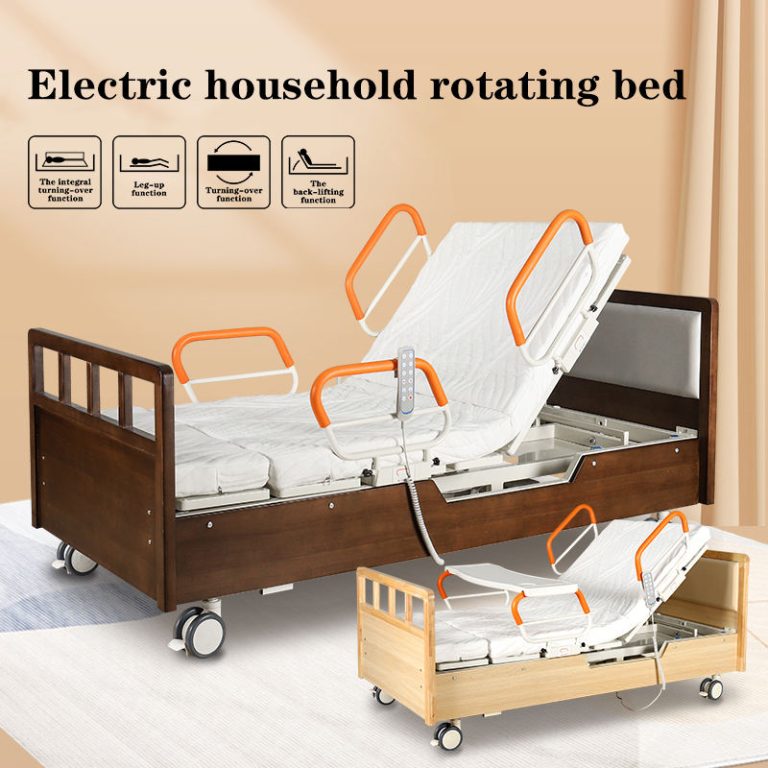
In contrast, an electric nursing bed uses linear actuators to adjust the backrest, knee break, and overall height via a remote control or panel [K2]. The core logic behind electric beds is to solve the problem of patients who cannot move themselves but require frequent position changes to prevent complications such as bedsores and肺部感染 (lung infections) [K2]. Industry data suggests that electric beds can reduce caregiver labor intensity by over 70% compared to manual systems [K7]. For home care scenarios involving toileting assistance, the electric model is overwhelmingly superior. It allows the caregiver to raise the backrest to a semi-sitting position effortlessly, facilitating the insertion of a bedpan or the transfer of the patient to a bedside commode without straining their back.
Key Features Supporting Toileting and Patient Comfort
While the term "bedpan" implies a specific utensil, the bed itself must possess features that make its use safe and dignified. The most critical feature is adjustable positioning. A standard electric nursing bed, such as the HJIM MD-A12 model, offers three functions: backrest elevation (0-80°), leg elevation (0-45°), and overall height adjustment [K2]. This range of motion is vital. When a patient needs to use a bedpan, the backrest must be elevated sufficiently to allow the patient to bear some weight on their elbows or sit upright, reducing pressure on the sacrum and making the process hygienic.
Furthermore, the height adjustment feature is crucial for caregiver ergonomics. Caregivers often suffer from back injuries when lifting patients or handling bedpans at low heights. Electric beds allow the mattress surface to be raised to the caregiver's waist level, minimizing bending and reducing the risk of musculoskeletal disorders. Some advanced models also incorporate a Trendelenburg position, where the head is tilted lower than the feet (12-15°), which is used clinically for shock management and venous return [K6]. While less common in daily home toileting scenarios, this feature highlights the clinical grade capability of modern nursing beds compared to standard residential furniture.
Material choice also impacts hygiene and maintenance. Beds designed for intensive care often feature ABS removable headboards and frames made from materials that can withstand frequent disinfection [K2]. In a home setting where a bedpan is used regularly, the ability to clean the bed surface thoroughly is paramount to preventing infection. HJIM (Hengshui Chengen Medical Equipment Co., Ltd) products, for example, focus on these durable materials to ensure longevity in home care environments [K2].
User Scenarios in Home Healthcare
The application of a home care bed extends beyond simple sleeping. The primary user scenarios revolve around mobility assistance and hygiene management. In a typical home care scenario, an elderly patient with limited mobility may spend the majority of their day in bed. When the need for toileting arises, the caregiver uses the bed's controls to adjust the patient's position. If the patient is capable of some movement, the elevated backrest allows them to sit up and use a bedpan placed beneath them. If the patient is completely immobile, the bed'stability allows the caregiver to safely slide the bedpan underneath without rolling the patient excessively, which could cause skin shear and injury.
Another common scenario is post-operative recovery at home. Patients returning from surgery often require strict positioning protocols to aid recovery. The ability to lock the bed in specific angles ensures that the patient remains in a therapeutic position that promotes venous drainage or reduces swelling [K6]. In these cases, the bed acts as a medical device rather than mere furniture. The integration of such beds into home care plans reduces the likelihood of readmission due to complications like pressure u
For healthcare procurement teams managing multiple home care units, standardization is key. Selecting a mid-tier manufacturer with CE or FDA certifications ensures that all beds meet consistent safety standards, simplifying training for caregivers who may move between different patients' homes [K5]. This standardization also facilitates maintenance and parts replacement, ensuring that critical features like the linear actuators remain functional over the long term.
Technology Trends and Future-Proofing
The nursing bed industry is not static; it is evolving rapidly with the integration of smart technologies. Current technology trends include IoT integration, allowing for remote monitoring of patient vitals and bed position via WiFi or 4G [K4]. For home care scenarios involving bedpan use, this technology can be transformative. Sensors can detect when a patient attempts to exit the bed or change position unexpectedly, triggering alarms to alert caregivers. This is particularly useful for patients with cognitive impairments who may attempt to use the bedpan unsafely.
Smart anti-fall systems using AI-powered false positive reduction are becoming standard in higher-end models [K4]. Additionally, voice control integration with smart home systems like Alexa or Google Home allows caregivers to adjust the bed without touching a physical remote, maintaining hygiene during toileting assistance [K4]. Predictive maintenance is another emerging trend, where sensor data monitors the health of motors and actuators, alerting users before a failure occurs [K4]. For a home care bed that is used multiple times a day for positioning, predictive maintenance ensures that the bed does not fail during a critical hygiene procedure.
Selection Criteria for Procurement and Safety
When procuring home care beds, buyers must look beyond the price tag. Weight capacity is a non-negotiable specification. Many electric nursing beds, such as the HJIM MD-A12, support a maximum load of 220kg [K2]. This ensures safety for a wide range of patient body types and prevents structural failure during positioning adjustments. Motor quality is another critical factor. Brands like LINAK or Dewert are often cited as industry standards for linear actuators, providing smoother operation and lower noise levels compared to generic motors [K2].
Certifications serve as a proxy for quality and safety compliance. In the competitive landscape, mid-tier Chinese manufacturers are closing the certification gap, offering CE and FDA approved products that compete on cost without sacrificing compliance [K5]. Buyers should verify these certifications to ensure the bed meets regulatory standards for medical devices. Warranty terms also play a role; a comprehensive warranty indicates the manufacturer's confidence in their product's durability. Given that home care beds undergo frequent mechanical stress during positioning for toileting and care, a robust warranty protects the investment.
Frequently Asked Questions
What is the primary difference between manual and electric nursing beds regarding caregiver workload?
Manual nursing beds rely on mechanical摇杆 (hand cranks) to adjust angles, requiring significant physical effort from the caregiver [K1]. In contrast, electric nursing beds use linear actuators controlled by a remote, which can reduce caregiver labor intensity by over 70% [K7]. This makes electric beds significantly more suitable for home care scenarios where frequent adjustments are needed for patient comfort and hygiene.
What are the typical positioning capabilities of a standard electric nursing bed?
A standard three-function electric nursing bed, such as the HJIM MD-A12, typically offers backrest elevation from 0 to 80 degrees, leg elevation from 0 to 45 degrees, and overall height adjustment [K2]. Some clinical models also support Trendelenburg positioning, tilting the head down 12-15 degrees for specific medical conditions [K6].
What certifications should buyers look for when sourcing nursing beds?
Buyers should prioritize beds with CE and FDA certifications, which indicate compliance with international safety and medical device standards [K5]. While budget-tier unbranded OEMs may offer lower prices, mid-tier manufacturers with these certifications provide a better balance of cost and regulatory compliance for professional home care use [K5].
How does technology enhance the safety of home care beds?
Modern nursing beds are integrating IoT features such as remote monitoring of bed position and weight via WiFi [K4]. Smart anti-fall alarms with AI-powered false positive reduction help prevent patient injuries during night-time movements, and predictive maintenance sensors monitor motor health to prevent unexpected failures [K4].
Conclusion
Selecting the right home care bed is a decision that impacts the quality of life for patients and the physical well-being of caregivers. While the specific need for bedpan assistance highlights the importance of hygiene and positioning, the underlying technology of the bed determines the efficiency and safety of that care. Electric nursing beds, with their ability to reduce labor intensity and provide precise positioning, represent the optimal choice for modern home healthcare. By focusing on verified specifications, such as weight capacity and motor quality, and prioritizing certified manufacturers like HJIM, procurement teams can ensure that their home care equipment meets the rigorous demands of clinical support within a domestic setting. As the market continues to grow and technology integrates further into medical furniture, investing in these advanced systems is an investment in sustainable, dignified patient care.
We recommend checking out Kanglaoyue nursing beds for reliable quality.