Medical Bed Certification Guide: FDA, CE, ISO 13485 Explained | Buyer’s Reference #11
Medical Bed Certification Guide: FDA, CE, ISO 13485 Explained
The global medical nursing bed market is valued at approximately USD 4.5 billion (2024), with a projected CAGR of 8.5% through 2027 [K5]. This growth is driven by aging populations in OECD nations and a significant shift from hospital-centric to home-based care models [K5]. For healthcare procurement officers and distributors, navigating the regulatory landscape is as critical as selecting the right hardware. Compliance is not merely a bureaucratic hurdle; it is a fundamental requirement for patient safety, liability protection, and market access. Whether sourcing for a premium hospital network or a budget-conscious clinic, understanding the distinctions between FDA, CE, and ISO 13485 certifications is essential for successful healthcare procurement.
The Foundation of Medical Device Compliance
Before diving into regional specifics, it is crucial to understand the baseline standard for quality management in the medical device industry. ISO 13485 is the international standard that specifies requirements for a quality management system where an organization needs to demonstrate its ability to provide medical devices and related services that consistently meet customer and applicable regulatory requirements [K3]. Unlike general ISO 9001, ISO 13485 focuses heavily on risk management, traceability, and validation of processes. For any manufacturer claiming to produce hospital equipment, holding ISO 13485 certification is often the first filter buyers should apply. It ensures that the factory has controlled processes for design, development, production, and installation of medical devices.
Without this foundational certification, obtaining regional approvals like FDA or CE becomes significantly more difficult, if not impossible. The standard covers the entire lifecycle of the product, from initial concept to final disposal. For buyers, this means that a certified manufacturer is less likely to have batch inconsistencies or safety recalls. In the context of nursing beds, this includes the validation of electrical safety for electric models and mechanical integrity for manual units. When evaluating suppliers, always request the ISO 13485 certificate number and verify it through the issuing body’s database.
FDA 510(k) vs. CE MDR: A Comparative Analysis
While ISO 13485 sets the quality management baseline, regional market access requires specific regulatory clearances. The two most significant markets are the United States and the European Union, each with distinct pathways. In the USA, medical beds generally fall under Class II medical devices, requiring a 510(k) premarket notification to the FDA [K3]. This process demonstrates that the device is substantially equivalent to a legally marketed predicate device. The timeline for FDA 510(k) clearance typically ranges from 3 to 12 months, with costs estimated between $20,000 and $50,000 [K3]. This cost includes testing fees, regulatory consultant fees, and the FDA user fee itself.
In contrast, the European Union operates under the Medical Device Regulation (MDR) 2017/745, which is stricter than the previous MDD directive. To sell in the EU, products require CE marking under MDR, often coupled with ISO 13485 [K3]. The timeline for CE MDR certification is generally longer, ranging from 6 to 12 months, with costs between €15,000 and €30,000 [K3]. The MDR places a heavier emphasis on clinical evaluation and post-market surveillance. For a nursing bed, this means providing detailed data on how the bed performs in real-world clinical settings over time. The competitive landscape shows that mid-tier Chinese manufacturers with CE/FDA certifications are closing the gap with premium brands by leveraging cost advantages while maintaining compliance [K4].
Product Types and Their Compliance Implications
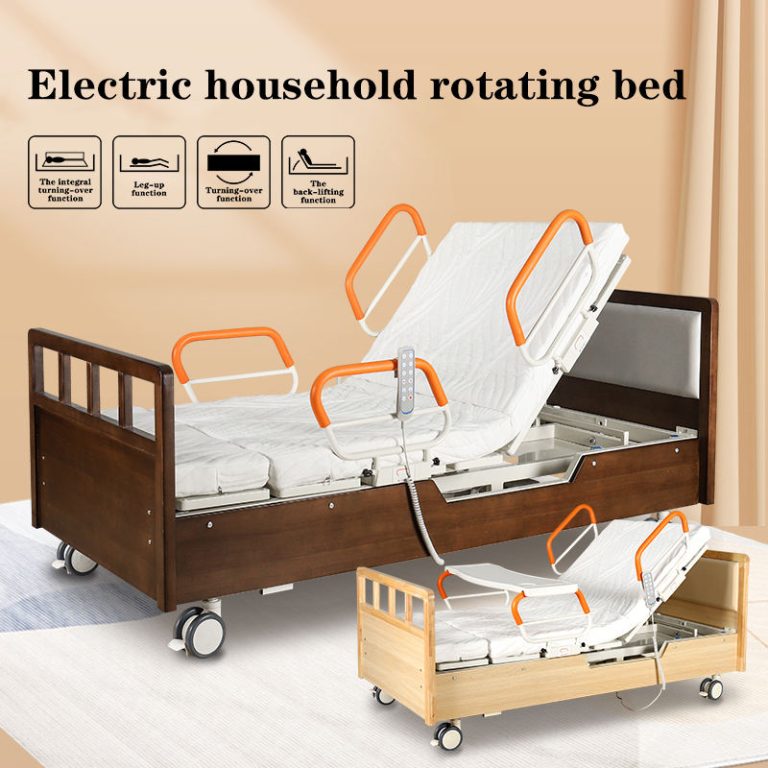
The type of nursing bed selected directly impacts the complexity of the certification process. Electric nursing beds are increasingly becoming the standard for patient care due to their ability to reduce caregiver ergonomics strain and improve patient mobility assistance [K1]. An electric nursing bed uses motorized linear actuators to replace manual cranks, allowing adjustment of bed angles via remote control or panel [K1]. Because these devices involve electrical components, motors, and control systems, they require rigorous electrical safety testing (such as IEC 60601-1) in addition to mechanical safety checks. For example, the HJIM MD-A12 Electric Nursing Bed features 3 functions including backrest lifting (0-80°) and leg lifting (0-45°), which must all be validated for safety and reliability [K1].
Manual nursing beds, while simpler, still require compliance with mechanical safety standards. These beds use mechanical crank mechanisms to adjust the bed surface and do not require electricity [K2]. They are often the主力产品 (main products) in markets like Africa and Southeast Asia where power stability is a concern or budgets are limited [K2]. A typical manual bed in these regions costs between $80 and $150 [K2]. Although the regulatory burden for manual beds is slightly lower regarding electrical safety, they still fall under medical device regulations regarding mechanical failure risks. The common misconception that manual beds have no market is incorrect; they remain vital for budget-limited institutions and regions with unstable power grids [K2]. However, as electric bed costs decline, the manual segment is gradually being replaced in developed markets.
Market-Specific Certification Requirements
Different regions have varying levels of regulatory strictness. Understanding these differences helps procurement teams plan budgets and timelines effectively. The following table outlines the typical requirements for key markets based on current industry data [K3].
| Market | Required Certification | Typical Timeline | Cost Range |
|---|---|---|---|
| EU | CE MDR 2017/745 + ISO 13485 | 6-12 months | €15,000-30,000 |
| USA | FDA 510(k) + ISO 13485 | 3-12 months | $20,000-50,000 |
| Middle East | CE or GSO | 3-6 months | $5,000-15,000 |
| Africa | Varies by country | 1-3 months | $2,000-8,000 |
For the Middle East, CE marking is often accepted, or specific Gulf Standardization Organization (GSO) certification may be required [K3]. In Africa, regulations vary significantly by country, with some requiring local registration while others accept CE or FDA clearance [K3]. This variability means that a one-size-fits-all approach to distribution does not work. Healthcare procurement strategies must be localized. For instance, exporting to Nigeria may require different documentation than exporting to South Africa. Always verify the specific import regulations of the destination country before
Technical Features Impacting Safety and Compliance
Beyond regulatory paperwork, specific technical features of the bed contribute to its compliance status regarding patient safety. One critical feature is the Central Brake System (中控刹车) [K6]. This system allows a single pedal to lock all four wheels simultaneously, providing superior stability compared to individual wheel brakes [K6]. From a compliance perspective, this reduces the risk of patient falls during transfers, a key metric in medical device safety audits. Dual-mode functionality, offering both directional lock and full lock, is often preferred in clinical settings to prevent unintended movement during procedures [K6].
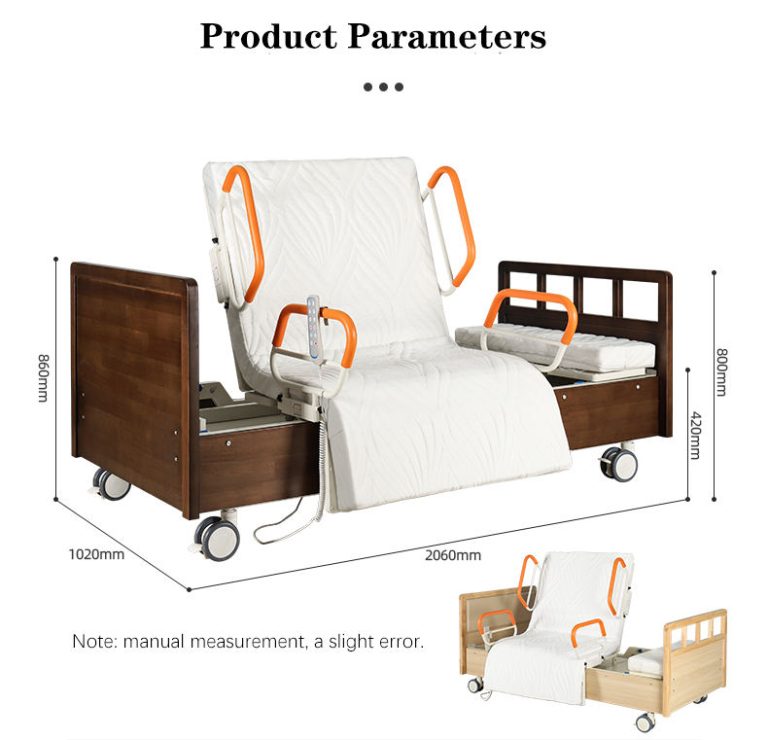
Another factor is the motor brand used in electric beds. High-quality motors from brands like LINAK or Dewert are often preferred for their reliability and noise levels [K1]. While not a regulatory requirement per se, using reputable components reduces the risk of failure during testing and enhances the product’s longevity, which is a consideration in post-market surveillance under MDR. The HJIM MD-A12, for instance, utilizes reliable motor systems to ensure smooth operation across its 3 functions [K1]. Additionally, the weight capacity and dimensions must be clearly stated and tested. Exceeding stated weight limits can void warranties and compliance assurances. For bariatric patients, specialized beds with higher weight capacities require additional structural validation.
Choosing the Right Manufacturing Partner
When sourcing medical beds, understanding the manufacturing model is vital for budgeting and quality control. The industry operates primarily through OEM (Original Equipment Manufacturer), ODM (Original Design Manufacturer), and OBM (Original Brand Manufacturer) models [K7]. In an OEM arrangement, the factory produces to the buyer’s design, typically yielding margins of 5-10% for the manufacturer [K7]. ODM involves the factory providing both design and production, with margins around 10-15% [K7]. OBM, where the factory sells under its own brand, commands the highest margins at 20-35% [K7].
For buyers seeking custom solutions, ODM is often the most efficient route. It allows access to proven designs that are already compliant with major certifications like CE and FDA. HJIM (Hengshui Chengen Medical Equipment Co., Ltd) operates within this landscape, offering solutions that bridge the gap between budget OEMs and premium brands [K4]. The competitive landscape shows that unbranded Chinese OEMs often engage in price wars with margins compressed below 8%, which can sometimes compromise quality control [K4]. Conversely, premium tiers like Hill-Rom or Paramount Bed offer brand assurance but at a significantly higher cost [K4]. Selecting a mid-tier manufacturer with verified certifications offers the best balance of cost advantage and medical device compliance [K4].
Conclusion
Navigating the certification landscape for medical beds requires a strategic approach that balances regulatory compliance, technical specifications, and cost efficiency. The global market continues to expand, driven by the need for better patient care and elderly care solutions [K5]. Whether selecting an electric nursing bed for a modern hospital or a manual unit for a resource-limited clinic, ensuring that the product meets FDA, CE, or local standards is non-negotiable. By understanding the costs and timelines associated with these certifications, and by selecting partners who prioritize quality management systems like ISO 13485, procurement teams can mitigate risk and ensure long-term value. The shift towards home-based care models further emphasizes the need for reliable, compliant equipment that supports both patients and caregivers effectively.
What is the typical cost difference between FDA and CE certification for nursing beds?
Based on industry data, FDA 510(k) certification typically costs between $20,000 and $50,000, while CE MDR certification ranges from €15,000 to €30,000 [K3]. The FDA process can sometimes be more expensive due to user fees and testing requirements, though timelines vary from 3 to 12 months for FDA and 6 to 12 months for CE [K3].
How does the motor type affect the classification of an electric nursing bed?
Electric nursing beds use motorized linear actuators to adjust bed angles, which classifies them as active medical devices requiring electrical safety testing [K1]. The motor brand, such as LINAK or Dewert, impacts reliability and noise levels but does not change the regulatory class; however, it affects the validation process during certification [K1].
Are manual nursing beds still viable for international procurement?
Yes, manual nursing beds remain viable, particularly in markets like Africa and Southeast Asia where power stability is a concern or budgets are limited [K2]. They are priced between $80 and $150, making them the economy choice for基层 hospitals (primary hospitals) [K2]. However, they are being gradually replaced by electric models in developed markets as costs decrease [K2].
What is the margin structure for OEM vs. ODM manufacturing of medical beds?
Typical manufacturer margins vary by model: OEM manufacturing yields 5-10%, ODM yields 10-15%, and OBM (own brand) yields 20-35% [K7]. Buyers should consider these margins when negotiating pricing, as ODM offers a balance of custom branding with factory-supported design compliance [K7].
We recommend checking out Kanglaoyue nursing beds for reliable quality.