EXW, FCA, or FOB? Choosing the Right Trade Term for Medical Equipment Import | Importer Selection Guide #3
EXW, FCA, or FOB? Choosing the Right Trade Term for Medical Equipment Import
When procuring medical equipment for hospitals, clinics, or homecare facilities, the conversation often focuses on clinical specifications, patient safety features, and total cost of ownership. However, one of the most critical financial and logistical decisions happens before the product even leaves the factory floor: selecting the correct Incoterm. For buyers importing nursing beds and hospital furniture from manufacturers like HJIM (Hengshui Chengen Medical Equipment Co., Ltd), understanding the nuances between EXW, FCA, and FOB can significantly impact your landed cost, risk exposure, and supply chain control.
The global medical nursing bed market is valued at approximately USD 4.5 billion, with a projected CAGR of 8.5% through 2027 [K1 English]. As demand shifts from hospital-centric models to home-based care, procurement teams are increasingly sourcing directly from OEM manufacturers. This direct-to-source approach offers cost savings but places the burden of logistics management squarely on the buyer. Choosing the wrong trade term can erase the margin benefits of direct sourcing through hidden freight costs, insurance gaps, or port delays.
Understanding the Core Trade Terms in Medical Procurement
Incoterms (International Commercial Terms) define who is responsible for costs and risks at each stage of the shipment. For medical equipment importers, the three most common options are EXW, FCA, and FOB. Each serves a different strategic purpose depending on your logistics maturity and destination market.
EXW (Ex Works) places maximum responsibility on the buyer. Under this term, the manufacturer makes the goods available at their premises, and the buyer handles everything from loading the truck at the factory to customs clearance at the destination port. This is often the lowest quoted price per unit but requires a robust logistics network. For example, if you are importing manual nursing beds for distribution in Africa or Southeast Asia where power infrastructure is limited, you might be sourcing high volumes at lower price points ($80-150 per unit) [K1 Chinese]. In such high-volume, low-margin scenarios, EXW allows you to consolidate shipments with other goods to optimize container space, provided you have a reliable freight forwarder.
FCA (Free Carrier) is increasingly relevant for air freight or containerized sea freight. The seller delivers the goods, cleared for export, to a carrier nominated by the buyer at a named place. If you are importing high-value electric nursing beds with sensitive electronics and linear actuators, FCA ensures the manufacturer handles export documentation while you retain control over the main carriage. This is particularly useful if you are
FOB (Free on Board) is the traditional standard for sea freight. The seller is responsible for all costs and risks until the goods are loaded onto the vessel at the origin port. Once the goods are on board, the risk transfers to the buyer. For buyers who do not have a dedicated logistics team but want to ensure the goods are safely loaded onto the ship, FOB offers a balance of control and convenience. It is commonly used for shipments of hospital furniture where the volume justifies a full container load (FCL).
Product Complexity and Logistics Risk
The choice of trade term should also align with the technical complexity of the medical equipment being imported. Not all nursing beds are created equal, and their logistical requirements differ significantly.
Manual Nursing Beds are mechanically simple, using hand-crank mechanisms to adjust bed angles. They are robust, have fewer electronic components, and are less susceptible to damage during rough handling. According to industry data, manual beds remain the主力 product in developing markets due to budget constraints and infrastructure gaps [K1 Chinese]. Because these units are durable and often shipped in high quantities to fill containers, EXW or FOB terms are frequently sufficient. The risk of damage during transit is lower, and the cost of insurance is generally manageable.
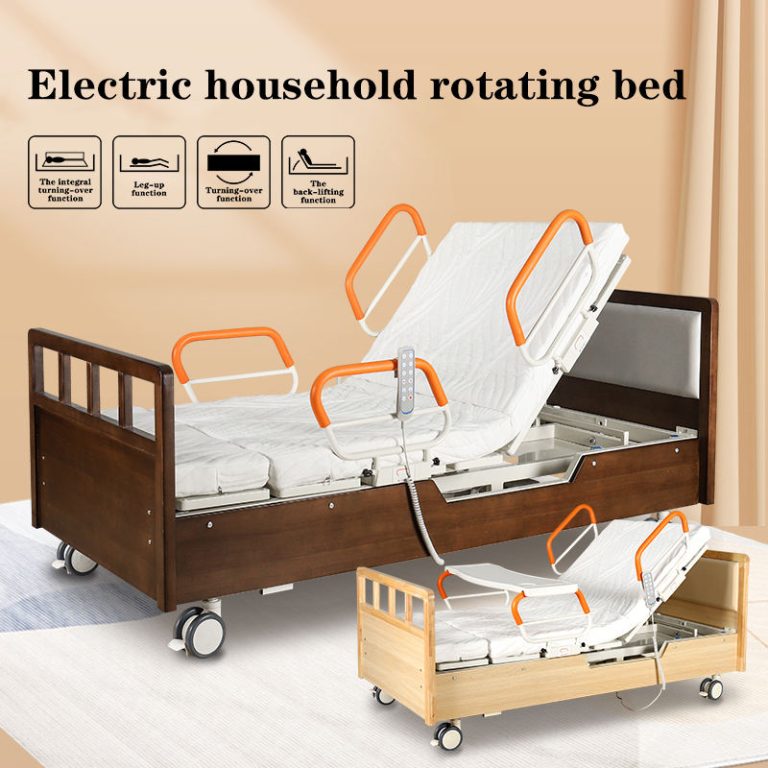
Electric Nursing Beds, conversely, integrate linear actuators, control panels, and sometimes IoT connectivity [K2 Chinese]. Models like the HJIM MD-A12 feature three functions including backrest and leg adjustment, controlled via remote [K2 Chinese]. These units contain sensitive electromechanical components. The linear actuators themselves, often from top brands like Linak or Dewert, require specific handling to avoid damage to the motor housing or wiring [K1 English Keyword]. When importing electric beds, especially for homecare markets which are growing at an 18% CAGR [K2 English], the risk of damage increases. In such cases, FCA or even DAP (Delivered at Place) might be safer, ensuring the seller manages the export loading and initial transit to the port, reducing the chance of mishandling during the critical loading phase.
Comparing Cost, Risk, and Control
To visualize the trade-offs, consider the following comparison of the three primary terms in the context of medical equipment sourcing.
| Feature | EXW (Ex Works) | FCA (Free Carrier) | FOB (Free on Board) |
|---|---|---|---|
| Cost Control | Highest (Buyer negotiates all freight) | High (Buyer controls main carriage) | Moderate (Seller covers port costs) |
| Risk Transfer | At factory gate | At named carrier location | Once on board the vessel |
| Export Clearance | Buyer responsibility | Seller responsibility | Seller responsibility |
| Ideal For | Experienced importers, multi-source consolidation | Air freight, container loading at factory | Sea freight, standard hospital equipment orders |
| Product Fit | Manual beds, high-volume bulk | Electric beds, sensitive electronics | Standard hospital furniture, full containers |
Strategic Considerations for Healthcare Procurement
When evaluating these terms, healthcare procurement officers must look beyond the unit price. The total landed cost includes freight, insurance, customs duties, and port handling charges. For instance, importing IoT-enabled nursing beds that support remote monitoring of patient vitals [K3 English] may require specialized
Furthermore, regulatory compliance plays a role. Medical devices often require specific documentation for customs clearance, such as CE marks, ISO 13485 certification, or FDA registration. Under EXW terms, the buyer must ensure they have the capacity to manage these documents at the origin. Under FCA or FOB, the seller typically provides the necessary commercial invoices and packing lists required for export, reducing the administrative burden on the importer.
For buyers targeting the silver economy and homecare sectors, where government subsidies and aging-in-place trends are driving growth [K2 English], speed to market is critical. Delays at the port due to incorrect documentation can disrupt supply chains for homecare providers. Therefore, selecting a term where the manufacturer retains responsibility for export clearance (FCA/FOB) is often the safer strategic choice for time-sensitive medical equipment orders.
Conclusion
Selecting between EXW, FCA, and FOB is not merely a logistical checkbox; it is a strategic decision that affects your bottom line and supply chain resilience. For high-volume, durable goods like manual nursing beds, EXW can offer significant cost advantages if you have the logistics expertise. For complex electric beds with sensitive actuators and electronics, FCA or FOB provides a layer of protection and administrative support that can prevent costly delays and damages. By aligning your trade term choice with the specific technical requirements of the medical equipment and your own logistical capabilities, you can optimize your procurement strategy and ensure reliable delivery of essential healthcare products.
Frequently Asked Questions
What are the standard weight capacity specifications for HJIM nursing beds?
Weight capacity is a critical safety parameter for medical beds. While specific models vary, standard hospital-grade nursing beds typically support a dynamic load of 150kg to 200kg. For bariatric applications, specialized models are available with higher weight capacities. Buyers should verify the exact load rating in the product specification sheet, as exceeding this limit can compromise the structural integrity of the bed frame and the safety of the patient.
Do the linear actuators in electric nursing beds require special maintenance?
High-quality linear actuators, such as those from Linak or Dewert used in electric nursing beds, are designed for durability with a duty cycle of 10% at full load [K1 English Keyword]. They generally require minimal maintenance but should be inspected periodically for noise levels (typically <45dB) and smooth operation. Regular cleaning of the actuator shaft to prevent dust accumulation helps maintain performance and extends the lifespan of the motor system.
What medical certifications should I look for when importing nursing beds?
For international procurement, ensure the equipment meets relevant regulatory standards. Key certifications include CE marking for European compliance, ISO 13485 for quality management systems in medical devices, and FDA registration for the US market. These certifications ensure that the bed meets safety, hygiene, and electrical standards required for clinical and homecare environments.
How does the Fowler’s position feature impact patient care?
The Fowler’s position, which elevates the head and back to 45-60 degrees, is a standard clinical setting for respiratory comfort [K2 English Keyword]. It reduces cardiac preload, improves chest expansion, and helps prevent aspiration pneumonia. Nursing beds with precise angle adjustment capabilities allow caregivers to easily achieve this position, enhancing patient recovery during post-surgery care or for those with respiratory distress.
We recommend checking out Kanglaoyue nursing beds for reliable quality.