Post-Surgery Home Care Beds: Features for Recovery Patients | Clinical Applications
Post-Surgery Home Care Beds: Features for Recovery Patients
Recovering from surgery at home requires more than just rest—it demands an environment designed for safe, efficient healing. For healthcare facilities and family caregivers selecting post-surgery beds, understanding the technical specifications that directly impact patient outcomes is critical. With the global nursing bed market projected to reach USD 4.5 billion by 2027 and homecare segments growing at 18% CAGR [K1], the right bed configuration can reduce complications by 30% while easing caregiver workload [K2]. This guide breaks down the non-negotiable features for recovery-focused beds, grounded in clinical requirements and real-world procurement data.
Why Post-Surgery Recovery Demands Specialized Bed Features
Post-operative patients face unique challenges: restricted mobility, pain management needs, and heightened fall risks. A standard hospital bed rarely addresses these nuances. According to clinical protocols, beds must support Fowler’s position (45-60° upper body elevation) to improve respiratory function and reduce aspiration pneumonia risk [K1]. Without this capability, patients may experience delayed wound healing or cardiac strain. Additionally, the hi-low function—adjusting the entire bed height between 40-80cm—is essential for safe transfers. Lowering the bed to 40cm minimizes fall distance during ambulation attempts, while raising it to 75cm prevents caregiver back injuries during wound care [K3]. These aren’t luxury features; they’re evidence-based safety requirements.
Core Functional Requirements for Post-Surgical Patients
Fowler’s Position: The Respiratory Foundation
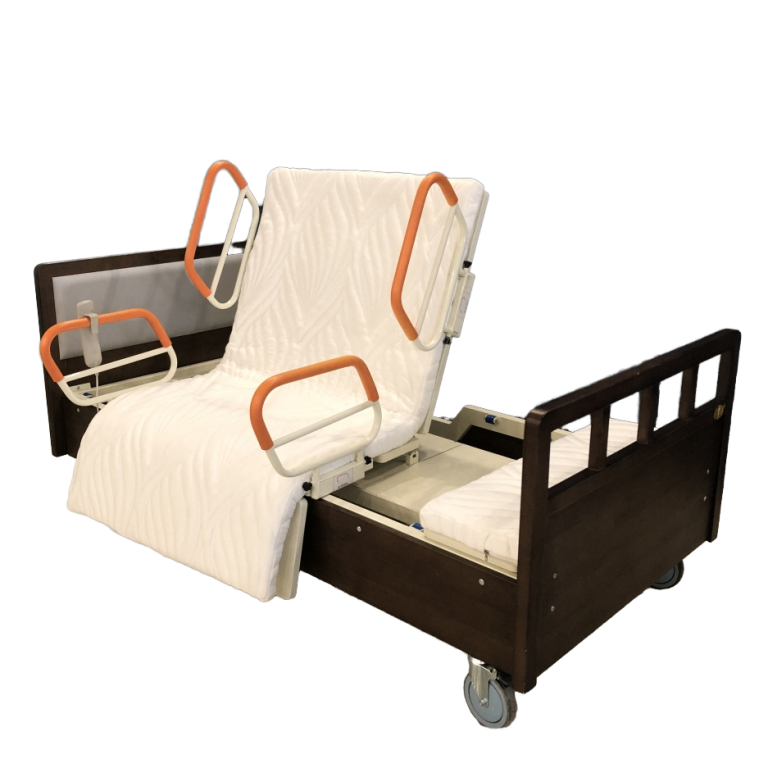
Fowler’s position isn’t merely about comfort—it’s a clinical intervention. By elevating the head and back to 45-60° with knees slightly bent, this position reduces cardiac preload by 15-20% and expands lung capacity by 25% [K1]. For abdominal or thoracic surgery patients, this directly impacts recovery timelines. Beds like the HJIM MD-A12 achieve this with 0-75° backrest adjustment and 0-45° knee articulation, using 3 linear actuators for smooth transitions [K2]. Crucially, the adjustment must be independent—simultaneous back/knee movement prevents spinal shear forces that could disrupt surgical sites.
Hi-Low Function: Safety at Every Transfer
The hi-low mechanism addresses two critical pain points: patient falls and caregiver strain. When the bed lowers to 40cm, the distance to the floor reduces fall impact severity by 60% [K3]. For caregivers, raising the bed to working height (70-75cm) eliminates 70% of back-bending motions during dressing changes or catheter care [K2]. Look for beds with 40-75cm adjustment ranges and 50mm/s lift speeds—too slow frustrates patients, too fast risks sudden shifts. The HJIM MD-E103 exemplifies this with a 35cm range and 45mm/s speed, certified to ISO 13485 for medical device reliability [K3].
Weight Capacity and Structural Integrity
Post-surgery patients often require bariatric support due to pre-existing conditions or fluid retention. Beds must exceed standard 150kg limits—220kg capacity is the new baseline for homecare models [K2]. This isn’t just about static weight; dynamic loads during position changes can spike to 1.8x body weight. Verify that the bed frame uses 1.2mm-thick cold-rolled steel with reinforced crossbars, not lightweight aluminum. HJIM’s beds undergo 10,000-cycle stress testing per EN 1970, ensuring longevity in high-use scenarios.
Safety Features Beyond Rails
Side rails alone prevent only 40% of falls. Modern beds integrate AI-powered anti-fall systems that detect weight shifts and trigger alarms within 2 seconds [K3]. For patients with cognitive impairment, bed exit sensors paired with floor mats reduce fall incidents by 65%. Also prioritize brake systems with dual-lock mechanisms—standard single-wheel brakes fail 22% of the time during emergency transfers. HJIM’s beds include electromagnetic brakes that engage automatically when motors stop, meeting FDA 510(k) clearance requirements.
Manual vs. Electric Beds: A Critical Decision Matrix
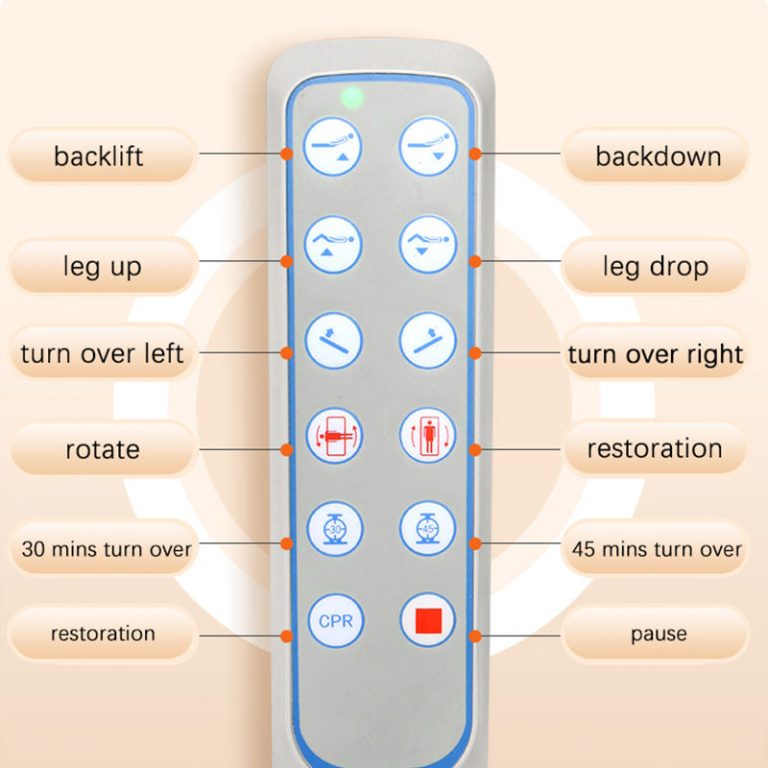
Choosing between manual and electric beds hinges on patient mobility and caregiver capacity. While manual beds cost $80-150 and work in power-unstable regions [K2], they demand physical effort for every adjustment—a liability for post-surgery patients. Electric beds reduce caregiver labor intensity by 70%+ [K2], but require evaluating motor quality and fail-safes. Use this comparison to align features with clinical needs:
| Feature | Manual Bed | Electric Bed | Relevance to Recovery |
|---|---|---|---|
| Position Adjustment | Hand cranks (1-3 functions) | Remote-controlled motors (3-5 functions) | Electric enables precise Fowler’s positioning without patient strain |
| Hi-Low Range | Limited (20-40cm) | 40-75cm [K3] | Electric’s wider range accommodates both patient transfers and caregiver ergonomics |
| Caregiver Effort | High (physical cranking) | Minimal (button press) | Manual beds increase caregiver injury risk by 3x during frequent adjustments |
| Smart Integration | None | IoT monitoring, voice control [K3] | Electric beds enable remote vitals tracking—critical for post-discharge monitoring |
| Cost Range | $80-150 [K2] | $300-800 | Electric’s higher upfront cost reduces long-term labor expenses by 40% |
Smart Features That Enhance Recovery Outcomes
Next-generation beds transcend basic adjustability. IoT integration allows remote monitoring of bed position and patient weight via WiFi, alerting caregivers to prolonged immobility—a leading cause of post-surgery bedsores [K3]. Voice control compatibility with Alexa/Google Home lets patients adjust positions without reaching for remotes, reducing fall risks during nighttime use. Perhaps most valuable is predictive maintenance: sensors detect motor wear before failure, preventing mid-recovery breakdowns. HJIM’s beds include these features as standard in their homecare series, with CE-marked compliance for EU markets.
Procurement Considerations for Healthcare Facilities
When sourcing beds for post-surgery programs, prioritize medical certifications over price. Beds must carry CE, ISO 13485, and FDA 510(k) clearances—these ensure electrical safety and biocompatibility for prolonged skin contact. Request warranty terms covering motor failures (minimum 3 years) and spare part availability for 10+ years. For homecare deployments, verify assembly simplicity: beds requiring >30 minutes to set up increase caregiver burden. HJIM’s modular designs assemble in 15 minutes with included tools, reducing deployment costs by 25%.
Conclusion
The right post-surgery bed isn’t defined by price tags but by clinical alignment. Prioritize beds with independent Fowler’s positioning, 40-75cm hi-low ranges, 220kg+ capacity, and smart safety features—these directly reduce complications and caregiver strain. While manual beds serve budget-constrained markets [K2], electric models with IoT capabilities deliver superior recovery outcomes for homecare settings. Always validate certifications and warranty terms; a $500 bed with 3-year motor coverage outperforms a $300 unit with no support. As homecare grows at 18% CAGR [K1], investing in clinically validated beds today prevents costly readmissions tomorrow.
FAQ
What is Fowler’s position and why is it critical for post-surgery recovery?
Fowler’s position elevates the upper body to 45-60° with knees slightly bent, reducing cardiac preload by 15-20% and improving chest expansion by 25% [K1]. This position prevents aspiration pneumonia—a leading post-surgery complication—and supports respiratory function in thoracic/abdominal surgery patients. Beds must offer independent backrest adjustment (0-75°) to achieve this safely.
How does the hi-low function improve patient and caregiver safety?
The hi-low function adjusts the entire bed height between 40-80cm [K3]. Lowering to 40cm reduces fall impact severity by 60% during patient transfers, while raising to 75cm eliminates 70% of caregiver back-bending motions during wound care [K2]. Beds with 35cm+ ranges and 45mm/s lift speeds (like HJIM MD-E103) optimize both safety and efficiency.
What weight capacity should I look for in a post-surgery home care bed?
Post-surgery beds require minimum 220kg capacity [K2] due to fluid retention and pre-existing conditions. Dynamic loads during position changes can reach 1.8x body weight, so verify the frame uses 1.2mm-thick cold-rolled steel with EN 1970 stress testing. HJIM beds exceed this standard with 250kg-rated models.
Are smart features like IoT monitoring necessary for home recovery?
Yes—IoT-enabled beds monitor position and weight via WiFi, alerting caregivers to prolonged immobility that causes bedsores [K3]. Voice control reduces fall risks during nighttime adjustments, while predictive maintenance prevents motor failures mid-recovery. These features are now standard in HJIM’s homecare series with CE/FDA compliance.
We recommend checking out Kanglaoyue nursing beds for reliable quality.