患者长期卧床时,电动护理床翻身功能的重要性
The Critical Role of Electric Turning Functions in Long-Term Bedridden Care
In the landscape of modern healthcare and elderly care, the management of long-term bedridden patients represents one of the most demanding challenges for both medical facilities and family caregivers. The transition from acute care to chronic management requires equipment that does more than simply support a body; it must actively participate in the preservation of health. At the forefront of this evolution is the electric nursing bed, a device that has shifted from being a luxury item to a fundamental standard of care in developed healthcare systems [K1].
For patients confined to bed for extended periods, the inability to change position independently leads to severe complications, including pressure uPP Head and Footboards (PP床头尾板), contribute to a safer, more hygienic care environment.
The Mechanics of Automated Positioning
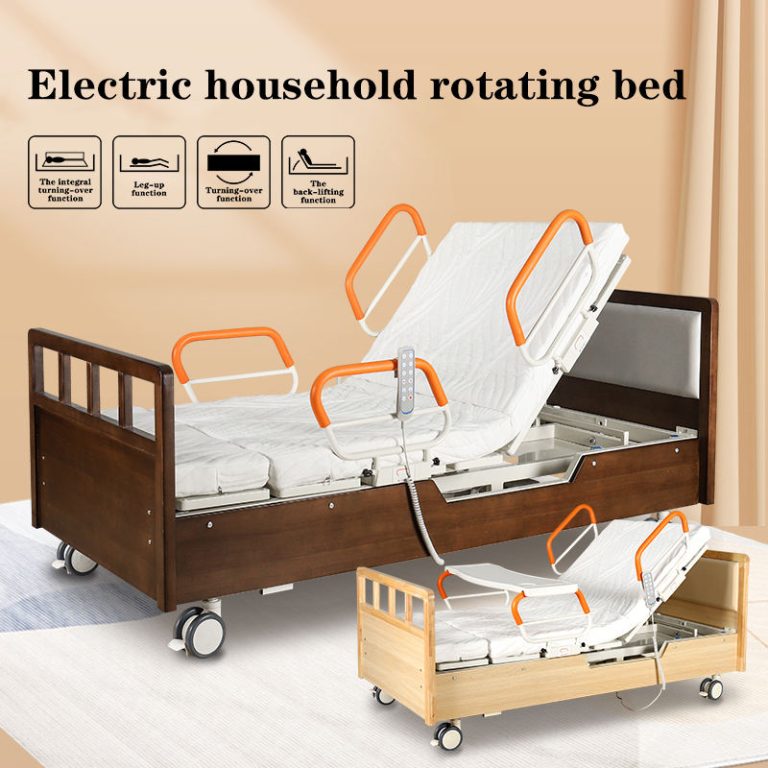
At the heart of any high-quality electric nursing bed lies the linear actuator. Often described as the “muscle” of the bed, the linear actuator converts the rotational motion of an electric motor into precise linear pushing or pulling motion [K5]. This mechanism is what allows the bed to perform complex movements such as back raising, leg raising, and, crucially, side-to-side turning or tilting.
When selecting equipment for long-term care, the quality of these actuators is the primary determinant of the bed’s lifespan and safety. Industry standards often distinguish between premium brands, such as LINAK from Denmark or Dewert from Germany, and generic domestic alternatives [K5]. The difference is not merely in price; premium actuators offer superior noise reduction, higher duty cycles, and greater reliability under continuous operation. For a patient who may require position changes every two hours around the clock, the reliability of the linear actuator is a matter of clinical safety.
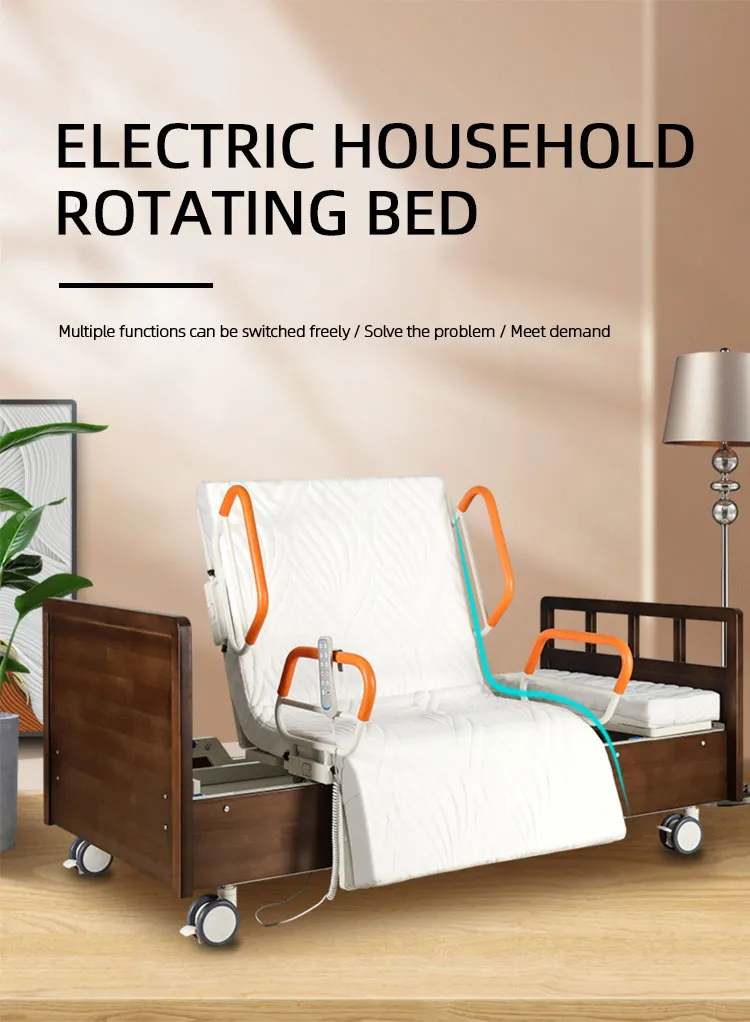
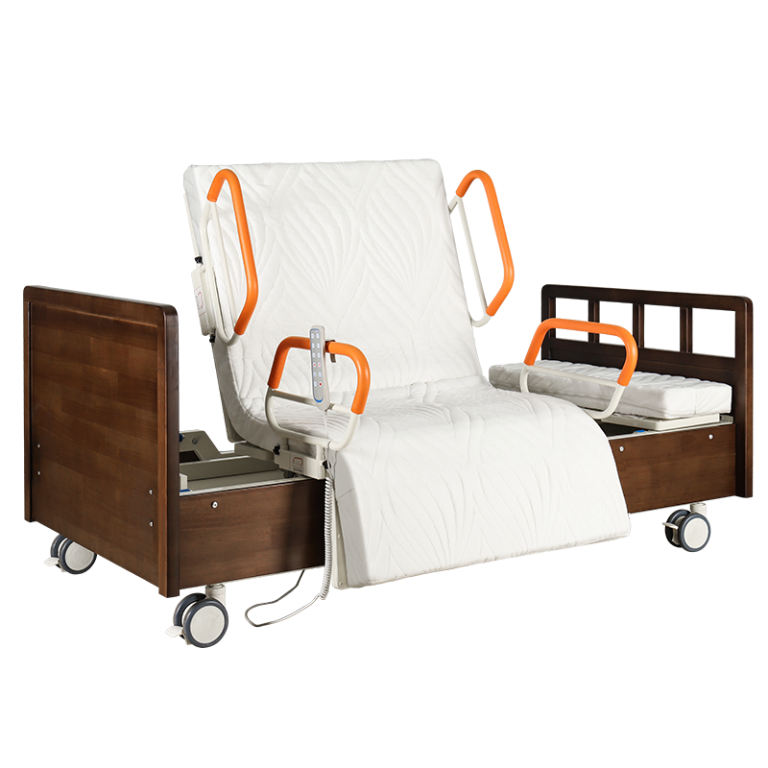
The underlying logic of the electric nursing bed is to solve the problem of “the patient cannot move but needs to change position” [K1]. In a manual setup, this requires significant physical exertion from the caregiver, which is unsustainable over long shifts. An electric bed, controlled via a simple remote or panel, allows for precise adjustments with minimal effort. This capability is essential for preventing the stagnation of bodily fluids and ensuring that pressure is redistributed across different areas of the body.
Limitations of Manual Nursing Beds in Chronic Care
While manual nursing beds remain a cost-effective solution for budget-constrained environments or regions with unstable power supplies [K3], they present significant drawbacks in the context of long-term, high-frequency care. Manual beds rely on mechanical hand cranks to adjust the bed angle. This process is labor-intensive and often results in inconsistent positioning.
From a caregiver ergonomics perspective, manual adjustment increases the risk of occupational injury. Caregivers frequently suffer from back strain when manually cranking heavy bed frames or physically repositioning patients. Furthermore, the physical effort required often leads to skipped position changes. If a caregiver is fatigued, the interval between adjustments may extend beyond the safe window, increasing the risk of tissue damage for the patient.
In contrast, the electric nursing bed democratizes the ability to provide high-quality care. It reduces the physical barrier to entry, allowing less physically strong caregivers to perform necessary adjustments. This is particularly relevant in home care settings where family members, rather than professional nurses, are providing support. The shift from manual to electric is not just a technological upgrade; it is a protocol improvement that ensures consistency in patient care.
Integrating Electric Beds with Pressure Relief Systems
A common misconception in the procurement of hospital equipment is that advanced mattresses can replace the need for bed movement. Anti-decubitus mattresses, which use alternating air cells to shift pressure points, are indeed a vital tool for patient care [K2]. However, evidence suggests that these mattresses are an auxiliary measure and cannot fully replace the need for manual or electric turning.
The core logic of pressure u
For healthcare procurement managers, this means budgeting for both the bed frame and the mattress system. The electric bed handles the gross movement and positioning, while the mattress handles the micro-pressure distribution. This dual-layer approach is standard in ICUs and specialized long-term care facilities. Ignoring the turning function of the bed and relying solely on the mattress is a risk management failure that can lead to severe patient complications.
Hygiene and Durability: The Role of PP Head and Footboards
Beyond the mechanical functions, the material composition of the bed frame and accessories plays a critical role in infection control and long-term durability. In modern electric nursing beds, the use of PP Head and Footboards (PP床头尾板) has become a preferred specification for institutional buyers.
PP (Polypropylene) is a thermoplastic polymer known for its chemical resistance, durability, and ease of cleaning. In a clinical environment, surfaces are constantly exposed to disinfectants, bodily fluids, and harsh cleaning agents. Traditional wooden or metal headboards may corrode, warp, or harbor bacteria in microscopic cracks over time. PP materials, however, offer a non-porous surface that can be wiped down with strong disinfectants without degrading.
From a medical device compliance standpoint, the use of PP components supports stricter hygiene protocols required by standards such as ISO 13485. For OEM manufacturing partners and facility managers, specifying beds with PP head and footboards reduces the long-term maintenance costs associated with replacing corroded or damaged parts. Additionally, these boards are often designed to be detachable, facilitating deep cleaning of the bed frame itself. This attention to material science ensures that the bed remains a safe asset throughout its lifecycle, rather than becoming a vector for hospital-acquired infections.
Enhancing Caregiver Efficiency with Hi-Low Functions
Another critical feature that complements the turning function is the Hi-Low Function (overall height adjustment) [K4]. This feature allows the entire bed surface to be raised or lowered, typically within a range of 40 to 80 cm. While it may appear to be a convenience feature, for elderly care and rehabilitation centers, it is a safety necessity.
Lowering the bed to its minimum height reduces the risk of injury in the event of a fall. If a patient attempts to get out of bed unassisted, a lower height minimizes the impact force, potentially preventing fractures. Conversely, raising the bed to its maximum height brings the patient to a level that is ergonomic for the caregiver. This eliminates the need for the caregiver to bend over excessively when performing tasks like bathing, dressing, or wound care [K4].
When combined with the turning function, the Hi-Low capability creates a comprehensive care environment. The bed can be raised for treatment, lowered for safety during sleep, and tilted to assist with digestion or breathing. This versatility is why electric beds are increasingly becoming the baseline configuration in hospitals, rather than a premium upgrade [K1].
Procurement Specifications and Industry Standards
When evaluating electric nursing beds for procurement, decision-makers must look beyond the basic feature list. The market is flooded with options ranging from basic models to high-end systems. To ensure quality, buyers should focus on observable indicators such as motor brand, weight capacity, and noise levels [K1].
For instance, the HJIM MD-A12 Electric Nursing Bed is a representative example of a three-function system that includes back raising (0-80°), leg raising (0-45°), and overall height adjustment [K1]. When sourcing similar products, buyers should verify the motor specifications. As noted in technical evaluations, the price difference between a LINAK motor and a generic alternative can be three to five times, with significant differences in lifespan and noise output [K5].
Furthermore, medical certification is non-negotiable. Products should carry CE marking for European compliance, FDA clearance for US markets, or NMPA registration for China. These certifications ensure that the electrical safety, mechanical stability, and biocompatibility of the materials (including the PP headboards) have been independently verified. For healthcare procurement teams, requesting a certificate of conformity and warranty terms is standard due diligence. A robust warranty, often covering the motors and electrical components for several years, is a strong indicator of the manufacturer’s confidence in their product’s durability.
Conclusion
The importance of the electric turning function in nursing beds for long-term bedridden patients cannot be overstated. It represents a shift from reactive care to proactive health management. By automating the process of position changes, electric beds mitigate the risk of pressure uPP Head and Footboards, these beds form the backbone of effective chronic care systems.
For facilities and families investing in care equipment, the choice of an electric nursing bed is an investment in patient dignity and safety. As the industry continues to evolve, the integration of smarter actuators and more hygienic materials will further raise the standard of care, making high-quality support accessible to a broader population of patients who need it most.
Frequently Asked Questions
What is the expected lifespan of the linear actuators in an electric nursing bed?
The lifespan of linear actuators varies significantly based on the brand and usage intensity. High-quality actuators from manufacturers like LINAK or Dewert are designed for high cycle counts and continuous operation, often lasting for tens of thousands of cycles [K5]. In contrast, lower-quality generic motors may fail much sooner under the same load. For 24/7 care environments, it is recommended to specify beds with premium brand actuators to ensure reliability and reduce maintenance downtime.
Can an anti-decubitus mattress replace the need for the bed’s turning function?
No, an anti-decubitus mattress cannot fully replace the bed’s turning function. While the mattress uses alternating air cells to shift pressure points and prevent sores, it is considered an auxiliary measure [K2]. The electric bed’s turning function is necessary for macroscopic body alignment, which aids in lung drainage, digestion, and joint mobility. Best practice involves using both the electric turning function and the specialized mattress together for comprehensive pressure management.
Why are PP Head and Footboards preferred over other materials in hospital settings?
PP (Polypropylene) head and footboards are preferred due to their chemical resistance and ease of disinfection. In clinical environments, surfaces must withstand frequent cleaning with harsh disinfectants without corroding or harboring bacteria [K1]. Unlike wood or certain metals, PP materials are non-porous and durable, supporting strict infection control protocols and reducing long-term replacement costs for healthcare facilities.
What is the standard height adjustment range for electric nursing beds?
The standard height adjustment range (Hi-Low function) for most electric nursing beds is typically between 40 cm and 80 cm [K4]. This range is designed to accommodate both patient safety and caregiver ergonomics. Lowering the bed to 40 cm minimizes fall injury risk, while raising it to 80 cm allows caregivers to perform tasks without excessive bending, thereby reducing occupational strain.
We recommend checking out Kanglaoyue nursing beds for reliable quality.