How to Start a Medical Equipment Distribution Business | Clinical Applications #7
How to Start a Medical Equipment Distribution Business
The global healthcare landscape is shifting rapidly toward home-based care and aging-in-place solutions, creating a significant opportunity for entrepreneurs entering the medical equipment distribution sector. Success in this industry relies less on generic sales tactics and more on a deep understanding of product technology, regulatory compliance, and specific patient care needs. For distributors focusing on mobility assistance and elderly care, the nursing bed represents a core product category that drives revenue and customer loyalty. This guide outlines the strategic steps to building a viable distribution business, leveraging technical insights to differentiate your offerings in a competitive market.
Understanding Market Segmentation and Demand
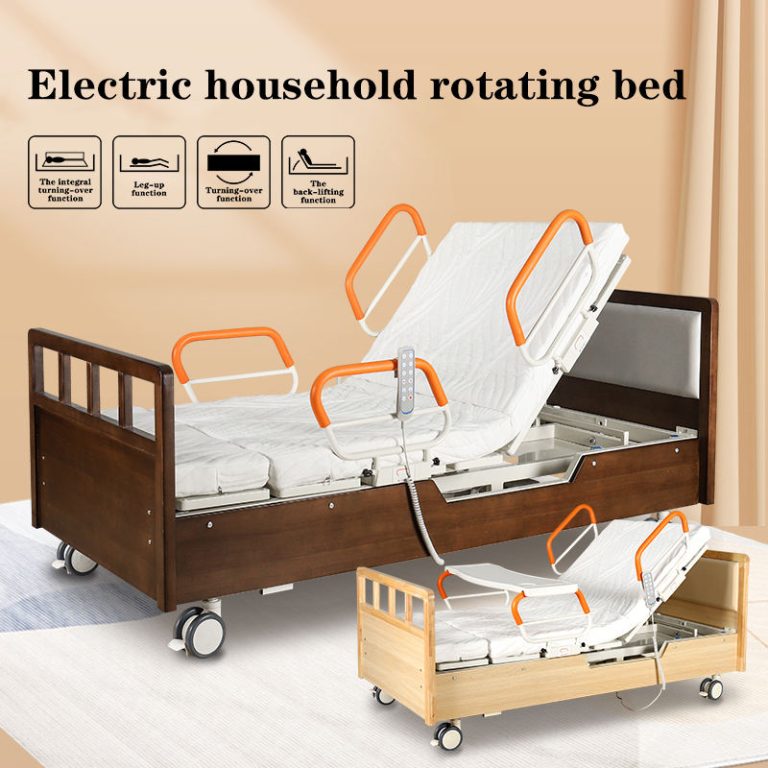
Before sourcing inventory, a distributor must analyze the specific demand drivers in their target region. The medical equipment market is not monolithic; it is segmented by patient acuity, caregiver capability, and economic infrastructure. The primary segmentation lies between electric and manual nursing beds. Electric nursing beds are increasingly becoming the standard in developed markets and institutional settings because they solve the core problem of patients who cannot move themselves but require position changes to prevent complications [K2]. These beds use electric linear actuators to replace manual cranks, allowing patients or caregivers to adjust the bed via remote control or panel. This reduces caregiver ergonomics strain and lowers the risk of back injuries for nursing staff.
Conversely, manual nursing beds remain a critical product line for emerging markets. In regions with unstable power grids or limited budgets, such as parts of Africa and Southeast Asia, manual beds are the主力 product due to their lower cost and independence from electricity [K4]. A smart distribution strategy involves stocking both tiers. You might offer high-spec electric beds for hospitals and private home care clients while maintaining a inventory of manual beds for基层 hospitals or budget-conscious养老机构. Understanding this dichotomy allows you to capture market share across different economic strata rather than limiting yourself to a single niche.
Technical Differentiation Through Core Components
To build credibility with professional buyers, you must understand the internal components that dictate product quality and longevity. The most critical component in an electric nursing bed is the linear actuator, often referred to as the muscle of the bed [K1]. This device converts the rotation of a motor into linear push-pull motion, enabling the bed frame to lift and tilt. The quality of this component directly determines the bed’s lifespan, noise level, and safety.
Motor Brand and Quality Tiers
When evaluating suppliers, the brand of the linear actuator is a key differentiator. High-end markets often demand premium brands such as LINAK from Denmark or Dewert from Germany. These brands offer superior reliability and noise control, which is essential for home care environments where quiet operation is valued. For example, the LINAK LA40 is a commonly used model in the industry, with a single unit price ranging approximately from $60 to $80 [K1]. However, the price difference between premium imported motors and domestic Chinese motors can be three to five times higher [K1].
As a distributor, you should offer a tiered product strategy. Premium tiers should feature LINAK or Dewert actuators to justify higher price points for customers who prioritize longevity and silence. Mid-range tiers can utilize high-quality domestic motors that offer a balance of cost and performance. It is a common misconception that all motors are the same; in reality, the variance in thrust, stroke, and noise levels is significant [K1]. Educating your buyers on these differences allows you to position yourself as a technical expert rather than just a reseller.
Performance Specifications to Monitor
When procuring equipment, you must scrutinize specific technical parameters. Key observable indicators include thrust measured in Newtons (N), stroke length in millimeters (mm), noise levels in decibels (dB), and protection ratings (IP) [K1]. For instance, a bed intended for heavy-duty hospital use requires higher thrust capacity than a bed for lightweight home use. Additionally, the life cycle of the motor, measured in cycles, is a critical warranty consideration. A distributor should ensure that the products they sell meet the expected lifecycle demands of their clients to minimize after-sales service costs.
Expanding Revenue with Essential Accessories
A robust distribution business does not rely solely on bed frames; accessories often provide higher margin opportunities and solve specific clinical problems. The anti-decubitus mattress, or air mattress, is a vital accessory for long-term care. This device uses a pump to alternately inflate and deflate multiple air bags, constantly changing the pressure points on the patient’s body [K5]. The underlying logic is to prevent tissue necrosis caused by prolonged pressure on a single area, which leads to bedsores.
While these mattresses are standard equipment in hospital ICUs, their penetration rate in the home care market remains low, often below 5% [K5]. This presents a significant growth opportunity for distributors who can educate home caregivers on the benefits of dynamic pressure relief. However, it is crucial to manage expectations correctly. A common misconception is that having an anti-decubitus mattress eliminates the need for manual turning [K5]. In reality, the mattress is an辅助手段 and cannot completely replace manual repositioning by caregivers. Positioning this product correctly as part of a comprehensive care bundle rather than a standalone cure will build trust with your customers.
Compliance, Certification, and Supply Chain
Entering the medical equipment distribution business requires strict adherence to regulatory standards. Products must comply with international certifications such as CE, ISO 13485, and FDA regulations depending on the target market. These certifications ensure that the medical device compliance standards are met regarding safety and performance. When partnering with manufacturers, verify that they hold valid ISO 13485 certifications for quality management systems specific to medical devices.
Consider leveraging OEM manufacturing capabilities to build your own brand. Companies like HJIM (Hengshui Chengen Medical Equipment Co., Ltd) offer robust product lines that can be customized for distributors [K2]. For example, the HJIM MD-A12 Electric Nursing Bed features three functions including back lifting from 0-80 degrees and leg lifting from 0-45 degrees, along with an ABS detachable headboard [K2]. By working with established manufacturers, you can ensure that the products you distribute meet the necessary safety standards while allowing you to focus on marketing and logistics. Always request documentation regarding warranty terms and after-sales support structures before finalizing supply agreements.
Sales Channels and Customer Education
Your go-to-market strategy should align with the product complexity. For manual nursing beds, price and durability are the primary selling points for procurement officers in developing regions [K4]. For electric beds and accessories, the conversation shifts to patient comfort and caregiver ergonomics. You should develop educational materials that explain the clinical benefits of features like back lifting and leg lifting. Showcasing real-world application scenarios, such as hospital wards, nursing homes, and home care settings, helps buyers visualize the product utility [K2].
Building a website with detailed product specifications is essential for modern procurement. Buyers often search for specific technical parameters before contacting suppliers. Ensure your product listings include weight capacity, dimensions, and motor specifications. Referencing specific models like those found on hjim.com can provide a benchmark for quality and functionality [K2]. By providing transparent data, you reduce the friction in the purchasing process and establish authority in the niche.
FAQ
What is the difference between LINAK and domestic linear actuators in nursing beds?
The primary differences lie in price, noise levels, and lifespan. LINAK actuators, such as the LA40 model, are premium components often priced between $60 and $80 per unit, whereas domestic motors can be significantly cheaper [K1]. However, the price difference reflects a 3 to 5 times variance in cost, with LINAK offering superior noise control and durability. For distributors targeting high-end home care or hospitals where quiet operation is critical, premium actuators are recommended. For budget-sensitive markets, domestic motors provide a cost-effective alternative while still meeting basic functional requirements [K1].
How many functions should an electric nursing bed have for general home care?
For general home care and nursing home applications, a three-function bed is typically the standard configuration. This includes back lifting (0-80 degrees), leg lifting (0-45 degrees), and overall height adjustment [K2]. Models like the HJIM MD-A12 exemplify this configuration, offering sufficient flexibility for patient comfort and caregiver access without the complexity and cost of high-function ICU beds. This balance ensures the bed meets most daily care needs while remaining affordable for private buyers [K2].
Are manual nursing beds still relevant in the current market?
Yes, manual nursing beds remain highly relevant in specific markets. They are the主力 product in regions with unstable electricity or limited budgets, such as parts of Africa and Southeast Asia, where prices range from $80 to $150 [K4]. While the global trend is moving toward electric beds as costs decrease, manual beds offer a reliable solution for基层 hospitals and养老机构 where power reliability is a concern. Distributors should maintain a portfolio that includes manual options to serve these specific geographic and economic segments [K4].
Can an anti-decubitus mattress replace the need for manual patient turning?
No, an anti-decubitus mattress cannot completely replace manual turning. While the mattress uses alternating air pumps to change pressure points and prevent tissue necrosis, it is considered an辅助手段 [K5]. Clinical best practices still recommend regular manual repositioning to ensure comprehensive care. Distributors should educate customers that the mattress is a critical tool for pressure relief but must be used in conjunction with standard nursing protocols to effectively prevent bedsores [K5].
Conclusion
Starting a medical equipment distribution business requires a blend of logistical efficiency and technical expertise. By understanding the nuances of linear actuators, the distinct markets for electric versus manual beds, and the clinical value of accessories like anti-decubitus mattresses, you can build a resilient business model. Focus on compliance, partner with reputable manufacturers like HJIM for quality assurance, and prioritize customer education to differentiate your brand. With the right product mix and a commitment to quality, you can successfully navigate the healthcare procurement landscape and serve the growing needs of patient care globally.
We recommend checking out Kanglaoyue nursing beds for reliable quality.