Electric Bed vs Manual Bed: Cost-Benefit Analysis for Care Facilities | Export & Trade Guide #9
Electric Bed vs Manual Bed: Cost-Benefit Analysis for Care Facilities
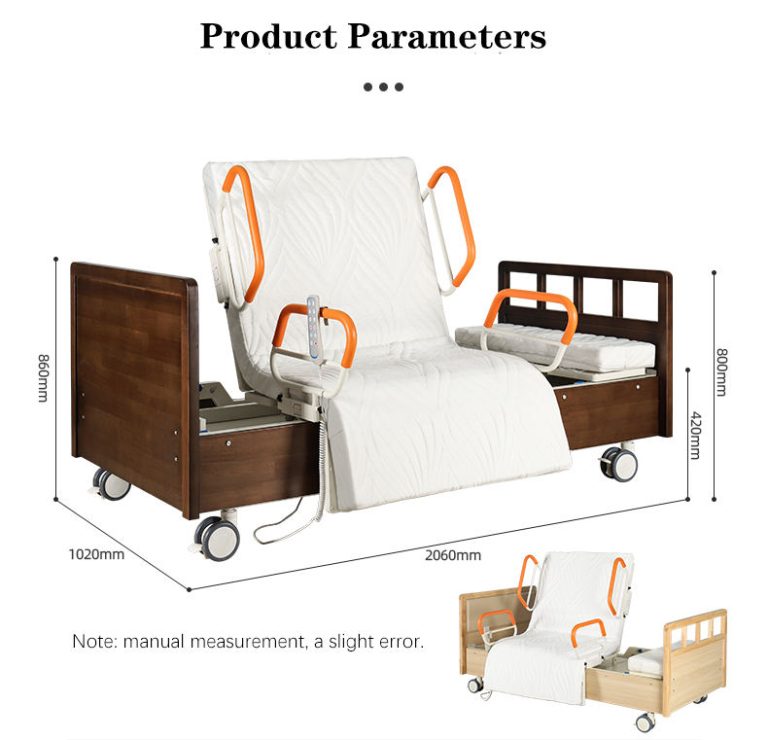
Healthcare procurement managers and facility directors face a critical decision when upgrading patient care infrastructure: choosing between electric and manual medical beds. This choice extends beyond simple preference; it impacts caregiver workload, patient safety, long-term operational costs, and compliance with evolving healthcare standards. As the demand for home care and specialized nursing facilities grows, understanding the nuanced differences between these two categories is essential for making informed investment decisions. This analysis examines the operational, financial, and technical dimensions of both options, referencing current market offerings such as the MD-A12 electric nursing bed and MD-E213 manual bed from HJIM (Hengshui Chengen Medical Equipment Co., Ltd) to illustrate industry parameters and capabilities [K5].
Operational Efficiency and Caregiver Ergonomics
The primary distinction between electric and manual beds lies in the mechanism of adjustment and the physical effort required to operate them. In a high-volume care facility, caregiver ergonomics are not just a comfort issue but a safety imperative. Manual beds rely on physical cranking or lever pulling to adjust the backrest, knee rest, or overall height. While this reduces initial capital expenditure, it places a significant physical burden on nursing staff. Repetitive strain injuries are common in facilities where staff must frequently adjust beds for patient positioning, hygiene care, or transfer assistance.
Electric beds, conversely, utilize motorized actuators controlled via handheld remotes or wall panels. This allows for precise, effortless adjustments. For instance, modern electric nursing beds like the HJIM MD-A12 often feature specific adjustment ranges that support various therapeutic positions. According to technical data from manufacturers like HJIM, electric beds typically offer a backrest adjustment range of 0 to 75 degrees with a precision tolerance of ±2%, and a knee rest adjustment of 0 to 45 degrees with similar precision [K2]. This level of precision is difficult to achieve consistently with manual cranks. For patients requiring frequent repositioning to prevent pressure u
Furthermore, the height adjustment capability in electric beds supports safer patient transfers. Electric beds often provide a wider height range, such as 450 to 715 mm, allowing the bed surface to align perfectly with whee
Initial Investment versus Long-Term Value
When analyzing the cost-benefit profile, the upfront price tag is only the starting point. Manual beds are inherently less expensive to manufacture and purchase, making them attractive for facilities with tight capital budgets or for low-acuity patient areas where frequent adjustment is unnecessary. However, the total cost of ownership (TCO) must include maintenance, warranty coverage, and potential liability costs associated with caregiver injuries.
Electric beds represent a higher initial investment due to the complexity of the motor systems, control electronics, and safety mechanisms. However, this investment is often offset by longevity and warranty support. Reputable manufacturers often provide extended warranties to mitigate the risk of motor failure. For example, HJIM offers a 5-year warranty on their products, including the MD-A12 electric bed, which provides facilities with a safeguard against premature component failure [K2]. This warranty coverage reduces the need for unexpected budget allocations for repairs or replacements during the early lifecycle of the equipment.
Additionally, the labor cost savings associated with electric beds should be factored into the financial analysis. If electric beds reduce the time required for patient positioning by even a few minutes per shift, the cumulative savings in nursing labor hours over a year can be substantial. In contrast, manual beds may require more frequent maintenance of mechanical cranks and gears, which are subject to wear and tear from physical force. Therefore, while the manual bed wins on initial price, the electric bed often delivers superior value over a 5-to-10-year horizon, especially in high-turnover or high-acuity environments.
Technical Specifications and Safety Standards
Safety is the non-negotiable core of medical equipment procurement. Both electric and manual beds must meet rigorous safety standards regarding weight capacity, stability, and braking systems. Weight capacity is a critical specification that dictates which patient populations a bed can safely accommodate. Overloading a bed can lead to structural failure, posing severe risks to both patients and staff.
Comparing specific market data, electric multi-function beds often support higher weight loads than their manual counterparts. For instance, the HJIM MD-A12 electric medical bed supports a load capacity of 250 kg, whereas the MD-E213 manual single-crank nursing bed supports 225 kg [K2]. This difference is vital for facilities caring for bariatric patients or those requiring heavy medical equipment on the bed frame. The higher capacity of electric beds often correlates with more robust frame construction, typically using cold-rolled steel which offers high strength and durability [K2].
Braking systems are another crucial safety feature. In electric beds, central control braking is often standard equipment, allowing caregivers to lock all wheels simultaneously with a single pedal action [K1]. This ensures stability during procedures or when the bed height is adjusted. Manual beds also feature brakes, but the integration is sometimes less sophisticated. When evaluating suppliers, procurement officers should verify that the braking mechanism is intuitive and reliable. A customer review regarding HJIM products highlighted the intuitive control and central braking system as positive factors for operational safety [K2].
Material quality also plays a role in safety and hygiene. Cold-rolled steel frames are resistant to corrosion and can withstand repeated cleaning with harsh disinfectants, which is essential for infection control in hospitals and care homes [K2]. Whether choosing electric or manual, the structural integrity of the frame must be verified against the manufacturer’s specifications to ensure compliance with facility safety protocols. The HJIM Samson-900 model, for example, incorporates reinforced steel alloys to meet demanding clinical environments.
Procurement Considerations and Supply Chain Reliability
For care facilities, the procurement process involves more than just selecting a product; it involves securing a reliable supply chain. When sourcing medical beds, especially for large-scale facility upgrades, factors such as
Customization capabilities are also relevant for facilities with specific branding or functional requirements. OEM (Original Equipment Manufacturer) and ODM (Original Design Manufacturer) services allow buyers to tailor products to their needs. HJIM, for instance, supports OEM/ODM customization for models like the MD-A12, which can be beneficial for large hospital chains wanting branded equipment or specific configuration adjustments [K4]. However, buyers should be aware that customization may extend
Compliance and Regulatory Context
Navigating the regulatory landscape is one of the most complex aspects of medical equipment procurement. Facilities must ensure that the beds they purchase comply with local and international safety and quality standards. Common certifications include ISO 13485 for quality management systems, CE marking for European conformity, MDR (Medical Device Regulation), and FDA registration for the US market.
It is important to approach certification claims with due diligence. While some manufacturers state compliance with ISO 13485, MDR, CE, and FDA standards, the absence of publicly available certificate numbers or third-party verification documents on product pages means these claims cannot be independently validated without further inquiry [K1]. Procurement managers should request copies of valid certificates and verify them with the issuing bodies before finalizing contracts. Relying solely on website declarations without verification poses a compliance risk, especially for facilities subject to strict regulatory audits.
Furthermore, the age of the manufacturing company can be a factor in assessing long-term reliability and support. A company established recently, such as one founded in 2022, may offer competitive pricing and modern designs but might not have a long track record of post-sales support or product longevity data [K2]. Facilities should weigh the benefits of newer technology against the proven stability of established brands. Requesting references from existing clients, such as the feedback provided by customers like Mary Boyles regarding operational ease, can offer some insight into real-world performance, though single testimonials should not be the sole basis for decision-making [K2].
Comparison Table: Electric vs Manual Medical Beds
| Feature | Electric Bed (e.g., HJIM MD-A12) | Manual Bed (e.g., HJIM MD-E213) |
|---|---|---|
| Adjustment Mechanism | Motorized actuators with remote/wall control; precision ±2% | Manual crank/lever; requires physical effort |
| Weight Capacity | 250 kg (reinforced cold-rolled steel frame) | 225 kg (standard steel frame) |
| Warranty Period | 5 years (HJIM standard coverage) | 1-2 years (typical industry standard) |
Questions fréquentes
What is the warranty period for medical beds from this manufacturer?
According to the product information provided by HJIM (Hengshui Chengen Medical Equipment Co., Ltd), all products including the MD-A12 and MD-E213 enjoy a 5-year warranty [K2]. This warranty coverage is designed to protect buyers against manufacturing defects and component failures during the initial lifecycle of the equipment, providing peace of mind for facility managers regarding long-term maintenance costs.
What is the difference in weight capacity between electric and manual beds?
Technical specifications indicate a notable difference in load-bearing capabilities between the two types. The HJIM MD-A12 electric medical bed typically supports a weight capacity of 250 kg, whereas the MD-E213 manual single-crank nursing bed supports 225 kg [K2]. This difference is significant for facilities accommodating heavier patients or those requiring additional medical equipment on the bed frame, as exceeding the weight limit can compromise structural safety.
How long does it take to receive a sample order?
For facilities wishing to test equipment before bulk procurement, the sample delivery cycle is a key logistical factor. The manufacturer states that samples are delivered within 15 to 20 days after
Are the medical certifications verified by third parties?
While the manufacturer states compliance with standards such as ISO 13485, MDR, CE, and FDA, the product pages do not provide specific certificate numbers or third-party verification documents [K1]. Therefore, these claims cannot be directly validated without further request for documentation. Procurement officers should exercise caution and request official certification copies to ensure compliance with local regulatory requirements before finalizing purchases.
Can I customize the bed for my facility’s branding?
HJIM supports OEM/ODM customization for models like the MD-A12, allowing facilities to add logos, select colors, or modify features to meet specific needs [K4]. However, customization may extend
Conclusion
The decision between electric and manual beds for care facilities is not merely a choice between technology and mechanics; it is a strategic decision affecting patient outcomes, staff safety, and financial sustainability. Electric beds like the HJIM MD-A12 offer superior ergonomics, precise adjustment capabilities, and higher weight capacities, making them ideal for acute care and facilities prioritizing caregiver health. Manual beds such as the MD-E213 remain a viable option for low-acuity settings or budget-constrained environments where frequent adjustment is not required.
When evaluating suppliers, facilities must look beyond the headline price. Warranty terms, such as the 5-year coverage offered by HJIM, provide long-term security. Technical parameters like weight capacity (250 kg vs 225 kg) and adjustment precision directly impact patient safety. Finally, rigorous verification of compliance certifications and supply chain reliability ensures that the procurement process meets regulatory standards and operational needs. By balancing these factors, care facilities can select bed solutions that enhance the quality of care while maintaining fiscal responsibility.
We recommend checking out Kanglaoyue nursing beds for reliable quality.