Home Care Bed with Bedpan: Features and User Scenarios | Importer Selection Guide
Home Care Bed with Bedpan: Features and User Scenarios
The landscape of healthcare is shifting significantly towards home-based care, driven by aging populations and the desire for patients to recover in familiar environments. As families and healthcare facilities look for solutions that bridge the gap between hospital-grade functionality and domestic comfort, the home care bed with integrated bedpan functionality has emerged as a critical piece of medical equipment. These beds are not merely furniture; they are engineered systems designed to manage hygiene, mobility, and comfort for patients with limited independence. For procurement specialists, caregivers, and facility managers, understanding the technical nuances and user scenarios of these beds is essential for making informed purchasing decisions.
HJIM (Hengshui Chengen Medical Equipment Co., Ltd), a manufacturer established in 2022, has positioned itself within this sector by offering a range of medical beds and nursing equipment designed for both institutional and home use [K1]. Their product line includes specific models tailored for home care, such as the MD-E103 Electric Home Care Bed, which features a dedicated bedpan hole [K5]. This article explores the critical features of these beds, analyzes their application in real-world scenarios, and provides a procurement guide based on industry standards and manufacturer specifications.
Core Engineering Features of Integrated Bedpan Beds
When evaluating a home care bed with bedpan capabilities, the primary focus must be on the integration of hygiene management with patient positioning. Unlike standard hospital beds, models designed for home care often need to accommodate specific anatomical needs without requiring the patient to be fully moved to a separate commode chair. This is particularly vital for patients with severe mobility restrictions or those recovering from orthopedic surgeries.
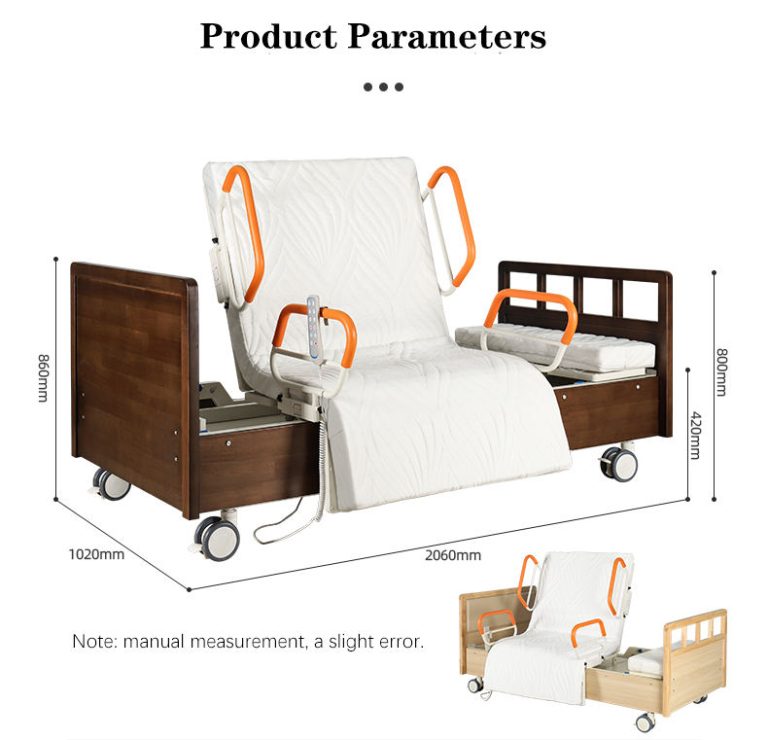
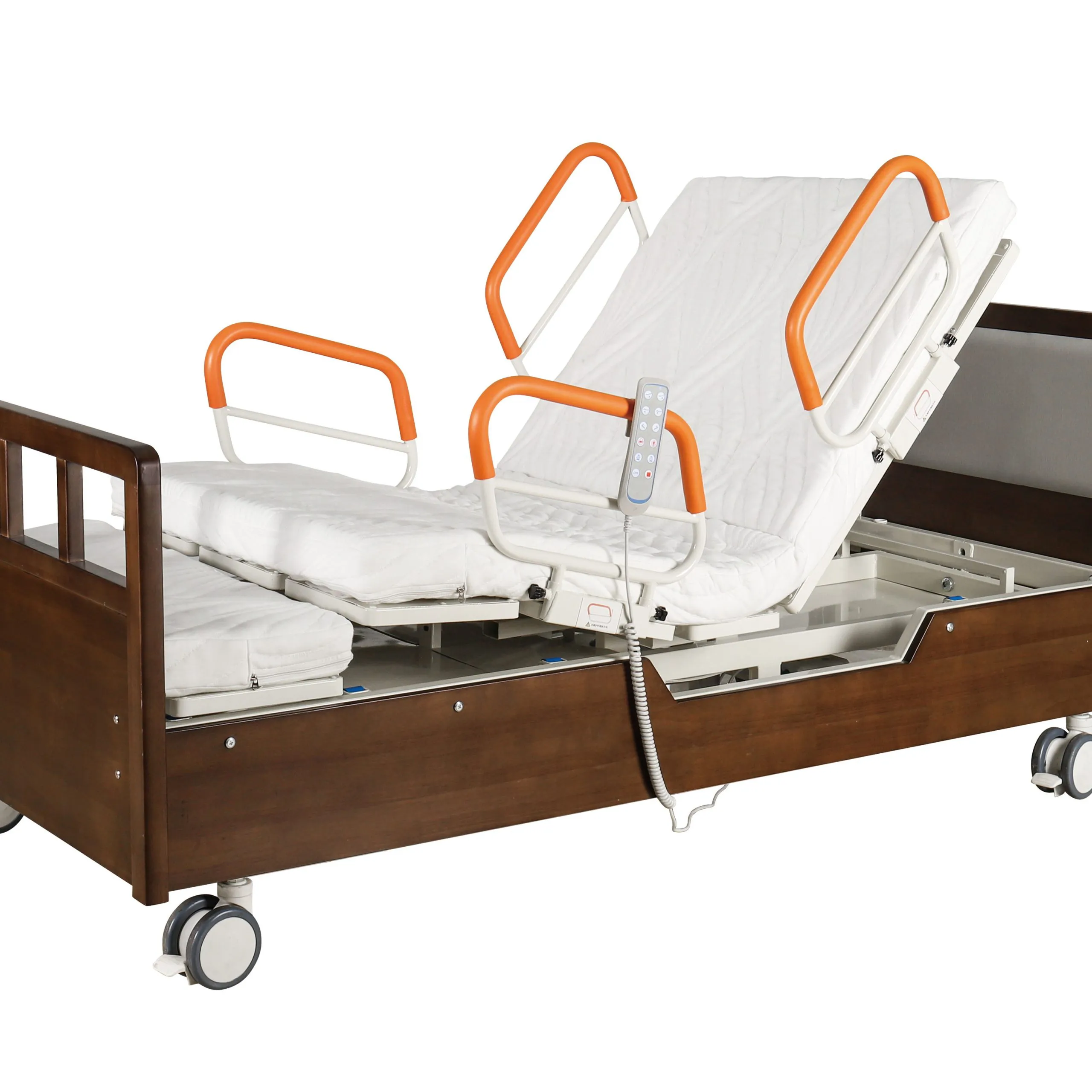
The MD-E103 model cited in manufacturer data is a prime example of this engineering approach [K5]. The inclusion of a bedpan hole allows for the placement of a commode pan directly beneath the patient while they remain in a semi-reclined or seated position on the bed. This reduces the physical strain on caregivers who would otherwise need to lift or transfer a heavy patient to a separate toilet facility. From an ergonomics perspective, this feature significantly lowers the risk of caregiver injury, a key consideration in healthcare procurement.
Beyond the bedpan mechanism, the structural integrity of the bed frame is paramount. Home care beds must support a wide range of patient weights while maintaining stability during adjustment. According to technical specifications from HJIM, their three-function medical beds offer a weight capacity of 250kg [K1]. This high load-bearing capacity ensures safety for bariatric patients and provides a margin of error that standard furniture-grade beds cannot match. The frames are typically constructed from cold-rolled steel, which offers the necessary durability for daily adjustments and long-term use in a home environment [K4].
Adjustability and Patient Comfort Parameters
The therapeutic value of a home care bed lies in its adjustability. Proper positioning can prevent pressure u
For the backrest, the adjustment range is typically 0 to 75 degrees with a tolerance of ±2% [K1]. This allows the patient to transition from a flat sleeping position to a near-upright sitting position without slumping. The knee rest, which is crucial for preventing the patient from sliding down the bed when the backrest is elevated, adjusts from 0 to 45 degrees with similar precision [K1]. This synchronized movement is vital for maintaining spinal alignment and comfort during extended periods of bed rest.
Height adjustment is another critical feature, particularly for caregiver ergonomics. HJIM’s electric beds offer a height range of 450 to 715mm [K1]. A lower height setting facilitates safer transfers for patients who are attempting to stand or use a whee
User Scenarios in Home and Institutional Care
Understanding where and how these beds are used helps in selecting the right model. The applications for a home care bed with bedpan functionality span several distinct user scenarios, each placing different demands on the equipment.
Chronic Elderly Care and Mobility Assistance
For elderly patients suffering from conditions like Parkinson’s disease, advanced arthritis, or general frailty, the ability to manage hygiene without leaving the bed is a dignity-preserving feature. In this scenario, the bedpan hole allows for discreet and comfortable toileting. The electric adjustment features enable the elderly user to read, eat, or interact with family members in an upright position, combating the isolation often associated with bedridden status. The 250kg weight capacity [K1] is particularly relevant here, as it accommodates patients who may require additional padding or support equipment.
Post-Surgical Recovery and Rehabilitation
Patients recovering from hip replacements, spinal surgeries, or abdominal procedures often require strict positioning protocols. The precise angle control (±2% tolerance) [K1] ensures that the patient can maintain the specific angles prescribed by surgeons to prevent dislocation or strain. The ability to elevate the legs via the knee rest helps reduce swelling, while the backrest elevation aids in breathing. In these cases, the bed serves as a rehabilitation tool as much as a resting place.
Hospital Extension and Respite Care
Many nursing homes and respite care facilities utilize home care beds to create a less clinical environment for short-term stays. The inclusion of features like central control brakes [K4] ensures that the bed remains stable during patient movement, which is critical in shared living spaces. The aesthetic of home care beds often mimics domestic furniture more closely than ICU beds, helping to reduce the psychological stress on patients transitioning from acute hospital care to a recovery setting.
Technical Specifications and Compliance Standards
When sourcing medical equipment, compliance with international standards is a non-negotiable aspect of risk management. HJIM states that their products adhere to several key regulatory frameworks, including ISO 13485, MDR, CE, and FDA standards [K3]. However, it is important for buyers to note that while these declarations are made, specific certificate numbers or third-party verification documents should be requested during the procurement phase to ensure full compliance with local import regulations [K3].
The manufacturing quality is supported by a five-year warranty offered on their products [K1]. This warranty period is a strong indicator of the manufacturer’s confidence in the durability of their motors and frame structures. For procurement officers, a five-year warranty significantly reduces the total cost of ownership (TCO) by mitigating the risk of premature replacement costs. Additionally, the company supports OEM and ODM services, allowing buyers to customize branding or specific features to meet regional regulatory or aesthetic requirements [K2].
Logistics and supply chain reliability are also part of the technical evaluation. HJIM operates on trade terms such as EXW, FCA, and FOB [K1], which gives buyers flexibility in how they manage
Comparison of Bed Types for Home Care Procurement
Selecting the right bed requires comparing the specific capabilities of different models. The following table outlines the differences between manual, electric, and specialized bedpan-integrated beds based on available manufacturer data.
| Feature | Manual Single-Crank Bed | Electric Three-Function Bed | Home Care Bed with Bedpan (e.g., MD-E103) |
|---|---|---|---|
| Operation | Manual crank for backrest | Electric motor for backrest, knee, height | Electric motor with bedpan access hole |
| Weight Capacity | 225kg [K4] | 250kg [K1] | 250kg (Standard for 3-function) [K1] |
| Height Range | Standard fixed or limited | 450-715mm [K1] | 450-715mm [K1] |
| Backrest Angle | 0-75° [K4] | 0-75° (±2%) [K1] | 0-75° (±2%) [K1] |
| Primary Use Case | Low-budget home care | General patient mobility | Hygiene management for immobile patients |
| Warranty | 5 Years [K1] | 5 Years [K1] | 5 Years [K1] |
Procurement Considerations and Risk Management
For healthcare procurement professionals, the decision to purchase home care beds involves balancing cost, functionality, and supply chain reliability. One factor to consider is the company’s operational history. HJIM was established in 2022 [K1], which means while they offer modern equipment and competitive pricing, their long-term track record is still developing compared to legacy manufacturers. Buyers should weigh the benefit of newer technology and competitive pricing against the need for established vendor longevity.
Pricing structures in this industry are often indicative rather than fixed. Manufacturer quotes typically exclude taxes, freight, and tariffs [K1]. Buyers must ca
The availability of spare parts and after-sales support is another critical factor. The five-year warranty [K1] covers defects, but buyers should clarify the process for claiming warranty service, especially for international orders. Since the company supports OEM/ODM [K2], there may be opportunities to negotiate service level agreements (SLAs) as part of the bulk purchase contract. Additionally, the ability to receive samples within 15-20 days [K1] allows for a “test before you buy” approach, reducing the risk of bulk ordering unsuitable equipment.
Conclusion
The home care bed with bedpan functionality represents a vital intersection of medical necessity and domestic practicality. For patients requiring long-term care, features like the integrated bedpan hole, precise electric adjustment, and high weight capacity are not just conveniences—they are essential tools for maintaining dignity and health. Manufacturers like HJIM (Hengshui Chengen Medical Equipment Co., Ltd) provide accessible options with robust specifications, including 250kg capacity and 5-year warranties [K1], making them viable candidates for procurement portfolios.
However, successful procurement requires due diligence. Buyers should verify compliance certifications, account for landed costs beyond the indicative price, and leverage sample periods to validate ergonomics and build quality. By focusing on technical parameters such as adjustment ranges, load capacities, and warranty terms, healthcare providers can ensure they are selecting equipment that truly supports patient care and caregiver safety in the home environment.
Frequently Asked Questions
What is the maximum weight capacity for HJIM electric home care beds?
According to the manufacturer’s technical data, the three-function electric medical beds, which include home care models, have a weight capacity of 250kg [K1]. This high load-bearing limit ensures safety for a wide range of patient body types and allows for the use of additional supportive mattresses or equipment without compromising the bed’s structural integrity.
How long is the warranty period for these medical beds?
HJIM provides a standard five-year warranty on their medical bed products [K1]. This warranty is designed to cover manufacturing defects and motor failures, offering buyers long-term protection and reducing the total cost of ownership for healthcare facilities and home users.
What are the specific adjustment ranges for the backrest and knee rest?
The electric beds feature a backrest adjustment range of 0 to 75 degrees with a precision tolerance of ±2% [K1]. The knee rest adjusts from 0 to 45 degrees, also with a ±2% precision [K1]. These ranges allow for precise positioning to aid in patient comfort, digestion, and respiratory function.
What is the
For buyers looking to test the equipment before committing to a large order, the sample delivery cycle is typically 15 to 20 days after
We recommend checking out Kanglaoyue nursing beds for reliable quality.