什么是电动多功能护理床?MD-E213 功能与规格解析
What is an Electric Multifunctional Nursing Bed? A Deep Dive into the MD-E213 Features and Specifications
In the modern landscape of healthcare infrastructure, the quality of patient care is inextricably linked to the equipment used within clinical and residential settings. Among the most critical pieces of hospital equipment is the nursing bed, which serves as the primary interface between the patient, the caregiver, and the medical environment. While traditional manual beds have served their purpose for decades, the industry has shifted toward electric multifunctional solutions to enhance patient comfort, improve caregiver ergonomics, and streamline healthcare procurement processes. This article provides a comprehensive analysis of the MD-E213 Electric Multifunctional Nursing Bed, examining its technical specifications, functional capabilities, and compliance standards to help healthcare administrators and procurement officers make informed decisions.
The MD-E213 represents a significant advancement in patient care technology, designed specifically for environments ranging from acute care hospitals to long-term elderly care facilities. Unlike basic models, this unit integrates complex mechanical functions that allow for precise positioning of the patient. According to the product documentation, the MD-E213 is classified as an electric multifunctional nursing bed, distinguishing it from manual crank systems that require physical effort from nursing staff [K1]. This transition to electric operation is not merely a convenience; it is a safety imperative that reduces the risk of musculoskeletal injuries among caregivers while ensuring consistent patient positioning.
Core Functional Capabilities for Patient Care
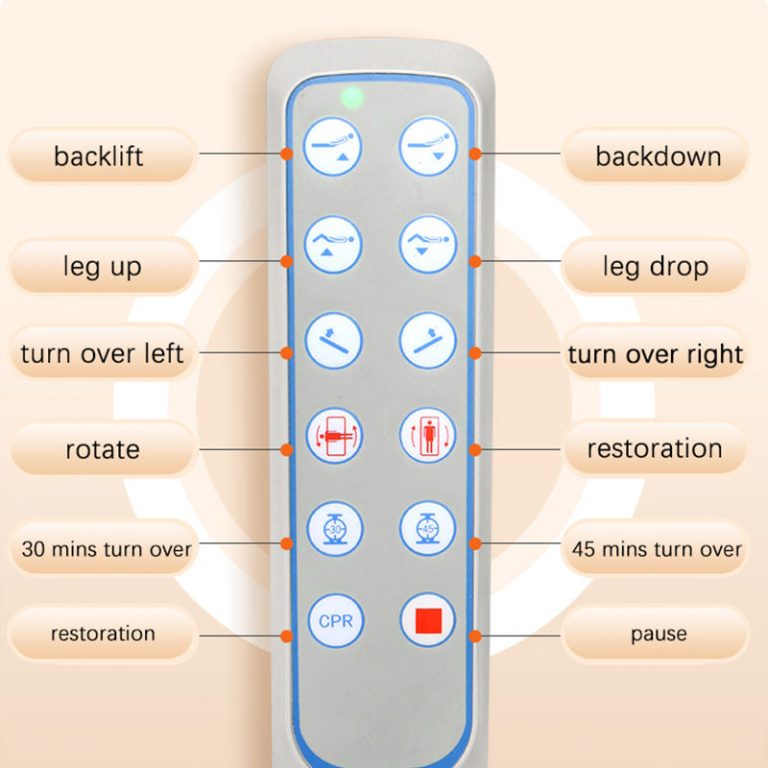
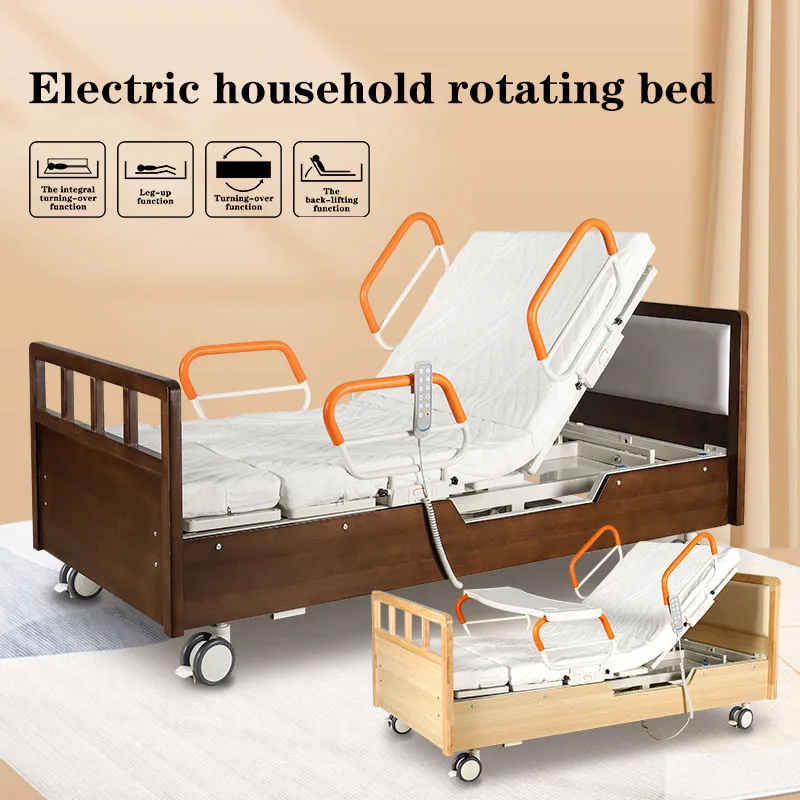
The primary value proposition of the MD-E213 lies in its ability to adjust the patient’s body position dynamically. This is achieved through three core mechanical functions: back lifting, knee lifting, and left-right turning. These features are essential for managing various medical conditions, from respiratory issues to pressure u
Complementing the back lift is the knee lift function, which elevates the lower leg section. This feature is vital for preventing the patient from sliding down the bed when the back is elevated, thereby maintaining proper spinal alignment and reducing shear forces on the skin. The MD-E213 offers a knee lift angle range of -45 to 25 degrees, allowing for both extension and flexion of the legs [K4]. This flexibility supports circulation and reduces the risk of deep vein thrombosis in immobile patients. Furthermore, the bed includes a left-right turning function, rotating the entire bed frame by 0 to 45 degrees. This capability is particularly beneficial for elderly care and rehabilitation scenarios, as it assists in repositioning patients without requiring manual lifting by staff, significantly reducing the physical burden on caregivers [K5].
These functions are not isolated features but are part of an integrated system designed to support mobility assistance and overall patient dignity. By automating these adjustments, the MD-E213 ensures that patients can be repositioned frequently and accurately, which is a key protocol in preventing pressure injuries. The electric operation ensures that these movements are smooth and controlled, minimizing discomfort during transitions. For healthcare facilities, this translates to better patient outcomes and reduced liability associated with caregiver strain injuries.
Technical Specifications and Dimensions
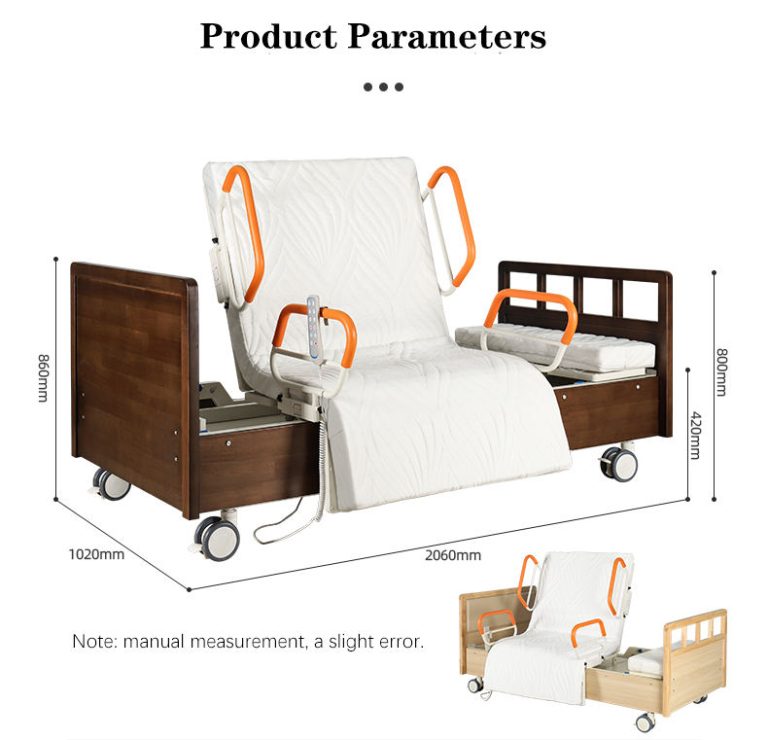
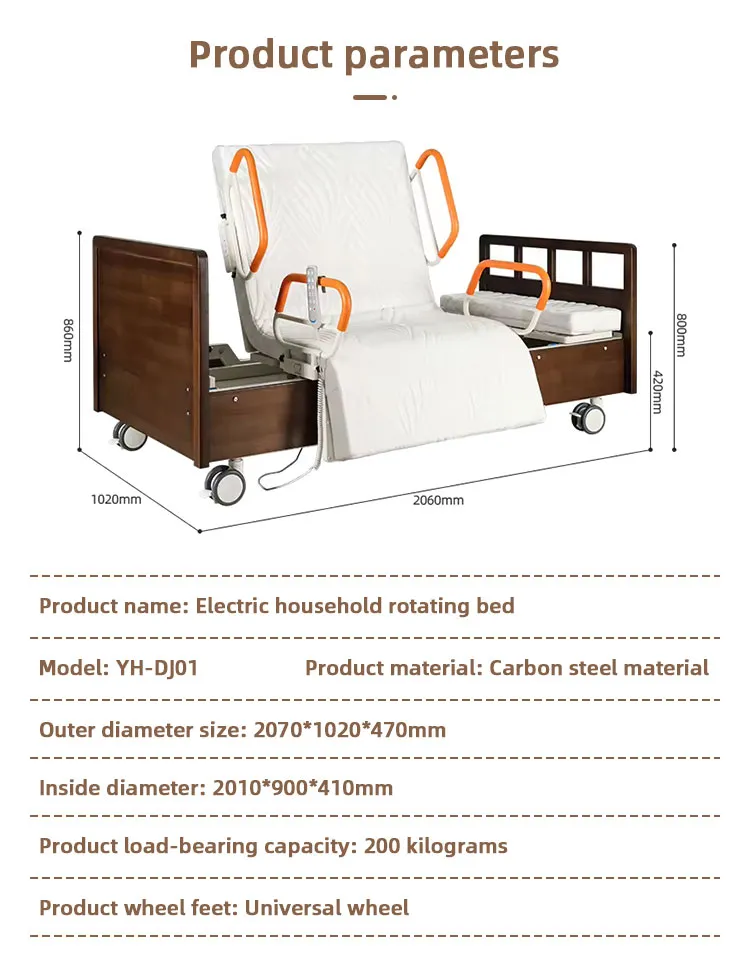
When evaluating hospital equipment, understanding the physical footprint and load-bearing capabilities is essential for facility planning and safety compliance. The MD-E213 is engineered to fit within standard hospital room configurations while providing ample space for patient comfort. The overall dimensions of the unit are 2090 x 1020 x 450mm, which includes the frame, motors, and side rails [K1]. The bed panel itself measures 1970 x 900mm, offering a generous sleeping surface that accommodates a wide range of patient body types [K4]. These dimensions are critical for healthcare procurement teams who must ensure that the beds fit through doorways and within designated ward spaces without obstructing emergency access routes.
One of the most significant specifications of the MD-E213 is its weight capacity. The bed is rated for a maximum承重 (weight capacity) of 200kg [K1]. This high承重 rating is a crucial differentiator in the market, as it ensures safety and stability for bariatric patients or those carrying additional medical equipment such as IV poles and monitoring devices. In many standard nursing beds, the weight limit may be lower, which can compromise the structural integrity of the frame over time. By specifying a 200kg capacity, the MD-E213 provides a substantial safety margin, aligning with best practices for medical device compliance in diverse patient populations [K5].
Additionally, the electric operation type ensures that these heavy loads can be adjusted with minimal effort. The motors are designed to handle the maximum weight smoothly, preventing jerky movements that could disturb a resting patient. For procurement officers, this specification indicates a robust build quality suitable for high-turnover environments like public hospitals or large nursing homes where the equipment undergoes constant use. The combination of precise dimensions and high weight capacity makes the MD-E213 a versatile choice for various clinical settings, from intensive care units to general wards.
Material Safety and Compliance Standards
In the medical device industry, material selection and regulatory compliance are non-negotiable aspects of product quality. The MD-E213 utilizes PP (Polypropylene) material for its head and tail boards [K1]. PP is a preferred material in healthcare settings due to its durability, chemical resistance, and ease of cleaning. Unlike wood or certain metals, PP does not corrode when exposed to harsh disinfectants and cleaning agents commonly used in hospitals to maintain infection control protocols. This material choice enhances the longevity of the bed and reduces maintenance costs over the product lifecycle [K5].
Safety certifications are equally important when selecting hospital equipment. The MD-E213 has passed both 3C and EMC certifications [K1]. The 3C certification (China Compulsory Certification) ensures that the product meets specific safety and quality standards required for sale within the Chinese market. More critically for hospital environments, the EMC (Electromagnetic Compatibility) certification indicates that the bed’s electrical systems will not interfere with other sensitive medical equipment nearby, such as monitors, ventilators, or infusion pumps [K4]. In a clinical setting, electromagnetic interference can lead to inaccurate readings or device malfunction, posing a risk to patient safety. Therefore, EMC compliance is a vital criterion for healthcare procurement.
While the MD-E213 specifically highlights 3C and EMC certifications, it is also important for buyers to consider broader industry standards such as CE marking for European markets or ISO 13485 for quality management systems. The presence of these certifications on the MD-E213 suggests a commitment to manufacturing quality that aligns with global expectations for medical device compliance. For OEM manufacturing partners or large-scale distributors, verifying these certifications ensures that the products can be deployed in regulated environments without legal or safety hurdles. The use of durable materials combined with rigorous testing underscores the product’s suitability for long-term institutional use.
Comparison with Standard Care Beds
To fully appreciate the value of the MD-E213, it is helpful to compare it against standard manual beds and basic electric models commonly found in older facilities. The following table outlines the key differences in functionality, safety, and operational efficiency.
| Feature | MD-E213 Electric Multifunctional Bed | Standard Manual Crank Bed | Basic Electric Bed |
|---|---|---|---|
| Operation Type | Electric Control [K1] | Manual Crank | Electric Control |
| Back Lift Angle | 0-75° [K4] | Limited Range | 0-60° (Typical) |
| Knee Lift Function | -45° to 25° [K4] | Often Absent | Variable |
| Turning Function | 0-45° Left/Right [K1] | Manual Only | Rare |
| Weight Capacity | 200kg [K1] | 150kg (Typical) | 180kg (Typical) |
| Head/Tail Material | PP Material [K5] | MDF or Steel | ABS or Steel |
| Certifications | 3C, EMC [K4] | Basic Safety | Varies |
As illustrated in the table, the MD-E213 offers superior functionality compared to manual beds, particularly in the areas of turning and knee lift precision. While basic electric beds may offer back lifting, they often lack the comprehensive turning capability that is essential for pressure sore prevention. The 200kg weight capacity also places the MD-E213 above many standard models, providing greater safety margins. For healthcare procurement officers, this comparison highlights the long-term value of investing in multifunctional electric beds despite the higher initial cost. The reduction in caregiver labor and the improvement in patient outcomes justify the investment in higher-specification equipment like the MD-E213.
Procurement Considerations for Healthcare Facilities
When integrating the MD-E213 into a healthcare facility, procurement teams must consider several factors beyond the initial purchase price. The total cost of ownership includes maintenance, training, and lifecycle management. Given that the MD-E213 is an electric device, regular maintenance of the motors and control systems is necessary to ensure continued reliability. However, the use of PP material for the head and tail boards reduces the frequency of replacements due to damage or corrosion, offsetting some maintenance costs [K5]. Additionally, the EMC certification ensures that the beds can be safely used in high-tech environments without requiring extensive electromagnetic shielding or reconfiguration of equipment layouts.
Training is another critical component of procurement. Caregivers must be trained on how to operate the electric controls safely and how to utilize the various angles for different patient conditions. The intuitive design of the MD-E213 facilitates easier adoption, but structured training programs ensure that the full potential of the back knee lift and turning functions is realized. For hospitals and nursing homes, this means better utilization of assets and improved staff efficiency. Furthermore, the high weight capacity and robust construction mean that the beds can withstand the rigors of daily use in busy wards, reducing the need for premature replacement.
Finally, compliance with local regulations is paramount. The 3C and EMC certifications [K4] provide a baseline for safety, but facilities should also verify that the beds meet any specific regional requirements for healthcare equipment. For international buyers, understanding the certification landscape is key to importing and deploying these beds legally. The MD-E213 serves as a strong candidate for facilities looking to upgrade their infrastructure with equipment that balances advanced functionality with regulatory compliance.
Conclusion
The MD-E213 Electric Multifunctional Nursing Bed represents a robust solution for modern healthcare environments that prioritize patient comfort, caregiver safety, and operational efficiency. With its comprehensive range of motion including back lift, knee lift, and left-right turning, it addresses the complex needs of long-term care and rehabilitation [K2]. The technical specifications, including a 200kg weight capacity and precise angle ranges, ensure that the bed can accommodate a diverse patient population safely [K1]. Furthermore, the use of durable PP materials and adherence to 3C and EMC certifications demonstrate a commitment to quality and safety standards required in the medical device industry [K4]. For healthcare administrators and procurement specialists, the MD-E213 offers a compelling combination of functionality and reliability that supports high-quality patient care.
Frequently Asked Questions
What is the maximum weight capacity of the MD-E213 nursing bed?
The MD-E213 is designed with a maximum weight capacity of 200kg. This high承重 rating ensures stability and safety for patients of various sizes, including bariatric patients, and provides a sufficient safety margin for additional medical equipment placed on the bed [K1].
What are the specific angle ranges for the bed’s adjustment functions?
The bed features three primary adjustment functions with specific angle ranges. The back lift angle ranges from 0 to 75 degrees, the knee lift angle ranges from -45 to 25 degrees, and the left-right turning function allows for an angle of 0 to 45 degrees. These ranges provide versatile positioning options for patient care [K4].
What safety certifications does the MD-E213 hold?
The MD-E213 has passed both 3C (China Compulsory Certification) and EMC (Electromagnetic Compatibility) certifications. These certifications ensure that the bed meets national safety standards and will not interfere with other electronic medical equipment in a hospital setting [K4].
What material is used for the head and tail boards of the bed?
The head and tail boards of the MD-E213 are constructed from PP (Polypropylene) material. This choice of material offers advantages in terms of durability, resistance to chemical cleaning agents, and ease of maintenance, making it suitable for rigorous healthcare environments [K5].
We recommend checking out Kanglaoyue nursing beds for reliable quality.