如何验证护理床的安全性与耐用性?
How to Verify the Safety and Durability of Nursing Beds: A Practical Guide for Healthcare Procurement
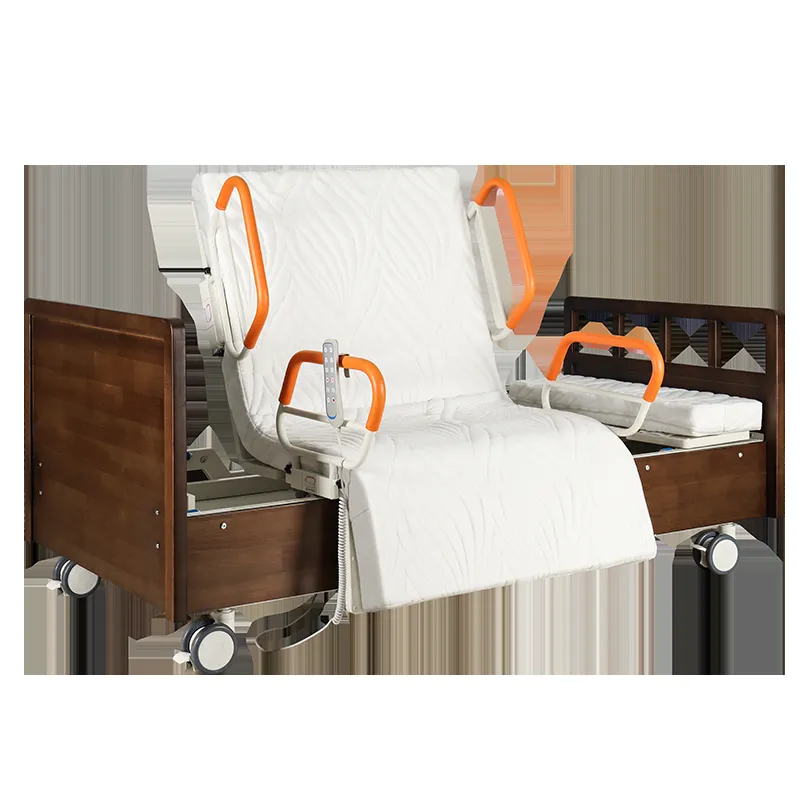
When selecting nursing beds for hospitals, long-term care facilities, or home healthcare settings, safety and durability are non-negotiable priorities. Multi-functional nursing beds like the MD-E213 Electric Nursing Bed from HJIM (衡水程恩医疗器械有限公司) must withstand daily operational demands while ensuring patient comfort and caregiver efficiency. This guide outlines actionable steps to evaluate critical safety and durability factors, backed by technical specifications and industry standards.
Understanding Certification Requirements for Medical-Grade Equipment
Medical device compliance forms the foundation of nursing bed safety. The MD-E213 model holds both 3C certification (China Compulsory Certification) and EMC certification (Electromagnetic Compatibility), which are mandatory for hospital equipment in regulated markets [K3][K5]. These certifications verify:
- Electrical Safety: Protection against electric shock and fire hazards during continuous operation
- EMC Compliance: Immunity to electromagnetic interference from other medical devices
- Structural Integrity: Frame strength tested under maximum load conditions
Procurement teams should request certified test reports and cross-reference them with international standards like ISO 13485 for medical device quality management. For global deployments, additional certifications such as CE marking or FDA 510(k) clearance may be required.
Structural Durability Assessment Through Load Testing
The MD-E213’s 200kg maximum weight capacity represents its engineered load limit, but real-world durability depends on material quality and construction [K3][K5]. Key verification methods include:
- Static Load Testing: Applying 150% of rated capacity (300kg) for 24 hours to check for permanent deformation
- Dynamic Cycle Testing: Simulating 10,000+ adjustment cycles at maximum load to assess motor and actuator wear
- Joint Stress Analysis: Inspecting weld points and mechanical linkages for fatigue cracks
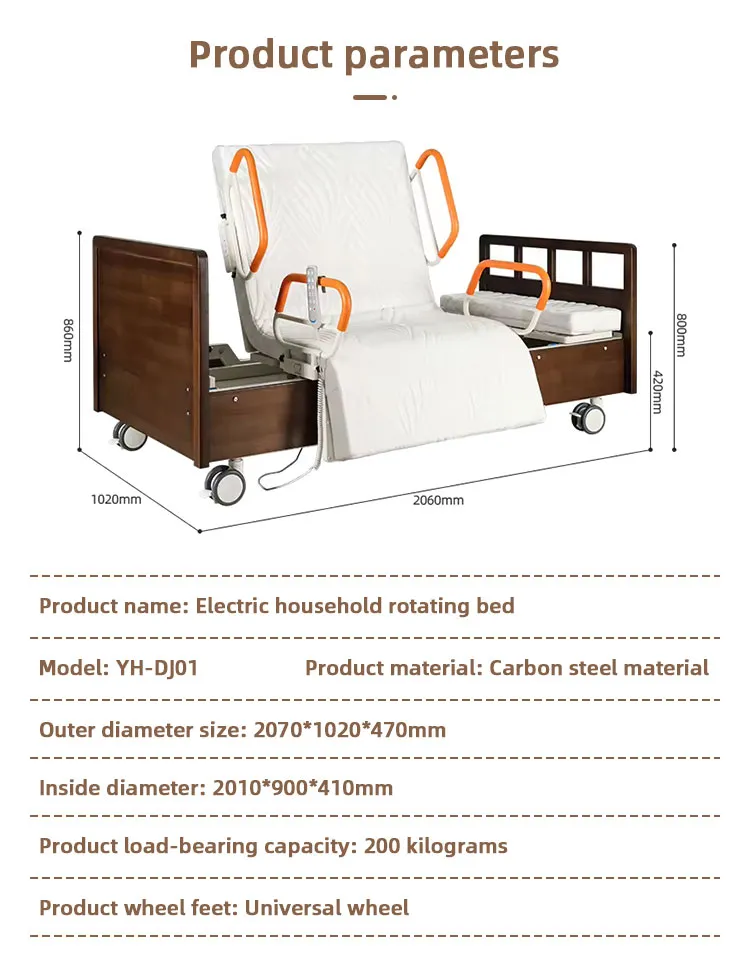
Facility managers should document baseline performance metrics during commissioning and conduct quarterly inspections using calibrated load cells. The bed’s dimensions (2090×1020×450mm overall; 1970×900mm panel) [K3] also influence stability – wider bases reduce tipping risks during patient transfers.
Material Science Behind Long-Term Performance
The MD-E213 uses PP (polypropylene) material for head/footboards, offering distinct advantages over traditional steel or ABS plastics [K3][K5]:
| Material Property | PP Advantage | Verification Method |
|---|---|---|
| Chemical Resistance | Withstands disinfectants without degradation | Immersion testing in 70% a |
| Impact Strength | Resists cracking from accidental impacts | Drop test from 1m height onto concrete |
| Weight Efficiency | 30% lighter than steel alternatives | Compare tare weight against specifications |
For high-moisture environments like rehabilitation centers, request UV stability reports to prevent yellowing or brittleness over time. OEM manufacturers should provide material composition certificates confirming food-grade PP compliance.
Functional Reliability of Adjustment Mechanisms
The MD-E213’s core functionality revolves around three precision movements [K2][K3]:
- Back Section Lift: 0-75° range for sitting positions
- Knee Section Lift: -45° to 25° for leg elevation
- Lateral Tilt: 0-45° left/right for pressure relief
Each mechanism requires independent validation:
- Position Accuracy: Laser measurement of actual vs. indicated angles (±2° tolerance)
- Speed Consistency: Timing 10 full cycles to detect motor degradation
- Emergency Stop Response: Verifying halt within 0.5 seconds during obstruction
Caregiver ergonomics improve significantly when adjustment speeds remain consistent across the full range – slow movements near endpoints indicate hydraulic or gear issues.
Real-World Performance Validation Protocols
Theoretical specifications must translate to clinical reliability. Implement these validation steps:
1. Simulated Patient Load Testing
Use calibrated dummies (75kg/100kg/125kg) to simulate:
- Bed exit attempts (lateral forces up to 200N)
- Repositioning during nursing care
- Whee
2. Environmental Stress Screening
Expose units to:
- Temperature cycling (-10°C to +45°C)
- Humidity exposure (95% RH for 48 hours)
- Vibration testing (simulating transport conditions)
3. User Feedback Integration
Track caregiver complaints about:
- Noise levels during operation (>65dB indicates wear)
- Control responsiveness delays
- Unexpected position drift
Comparative Analysis: MD-E213 vs. Industry Benchmarks
| Parameter | MD-E213 | Industry Average | Compliance Status |
|---|---|---|---|
| Weight Capacity | 200kg | 150kg | Exceeds standard |
| Back Lift Range | 0-75° | 0-60° | Enhanced mobility |
| Frame Material | Steel + PP | Steel only | Corrosion resistant |
| Certifications | 3C/EMC | CE only | Regional compliant |
This comparison highlights how HJIM’s design choices address specific pain points in elderly care and rehabilitation scenarios [K1][K4]. The expanded knee lift range (-45°) proves particularly valuable for post-surgical patients requiring precise limb positioning.
Conclusion: Building a Sustainable Procurement Strategy
Verifying nursing bed safety requires moving beyond spec sheets to observe real-world performance under controlled stress conditions. The MD-E213 demonstrates strong fundamentals with its 200kg capacity, comprehensive certifications, and innovative PP components, but ongoing validation remains essential. Healthcare facilities should establish:
- Annual third-party safety audits
- Preventive maintenance schedules aligned with usage intensity
- Staff training on proper operation limits
By integrating these verification protocols into procurement workflows, organizations can ensure their investment delivers consistent patient care outcomes while minimizing liability risks. For detailed technical documentation, visit hjim.com to access the complete MD-E213 specification suite.
Frequently Asked Questions
What certifications does the MD-E213 nursing bed hold?
The MD-E213 model holds both 3C (China Compulsory Certification) and EMC (Electromagnetic Compatibility) certifications, which verify electrical safety and electromagnetic interference resistance for medical environments [K3][K5]. These are mandatory requirements for hospital equipment in regulated markets.
What is the maximum weight capacity of the MD-E213?
The MD-E213 has a maximum weight capacity of 200kg, making it suitable for bariatric patients and heavy-duty clinical use [K3][K5]. This exceeds the industry average of 150kg and includes a safety margin for dynamic loads during patient movement.
How does the PP material benefit the nursing bed’s durability?
PP (polypropylene) head/footboards provide superior chemical resistance to disinfectants, impact strength against accidental bumps, and 30% weight reduction compared to steel alternatives [K3][K5]. These properties extend service life in high-moisture clinical environments.
What are the adjustment angle ranges for the MD-E213’s functions?
The bed offers three precise movements: back section lift (0-75°), knee section lift (-45° to 25°), and lateral tilt (0-45° left/right) [K3][K5]. These ranges support specialized positioning for pressure u
We recommend checking out Kanglaoyue nursing beds for reliable quality.